 By st20113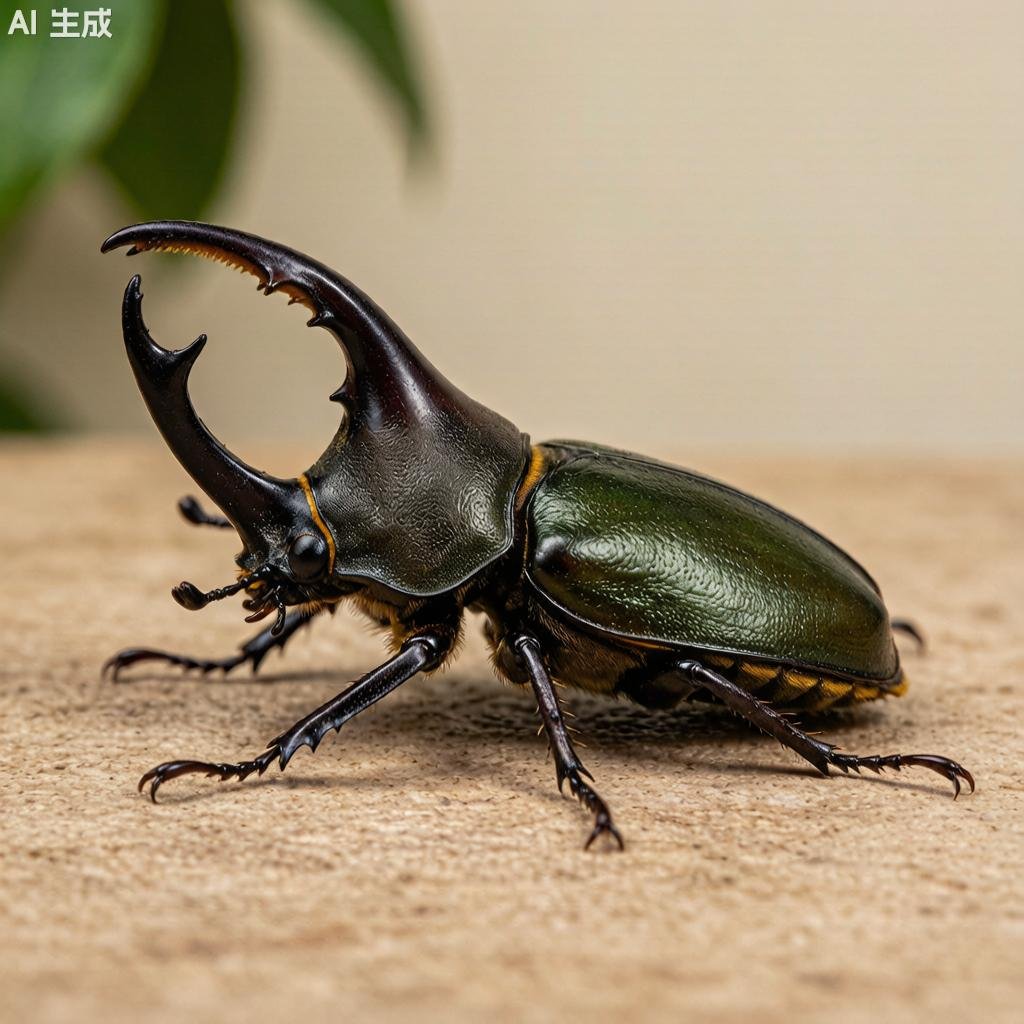
Introduction
The Hercules beetle (Dynastes hercules) stands as one of the most awe-inspiring insects on the planet, capable of lifting up to 850 times its own body weight. Found in the tropical rainforests of Central and South America, males are immediately recognizable by the spectacular thoracic horn that dominates their foreheads, used in dramatic battles against rival males for access to mating opportunities. Despite its fearsome appearance, the Hercules beetle is entirely harmless to humans, feeding exclusively on decaying plant matter and playing an essential ecological role on the tropical forest floor.
Taxonomy
The Hercules beetle belongs to the family Dynastinae, the rhinoceros beetles, which are a subfamily of the Scarabaeidae. Its full scientific name is Dynastes hercules, assigned by Carl Linnaeus in 1758. The genus Dynastes comprises seven recognized species, all restricted to the Neotropical regions of the Americas, with D. hercules being the largest and most widely known. Phylogenetic analyses have confirmed that the Hercules beetle’s lineage diverged from other rhinoceros beetles approximately 20 to 30 million years ago. Other remarkable tropical megafauna include the Komodo dragon and the African elephant, representing the incredible diversity of large animals that evolved in tropical environments worldwide.
Physical Characteristics
The Hercules beetle is among the largest insects on Earth, with males reaching lengths of up to 7 inches (17.5 cm) including their impressive horn structure. The male’s most striking feature is the elongated horn projecting from the pronotum, which can measure up to 2 inches on its own. These horns are highly sclerotized, hollow structures reinforced with internal fibers that maximize strength while minimizing weight. Males frequently exhibit a unique phenomenon: their elytra change color from dark brown to brilliant chartreuse green when atmospheric humidity rises. The beetle’s powerful legs are equipped with sharp tarsal claws that provide excellent grip on rough bark and tree surfaces.
Habitat
The Hercules beetle inhabits the dense tropical rainforests of Central and South America, from Venezuela and Colombia through Ecuador and Peru to the Amazon Basin of Brazil. It is most commonly found in lowland rainforest environments at elevations below 800 meters. Within these forests, Hercules beetles spend most of their lives in the larval stage, inhabiting and feeding on decaying hardwood logs softened by fungal and bacterial decomposition. Adults emerge during the rainy season and spend their brief reproductive lives moving through the forest canopy in search of mates and fermenting fruit. Logging and agricultural expansion have caused significant population declines.
Diet
The diet of the Hercules beetle differs fundamentally between its larval and adult life stages. As larvae, they feed within decaying hardwood logs, consuming soft, fungus-ridden wood fiber broken down by decomposer organisms. The larvae rely on symbiotic gut bacteria to break down complex cellulose and lignin compounds into absorbable nutrients. The larval stage may last from one to two years. Adult Hercules beetles feed almost exclusively on sweet, fermenting fruit, particularly overripe bananas and fallen figs. Adult beetles can survive for long periods without feeding, subsisting on energy reserves accumulated during the larval stage.
Reproduction
Reproduction in the Hercules beetle is a dramatic and intensely competitive affair. Males use their formidable thoracic horn as a weapon, engaging in one-on-one battles to dislodge rival males from access to females and egg-laying sites. These contests involve the males interlocking horns and engaging in a shoving match of considerable force, with the larger male almost always emerging victorious. A successful male guards his chosen female and the oviposition site until mating is complete. Females deposit eggs in batches within decaying logs, with each female laying 50 to 100 eggs over her adult life. The larvae pass through three instars over 12 to 18 months before pupating in a cocoon constructed from compacted wood fibers.
Conservation
The Hercules beetle is not currently classified as globally endangered, but localized population declines have been documented in association with deforestation and habitat fragmentation. The species’ dependence on old-growth decaying hardwood logs makes it particularly vulnerable to logging operations. In countries such as Ecuador, Colombia, and Brazil, illegal collection for the international entomology trade has added additional pressure to wild populations. Some range states have implemented regulations governing the collection and export of rhinoceros beetles. Conservation of the Hercules beetle ultimately depends on the preservation of large tracts of intact tropical rainforest. Large-bodied tropical species such as the giant tortoise face similar conservation challenges in fragmented tropical environments.
Fun Facts
The Hercules beetle’s strength has inspired materials science research aimed at replicating the mechanical properties of its horn cuticle in engineered materials. Engineers have studied the microscopic fiber architecture of the horn to design lighter, stronger composites for aerospace applications. The Hercules beetle gets its name from the mythical Greek hero Heracles, reflecting its status as the heavyweight champion of the animal kingdom. Its horns are specialized weapons evolved exclusively for intraspecific male-male competition — one of the most well-documented examples of sexual selection in insects. Its sheer size rivals the raw physical power of the formidable brown bear.