 By Iris
Platemys platycephala | Twist-necked Turtle
Species Profile · Chelidae
Twist-necked Turtle
A flat turtle rests in shallow brown water under a fallen leaf.
Least Concern
Shell
Head
Clutch
Incubation
Neck
Rating
The Twist-necked Turtle
A head that will not go inside
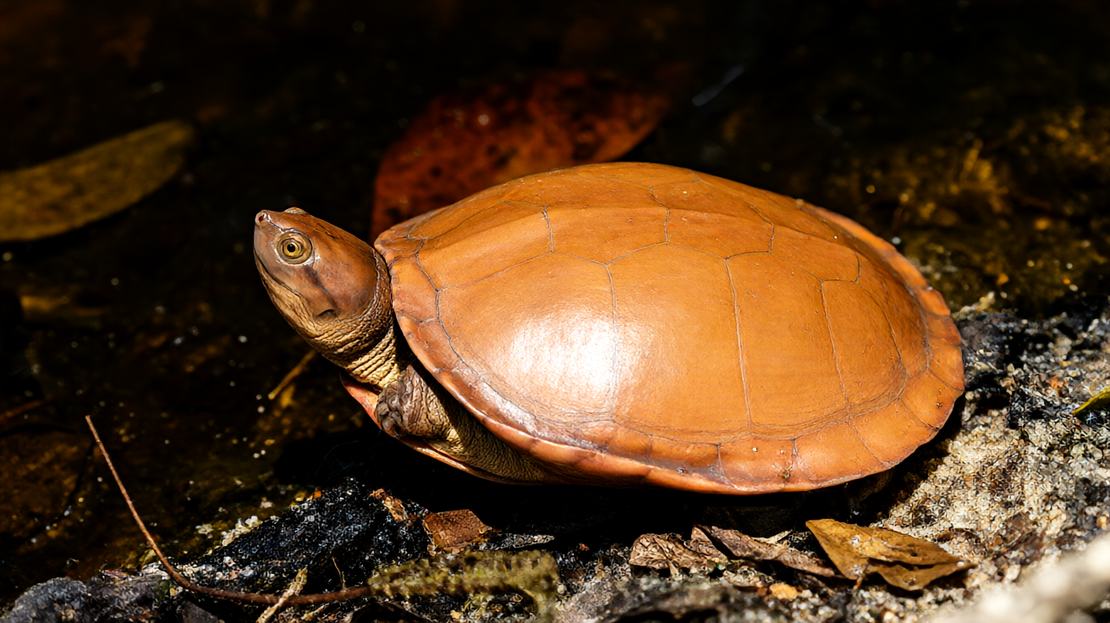
A flat turtle rests in shallow brown water under a fallen leaf. Its head is orange-red, and a black stripe runs through the eye. The shell looks too flat for a turtle.
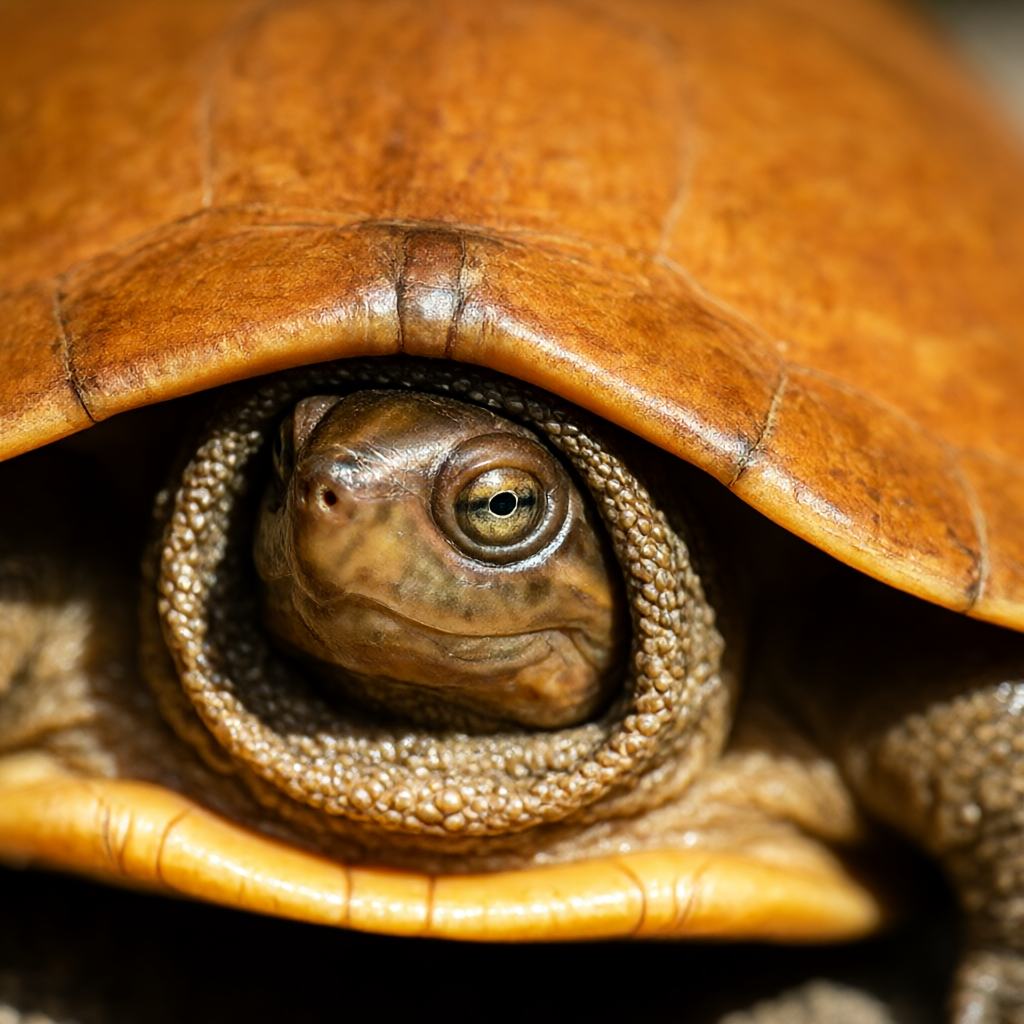
Because the neck cannot pull straight back, the turtle folds it sideways instead. That trick gave the species its common name. Few turtles look so much like a discarded plate.
Family tree
Chelidae, the side-necked turtles
Its scientific name is Platemys platycephala, and it stands alone in its genus. Chelidae is the family, a group known as the side-necked turtles. A Matamata Turtle shares the same rivers and the same sideways fold.
Both animals belong to an ancient South American line, and neither can hide its head the usual way. An Anaconda hunts in the same flooded forest, so the flat shell helps the turtle press under roots. Three subspecies are named, though their boundaries remain unclear.
A flat shell
How to tell one
Shell length runs 15 to 18 cm, and it lies almost flat. Weight stays low for the size, since the body is thin. Its shell is dark brown with a reddish tinge and black seams. A bright orange-red head makes the turtle easy to spot in clear water.
Because the neck folds to one side, the head lies exposed against the shell edge rather than inside it. Plastron hinges appear in some numbers. Its feet are fully webbed, and the claws stay short.
1
2
3
Flooded forest
Where it lives
Rainforest streams and flooded forest hold the species. Its range covers the Amazon and Orinoco basins, plus the Guianas. Shallow, still water matters most.
The water there barely moves. Because the turtle needs leaf litter, it stays near fallen branches and roots. Temporary pools suit it too, and it survives there through the dry months.
Where the water clears, the turtle becomes far easier to find. Open river channels and fast current stay empty.
Insects and tadpoles
What it eats
Bugs, worms and tadpoles make up most of the food. Small fish and carrion add a share. Because the turtle feeds by suction, it can take prey without much movement.
Fruit falls into the water and gets eaten as well. A feeding turtle works along the bottom rather than chasing. Its jaw is weak, so it takes soft prey.
Suction does the work. Nothing large is attempted, and nothing is chewed.
One huge egg
The breeding cycle
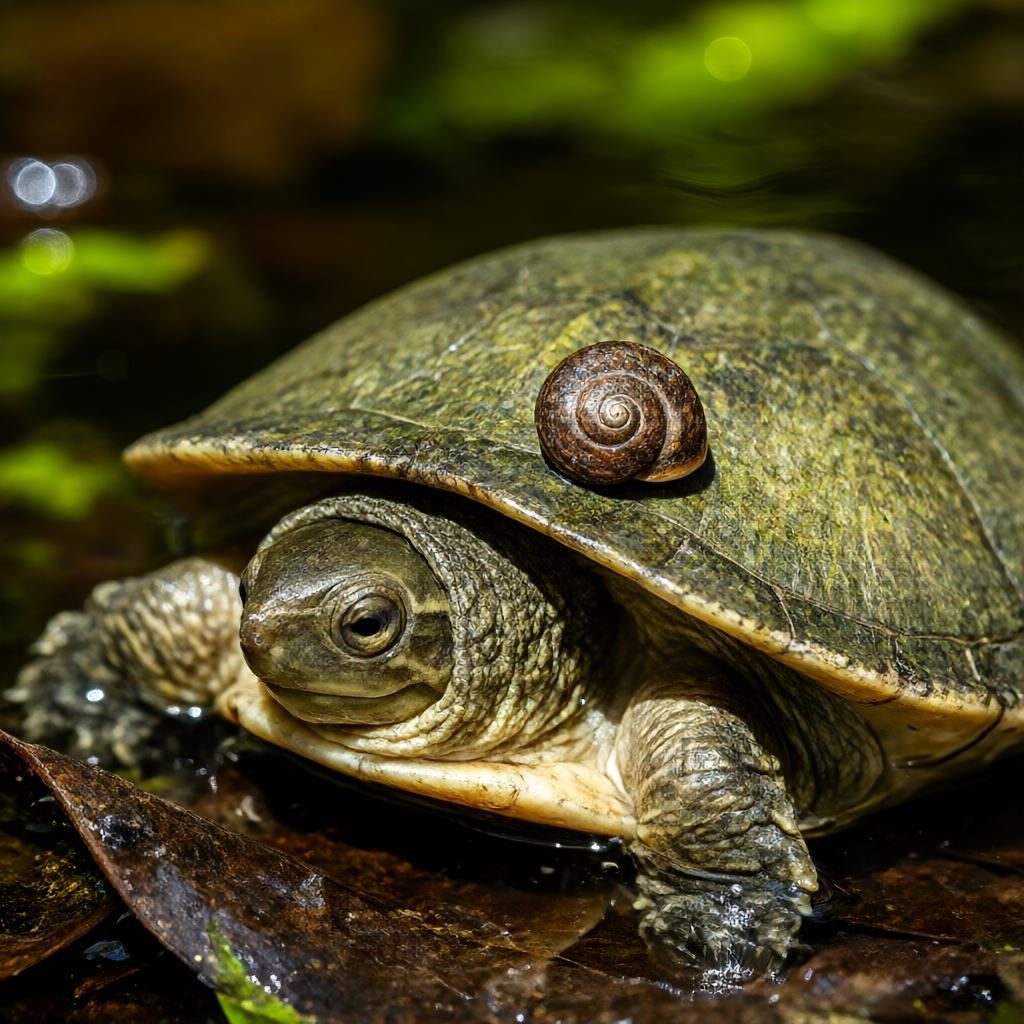
Nesting happens at the start of the wet season. A female digs a shallow hole in soft ground near the water. One large egg goes in, and it is huge for the size of the turtle. Because the egg is hard-shelled and buried in damp soil, it survives the floods that follow the first rains.
Incubation runs roughly three months. The hatchling emerges at night, when the ground stays wet. Nothing is known about the mother’s later care, and none is expected.
Least Concern
Conservation
Red List status is Least Concern. Its range stays vast and the numbers appears stable. Because the turtle hides in flooded forest, it escapes most collection.
Deforestation removes the leaf litter it depends on. Gold mining silts the streams, and that mud buries the shallow pools. The pet trade takes a number, though the species breeds in captivity.
River dams alter the flood cycle that creates its range. Surveys remain uneven, so the trend rests on range estimates.
Side by side
How It Compares
| Trait | Twist-necked Turtle | Matamata |
|---|---|---|
| Family | Chelidae | Chelidae |
| Shell | 15-18 cm, flat | up to 45 cm, ridged |
| Head | orange-red, striped | flat and fringed |
| Prey | insects and tadpoles | fish, taken by suction |
| Range | Amazon and Orinoco | Amazon and Orinoco |
| Rating | Least Concern | Least Concern |
Common misreadings
What People Get Wrong
- Not a turtle that pulls its head in. The neck folds sideways. The skull is too large for the opening, so the animal lays its head against the shell edge instead of drawing it back.
- Not a fast swimmer. It walks the bottom. Feeding happens by suction in shallow water, and the animal works along the mud rather than chasing anything through open current.
- Not a turtle that lays many eggs. One egg per clutch. That single egg is huge for the body size, and the shell hardens enough to survive damp soil through three months of incubation.
Going further
Sources and Further Reading
Quick hits
Five things to remember
- The head is too large to pull inside the shell, so it folds sideways and rests against the edge.
- The single egg is about the size of a small hen’s egg, which is enormous for a turtle this size.
- Its flat shell lets it press under sunken logs, where hunters cannot follow.
- The bright head may work as a lure, since small fish approach the orange shape.
- A hatchling leaves the nest at night, and it reaches water within hours.