 By st20113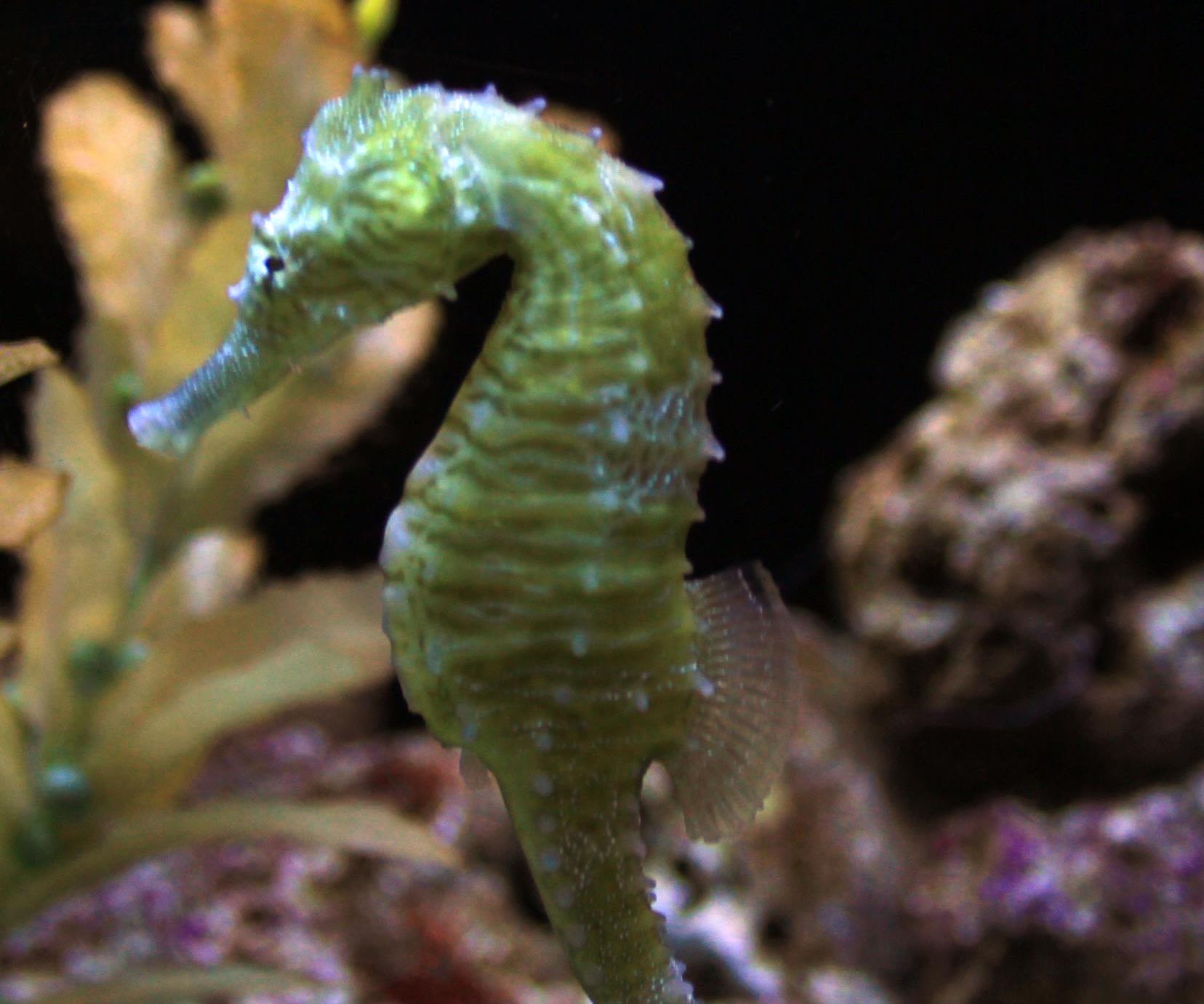
Introduction
The seahorse (genus Hippocampus) is one of the ocean’s most unusual fishes, named for its horse-like head and known for its upright swimming posture, curled prehensile tail, and the remarkable fact that it is the male who becomes pregnant. Found in shallow tropical and temperate waters worldwide, seahorses are masters of camouflage, changing color to blend with seagrass, coral, and seaweed.
Though small and gentle, seahorses are part of the same marine world ruled by giants such as the great white shark, which patrols coastal waters where seahorses drift, though the two never interact directly given their vastly different sizes and habits.
Taxonomy and Classification
Seahorses belong to the family Syngnathidae, which also includes pipefish and seadragons, and to the genus Hippocampus, from Greek words meaning horse and sea monster. More than 45 species are recognized, ranging from the tiny 1.5-centimeter dwarf seahorse to species exceeding 30 centimeters.
They are bony fish, not invertebrates, and are most closely related to pipefish, with which they share the trait of male pregnancy. Genetic studies help distinguish the many similar-looking species that are easy to confuse in the wild.
Physical Characteristics
Seahorses have a head angled at right angles to the body, a long snout, and eyes that move independently to scan for prey. Instead of scales they have bony plates, and their tail is a grasping organ used to anchor to vegetation. They lack a caudal fin and swim poorly, using a small dorsal fin to flutter in place.
Males possess a brood pouch on the belly where females deposit eggs. Their color and skin filaments help them vanish among plants, and some species can change hue to match their surroundings or signal mood.
Habitat and Distribution
Seahorses live in seagrass beds, mangroves, coral reefs, and estuaries across the globe, from warm tropical seas to temperate coasts. They prefer shallow, sheltered water where they can cling to plants and avoid strong currents.
They are found in the Atlantic, Pacific, and Indian Oceans, with especially high diversity in the Indo-Pacific. Because they are weak swimmers, they depend on habitat structure for survival and are vulnerable to habitat loss.
Diet and Behavior
Seahorses are ambush predators that feed on tiny crustaceans such as copepods and amphipods, sucking them up through the snout like a straw. They must eat almost constantly because food passes through their simple digestive system quickly.
They are generally solitary or found in monogamous pairs, greeting each other each morning with a dance of intertwined tails and color changes. Males carry and protect the developing young, a rare reversal of parental roles in the animal kingdom.
Reproduction and Life Cycle
Reproduction is unique: the female transfers eggs into the male’s brood pouch, where he fertilizes and incubates them for two to four weeks. He then gives birth to fully formed, miniature seahorses, releasing hundreds to thousands at a time.
The young are independent and face high mortality, with only a small fraction surviving to adulthood. Seahorses can breed multiple times per year, which helps offset the heavy losses among offspring.
Conservation Status
Many seahorse species are listed as Vulnerable or Endangered due to overharvest for traditional medicine, the aquarium trade, and accidental capture in trawl fisheries. Habitat destruction of seagrass and mangroves further threatens them.
International trade is now regulated under CITES for most species, and protected areas help safeguard key habitats. Because they are indicator species, their health reflects the condition of coastal ecosystems.
Fun Facts
Male seahorses experience pregnancy complete with hormonal changes and nutrient transfer to the embryos, a role unmatched among other fish. Some species can change color in seconds to match surroundings or court a mate.
Each seahorse has a unique coronet of bony plates on its head, much like a fingerprint. On land, the coastal skies above seahorse habitat are sometimes crossed by the Blue Jay, a bright corvid that flashes through trees far from the water, a reminder that the same shores host both a tiny drifting fish and a loud, clever bird.
[…] seahorse shares comparable ocean habitats with this […]