 By st20113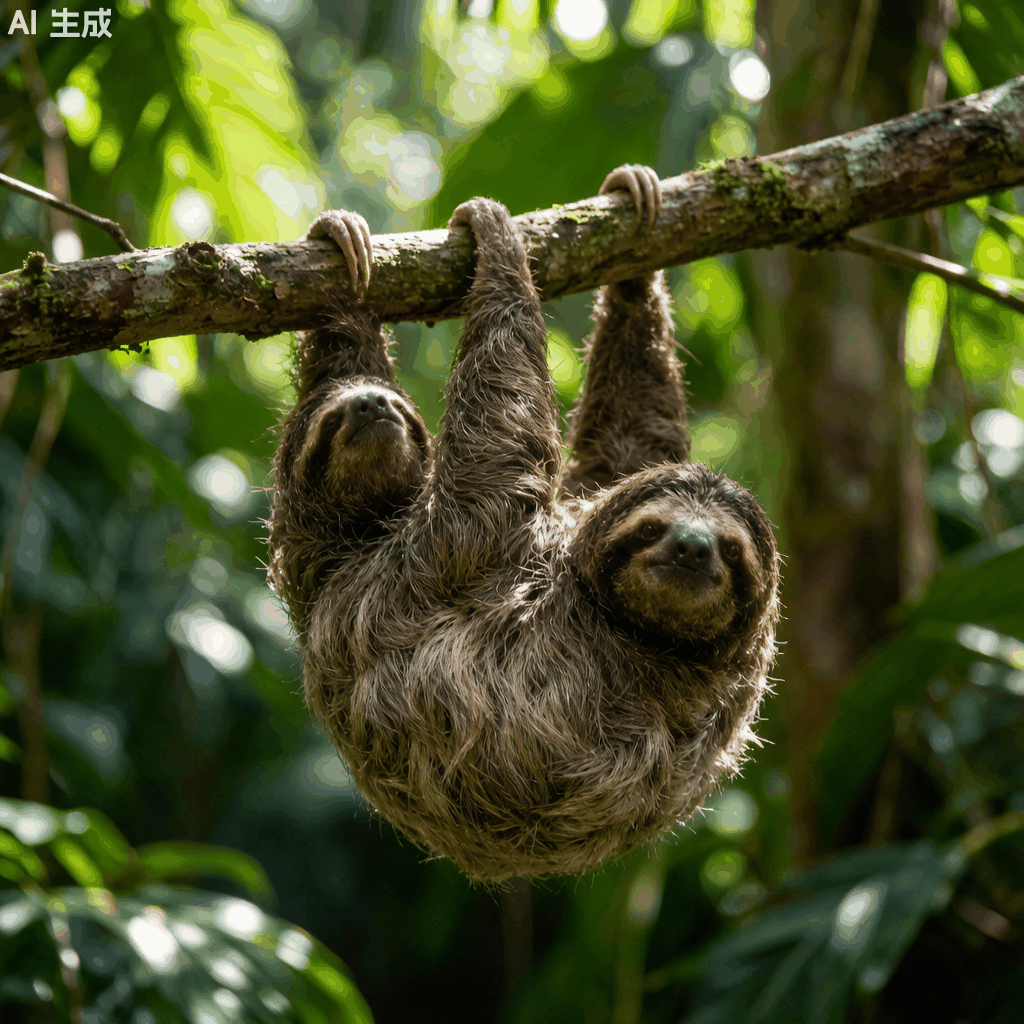
Introduction
The Linnaeus’s two-toed sloth, scientifically named Choloepus didactylus and also called the southern two-toed sloth, is a medium-sized mammal that spends almost its entire life suspended upside down in the canopy of Central and South American rainforests. Relatives of this animal include some of the most widespread terrestrial carnivores, such as the gray wolf, yet the two-toed sloth has adopted one of the most leisurely lifestyles of any mammal on Earth. Sloths are famous for their extraordinarily slow movements, which help them conserve energy on a diet that is low in calories. Despite their sluggish reputation, these animals are surprisingly strong swimmers and possess a suite of remarkable adaptations that allow them to thrive in the trees. Their fur hosts a miniature ecosystem of algae, fungi, and insects, giving the coat a greenish tint that serves as camouflage among the leaves. Active mainly at night, the Linnaeus’s two-toed sloth is a solitary creature that rarely descends to the ground except to defecate or to move between trees. Its gentle face, with a perpetual smile-like expression, has made it a beloved symbol of tropical wildlife. Understanding this species offers a window into the slow-but-steady evolutionary strategy of the order Pilosa, which also includes anteaters.
Taxonomy
Choloepus didactylus belongs to the class Mammalia, order Pilosa, family Megalonychidae. The genus name Choloepus derives from Greek words meaning “lame foot,” a reference to the animal’s awkward terrestrial gait, while the species epithet didactylus means “two fingers,” pointing to the two claws on each front limb. The species was first formally described by Carl Linnaeus in 1758, which is why it carries his name. Within the sloth lineage, there are two main families: the two-toed sloths (Megalonychidae) and the three-toed sloths (Bradypodidae). Although both groups share a superficial resemblance, genetic evidence shows they evolved their slow, arboreal habits independently, a classic example of convergent evolution. The Linnaeus’s two-toed sloth is one of two species in its genus, the other being the Hoffman’s two-toed sloth. Fossil relatives of modern sloths included enormous ground sloths that once roamed the Americas, some reaching the size of elephants. Today’s tree-dwelling sloths are the greatly reduced descendants of these giants, retaining only a fraction of that ancient diversity.
Physical Characteristics
Adult Linnaeus’s two-toed sloths typically weigh between four and eight kilograms and measure roughly fifty to seventy centimeters in body length, with a short, often inconspicuous tail. Their most distinctive feature is the presence of only two elongated claws on each front foot, which they use like hooks to grip branches securely. The hind feet bear three claws. The body is rounded and the limbs are long, with the arms noticeably longer than the legs, an adaptation for hanging and reaching. Coarse outer guard hairs overlay a softer undercoat, and the fur grows in the opposite direction to most mammals, from belly to back, so that rain runs off while the animal hangs upside down. A symbiotic green algae living in the hair gives many individuals a mossy appearance that blends with foliage. The head is round with a flattened face, small ears hidden in the fur, and large dark eyes. Sloths have poor eyesight and hearing but an excellent sense of smell and touch. Their body temperature is unusually variable for a mammal, fluctuating with the surrounding environment, which is part of their energy-saving strategy.
Habitat and Distribution
The Linnaeus’s two-toed sloth inhabits the humid tropical and subtropical forests of northern South America, ranging across Venezuela, the Guianas, Brazil, Colombia, Ecuador, Peru, and parts of Bolivia. It favors primary and secondary rainforests, mangrove swamps, and occasionally cacao and coffee plantations where tall trees remain. Unlike some relatives that prefer higher elevations, this species is largely a lowland dweller, thriving below about one thousand meters in areas with a continuous canopy. The sloth depends on a connected forest because it moves between trees by careful bridging rather than by walking on the ground, where it is extremely vulnerable. Fragmentation of forest by logging, agriculture, and roads therefore poses a serious challenge. Within its home range, an individual may occupy a territory of several hectares, though territories often overlap. The animal spends the vast majority of its time in the upper and middle canopy, descending to the forest floor roughly once every week to relieve itself at the base of a favorite tree.
Diet and Behavior
This sloth is primarily a leaf-eater, but it is more of an omnivore than its three-toed cousins, also consuming fruits, flowers, buds, twigs, and occasionally insects, small vertebrates, and bird eggs when opportunity arises. Digestion is exceptionally slow, with a multi-chambered stomach hosting bacteria that ferment tough plant cellulose over the course of days. To compensate for this low-energy diet, the sloth moves at an almost glacial pace, often traveling less than forty meters in a full day. Its metabolic rate is among the lowest of any mammal, and it sleeps or rests for up to twenty hours daily. The two-toed sloth is mainly nocturnal, foraging and moving under cover of darkness. On the ground it is nearly helpless, but in water it swims with a confident dog-paddle using its long limbs. Sloths are generally solitary, communicating through soft vocalizations, scent marking, and occasional maternal contact. Their slowness is a defense: by moving little and blending in, they avoid detection by predators such as harpy eagles, jaguars, and large snakes.
Reproduction
Linnaeus’s two-toed sloths do not have a strict breeding season and may mate at any time of year in the wild, though births often cluster in certain months depending on local conditions. After a gestation period of roughly ten to eleven months, the female gives birth to a single offspring, though twins are occasionally recorded. The newborn is remarkably precocial for a sloth, born with eyes open and claws already functional, and it clings to the mother’s belly or back from the first hours of life. The mother carries the young for several months, during which time it learns to select leaves and to navigate the canopy by observation. Weaning occurs gradually, often around five to six months, but the juvenile may remain near its mother for up to a year. Sexual maturity is reached at about two to three years of age. In captivity, these sloths have lived for more than thirty years, while wild individuals likely have shorter lifespans owing to predation and environmental hazards. The slow reproductive rate means populations recover only slowly from losses.
Conservation Status
The International Union for Conservation of Nature currently lists the Linnaeus’s two-toed sloth as a species of Least Concern, reflecting its broad range and apparently stable populations across much of the Amazon basin. However, this assessment masks serious regional pressures. Deforestation for cattle ranching, soy cultivation, mining, and infrastructure has eroded and fragmented its habitat, isolating populations and increasing mortality from road strikes and dog attacks near forest edges. The illegal pet trade also removes animals from the wild, often with high death rates in transit. Because the species is difficult to survey in the dense canopy, precise population trends remain uncertain, and some local populations are clearly declining. Conservation strategies emphasize the protection of continuous forest corridors, stricter enforcement against wildlife trafficking, and community education programs that discourage keeping sloths as pets. Ecotourism, when well managed, can provide economic incentives to preserve intact forest. Continued monitoring is essential to detect declines before they become severe, especially as climate change alters the composition of rainforest ecosystems.
Fun Facts
Despite their reputation for laziness, two-toed sloths are surprisingly good swimmers and may drop into rivers to cross between forest patches. Their fur is home to an entire hidden world: algae, mites, beetles, and moths that live nowhere else, making each sloth a walking micro-ecosystem. The green tint of their coat is not pigment but living algae, providing camouflage that helps them vanish among leaves. Sloths can rotate their heads nearly ninety degrees thanks to extra neck vertebrae, an unusual trait among mammals that lets them scan for danger without moving their bodies. They descend to the ground to defecate only about once a week, a risky routine that scientists still debate, with theories ranging from fertilization of favored trees to communication. A sloth’s grip is so secure that a sleeping individual can remain hanging from a branch even after death. With a metabolic rate roughly half that of a typical mammal their size, they have turned slowness into a survival art form found almost nowhere else in the animal kingdom.