 By Iris
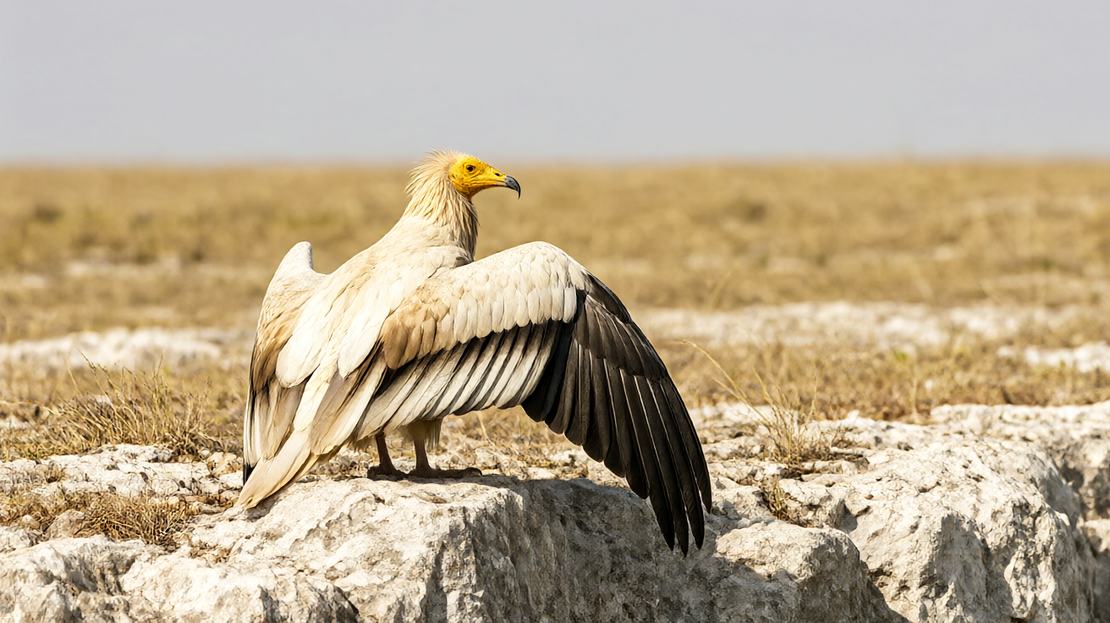
Neophron percnopterus | Egyptian Vulture
Species Profile · Accipitridae
Egyptian Vulture
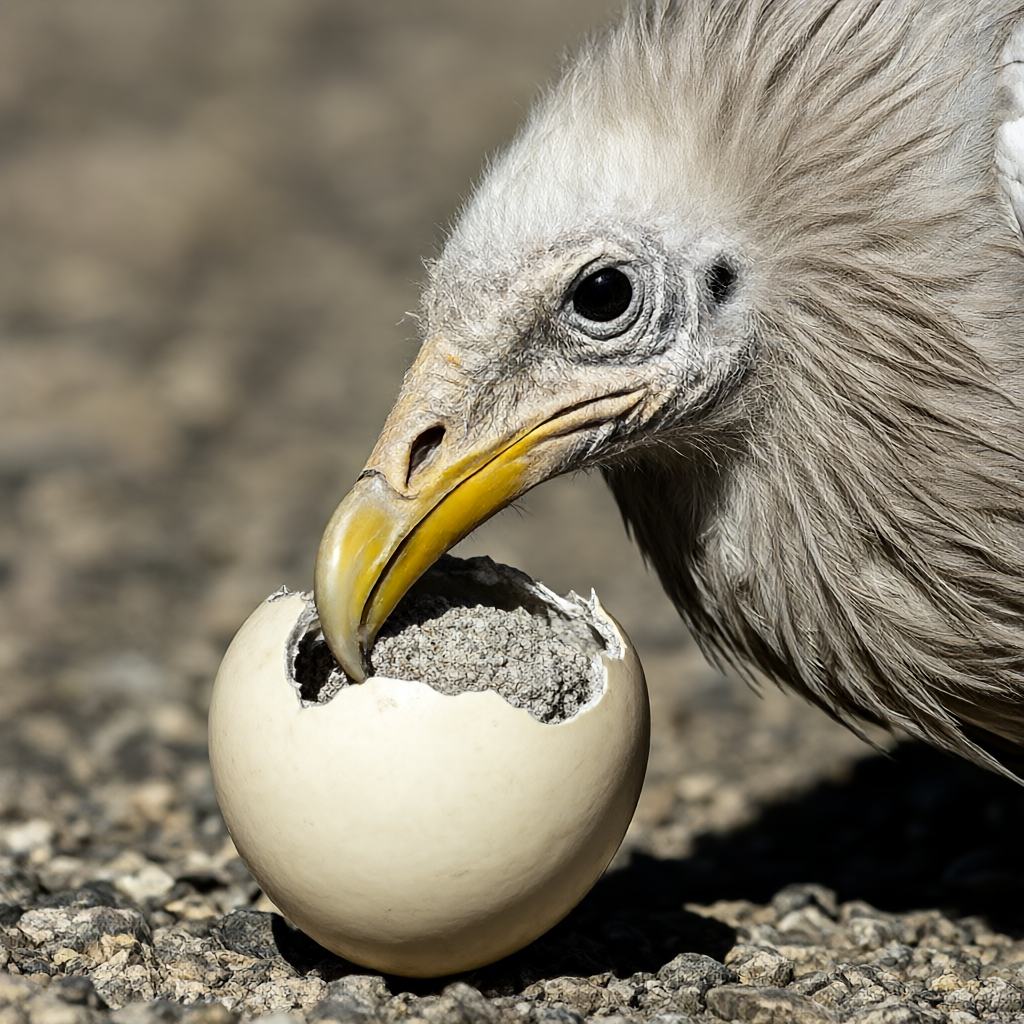
A small white vulture cracks an ostrich egg with a stone, and then eats what runs out.
Endangered
Length
Wingspan
Weight
Clutch
Fledge
Rating
The Egyptian Vulture
The vulture that throws stones
A small white vulture drops a stone onto an ostrich egg. It walks up and swallows what spills out. Few birds make tools, and this one does.
Carrion feeds it, though a stone sometimes does more. Bare yellow skin covers the whole face, because feathers would mat with blood. The rest of the bird is white, with black flight feathers that show in flight.
Europe holds a few thousand pairs, and the number keeps falling. Yet the species still ranges from Spain to India and down through Africa. Although the bird is small for a vulture, it travels farther than most of its larger relatives each year.
Family tree
Accipitridae, the family it shares with eagles
Its proper name is Neophron percnopterus, the only member of its genus. Old World vultures share a family with eagles and hawks. Three races are recognised across the range, and each one differs in size and shade.
Birds of southern Europe and Asia run largest and palest, with a longer wing than the others. Indian birds are smaller and darker, and they carry a shorter wedge shaped tail. A third race holds on in the Canary Islands, where it is now rare.
Because the genus is ancient, no close relative survives beside it. Three races are recognised, and the differences between them follow geography rather than any clear change in habit.
Face, wings and tail
How to tell one
Adults measure 54 to 70 cm from bill to tail. Wings span 150 to 170 cm. That is modest for a vulture. Weight falls between 1.6 and 2.4 kg. Females run slightly heavier than males, though the gap is small.
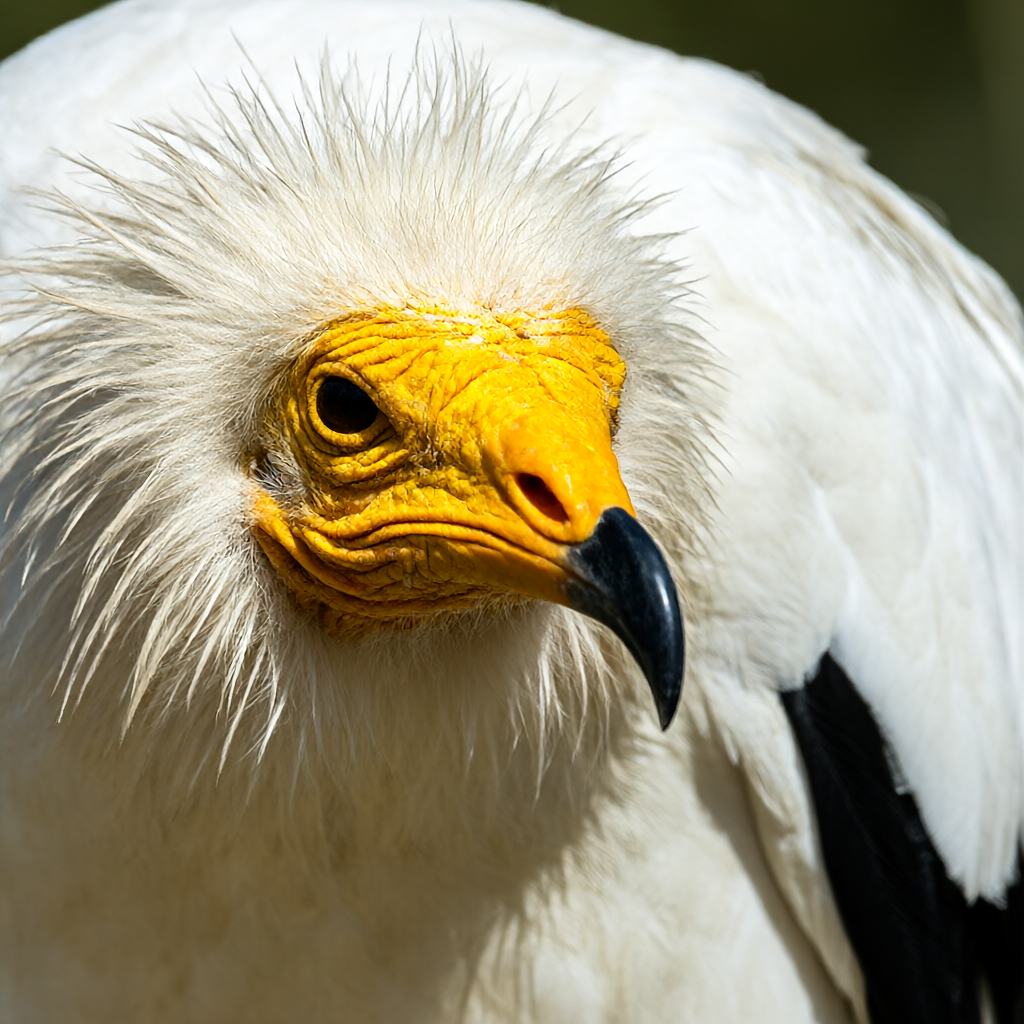
White plumage covers the body, and the flight feathers are black. On a soaring bird those black tips read as a dark trailing edge. The head looks bald, yet fine down covers most of it. Skin around the eye and bill stays bare and bright yellow. That bare skin is easy to clean, since a carrion eater cannot groom a feathered face.
A wedge shaped tail steers the bird on long glides. Young birds start brown, and take five years to reach full white. A wedge shaped tail and broad wings let the bird hang on rising air without a single wingbeat for minutes at a time.
1
2
3
Cliffs and farmland
Where it lives
Open country suits it best, with cliffs for nesting. Pairs choose ledges, caves and old ruins, and they often nest above a river. Dry hills, farmland and steppe all hold birds, provided stock grazes nearby.
In winter northern breeders cross to Africa. Thousands funnel through the Strait of Gibraltar each autumn. Because that crossing is long, birds wait for strong thermals before setting out over the water.
Villages also attract them, since a rubbish heap is food. The bearded vulture nests on the same cliffs, though it drops bones rather than stones.
Eggs, dung and bone
What it eats
Carrion makes up most of the diet. Bones, skin and afterbirth get eaten too. Small prey falls to a quick grab, and eggs are taken whole.
An ostrich egg is too thick for any beak. So the bird throws stones at the shell, and a bird that learns the trick keeps it for life. Chicks learn by watching adults, and the habit spreads locally.
Dung also feeds it, since the seeds inside the droppings pass through the gut undigested. A dead rhinoceros feeds a flock for days, though such carcasses are now rare.
One chick survives
The breeding cycle
A pair keeps one nest site for years. The nest is a platform of sticks lined with wool and rags. Two eggs is the usual clutch, laid in March or April.
Incubation lasts 42 days. Both birds take turns. Chicks hatch covered in white down.
The older chick takes most of the food, and the younger one often dies within its first two weeks. Fledging takes about 75 days, then the young follow their parents south.
Poison and power lines
Conservation
The Red List calls the species Endangered worldwide. Numbers in Europe have fallen for decades. Poisoning drives most of the decline, from baits set for other animals.
Veterinary drugs in carcasses kill birds that feed on livestock. Power lines also take a toll, because young birds fly into the wires on their first migration. Cleaner rules on carcass disposal have cut the food supply across Europe.
Captive breeding and feeding stations now prop up a few pairs. Canary Island birds number under 40 pairs, and every one is watched. Although the bird eats what others leave behind, its decline tracks the health of whole farming landscapes.
Side by side
How It Compares
| Trait | Egyptian Vulture | Osprey |
|---|---|---|
| Family | Accipitridae | Pandionidae |
| Length | 54-70 cm | 52-60 cm |
| Feeding | carrion, eggs and dung | fish taken from the surface |
| Plumage | white with black flight feathers | dark brown above, white below |
| Nest | ledge of a cliff or ruin | big stick nest on a dead tree |
| Rating | Endangered | Least Concern |
Common misreadings
What People Get Wrong
- Not carrion alone. It also takes eggs, dung and insects from open ground. The bird will rob the nests of smaller species too, and a pair with chicks feeds them on whatever the day provides.
- Pure instinct? Young birds watch adults at work and copy the habit. The trick spreads through a local population by imitation, and a bird that learns it keeps the habit for life.
- Sacred, not safe. Poison baits and power lines have cut European numbers for decades. Ancient Egypt protected the bird, yet the Red List now calls it Endangered, and the fall tracks the health of whole farming landscapes.
Going further
Sources and Further Reading
Quick hits
Five things to remember
- It cracks ostrich eggs with stones.
- Ancient Egyptians held it sacred.
- It was once called the Pharaoh’s chicken.
- Young birds stay brown for five years.
- It crosses at Gibraltar in thousands.