 By Iris
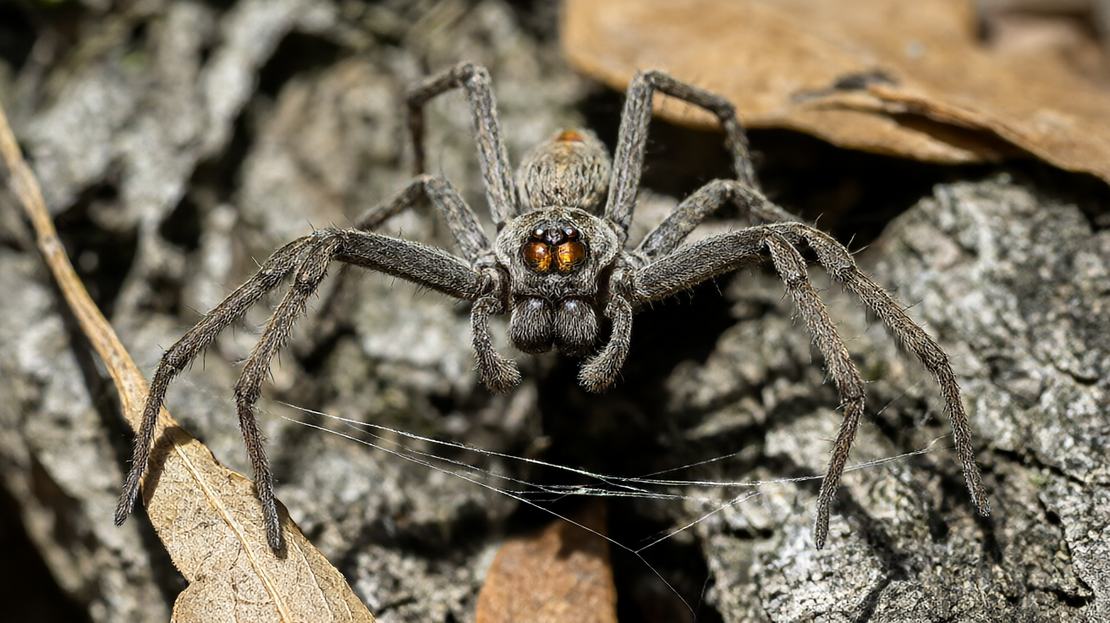
Deinopis spinosa | Net-casting Spider
Species Profile · Deinopidae
Net-casting Spider
A spider hangs head down and holds a small net.
Least Concern
Body
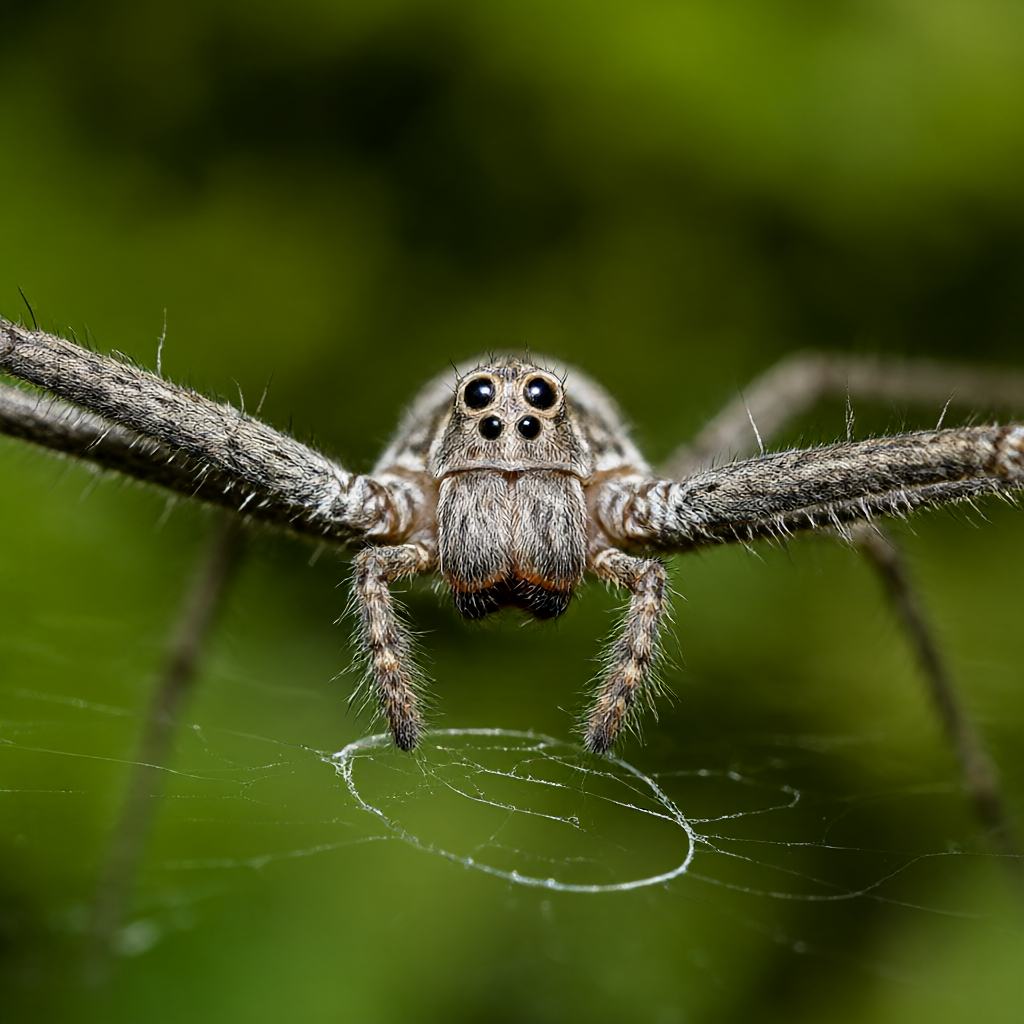
Rear eyes
Net
Hunt
Range
Rating
The Net-casting Spider
A spider that throws its web
A spider hangs head down and holds a small net. Its eyes run enormous, and they gather light at levels no camera manages. Nothing about the animal looks like a web builder, since it carries the web.
Most spiders wait in a web, yet this one throws the silk. Silk measures a few centimetres, and the spider stretches it between its legs. The net-casting spider hunts at night in the southeastern United States, and it catches prey by dropping a stretchy net over it.
Family tree
Deinopidae, the ogre-faced spiders
Deinopis spinosa sits in the family Deinopidae. Its relatives are the ogre-faced spiders, and all of them hunt with a net. Its name joins two Greek words, where deinos means terrible and opis means face. Spinosa means spiny, since the legs carry coarse hairs.
Workers place the family near the orb weavers, though the hunting method differs completely. A dozen relatives live in the tropics, and only a few reach the United States. One neighbour, the Wasp Spider, builds an orb and waits instead of throwing silk.
Huge eyes, long front legs
How to tell one
Adults measure 15 to 25 mm. Rear eyes run huge, and the retina works like a night sensor. Its front legs stay long, and the spider holds the net with them.
Colour runs brown and grey. Body colour copies a twig. Males carry smaller bodies, though their legs grow proportionally longer.
A light sensitive layer breaks down each dawn, and the eye rebuilds it by dusk. Venom stays weak, since the net does the catching.
1
2
3
Low perch over a path
Where it lives
Woodland and scrub hold the species in the southeast. Hunting happens at night, and the spider takes a position over a path. Its range runs from Florida to Texas, and most records come from warm counties where frost stays rare. Because the spider needs a clear drop zone, it hunts below a branch.
Daytime shelter matters. Because the animal hides as a stick along bark, it rarely gets found. Freezing winters limit the range, and the northern edge stays uncertain.
Moths and flies
What it eats
Moths and flies make up most of the catch. Beetles and crickets follow. The spider waits above a path, and it drops the net when prey passes. Because the net stretches, it covers prey wider than the spider itself, and nothing that size gets away.
A strike ends in milliseconds, and the legs pull the net tight. Nothing gets chased. Because the spider never leaves its perch, it must wait for prey to walk underneath.
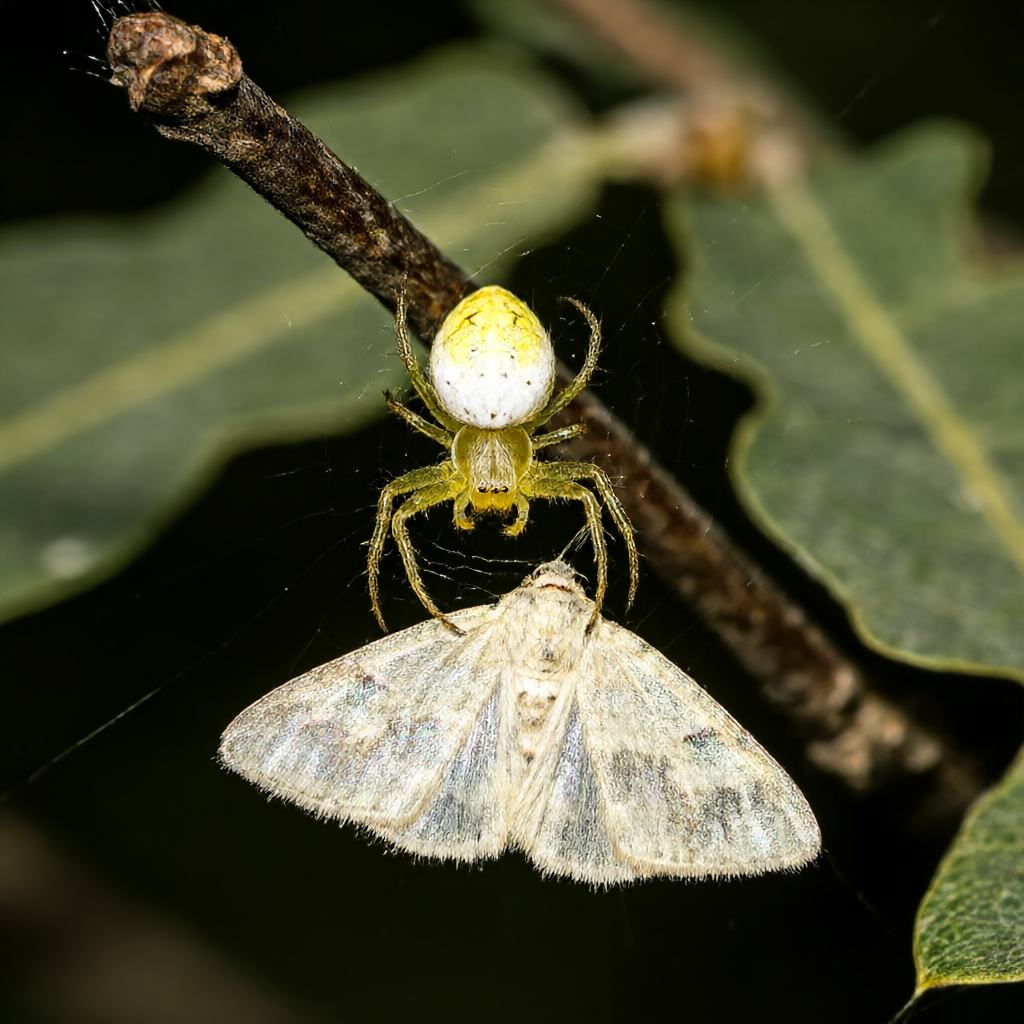
Suspended egg sac
The breeding cycle
A male approaches with caution, since females eat intruders. He plucks the silk, and the vibration tells her what he is. She lays eggs in a sac, and she suspends it on a thread, which keeps the clutch away from ants.
Because the sac hangs free, ants rarely reach it. Young hatch small, and they carry a net from the start. Males die soon after mating, though the female survives another season.
Insecticide
Conservation
The Red List calls the species Least Concern. Its range stays wide, and the habitat holds across the southeast, though nobody has counted the animals. Insecticide reduces prey, because moths vanish where spraying runs.
Light pollution matters, though the effect stays unmeasured. Because the spider hides by day, few people record it. Habitat loss takes the largest share, yet the species survives in gardens.
Side by side
How It Compares
| Trait | Net-casting Spider | Wasp Spider |
|---|---|---|
| Family | Deinopidae | Araneidae |
| Body | 15-25 mm | 10-15 mm |
| Web | thrown over prey | orb, kept in place |
| Eyes | enormous, night sensitive | moderate |
| Hunt | at night from a perch | day and night in the web |
| Rating | Least Concern | Least Concern |
Common misreadings
What People Get Wrong
- Not a web builder in the usual sense. The silk stays in the legs. Nothing gets strung between branches, because the spider holds a small rectangle of silk and drops it over whatever walks underneath.
- Not a spider that sees badly at night. The rear eyes run huge. A light sensitive layer breaks down each dawn and rebuilds by dusk, which gives the animal night vision no camera matches.
- Not a dangerous bite. The venom stays weak. The net does the catching, so the bite only needs to hold a moth, and a person barely notices it.
Going further
Sources and Further Reading
Quick hits
Five things to remember
- Its net can stretch to three times the spider’s reach, and it snaps shut in a fraction of a second.
- The eye membrane breaks down at dawn, and the spider rebuilds it before dusk.
- A hunting spider holds the net open with four legs.
- It looks like a dead twig during the day, and it barely moves.
- Its venom does little to people, and a bite rarely breaks the skin.