 By st20113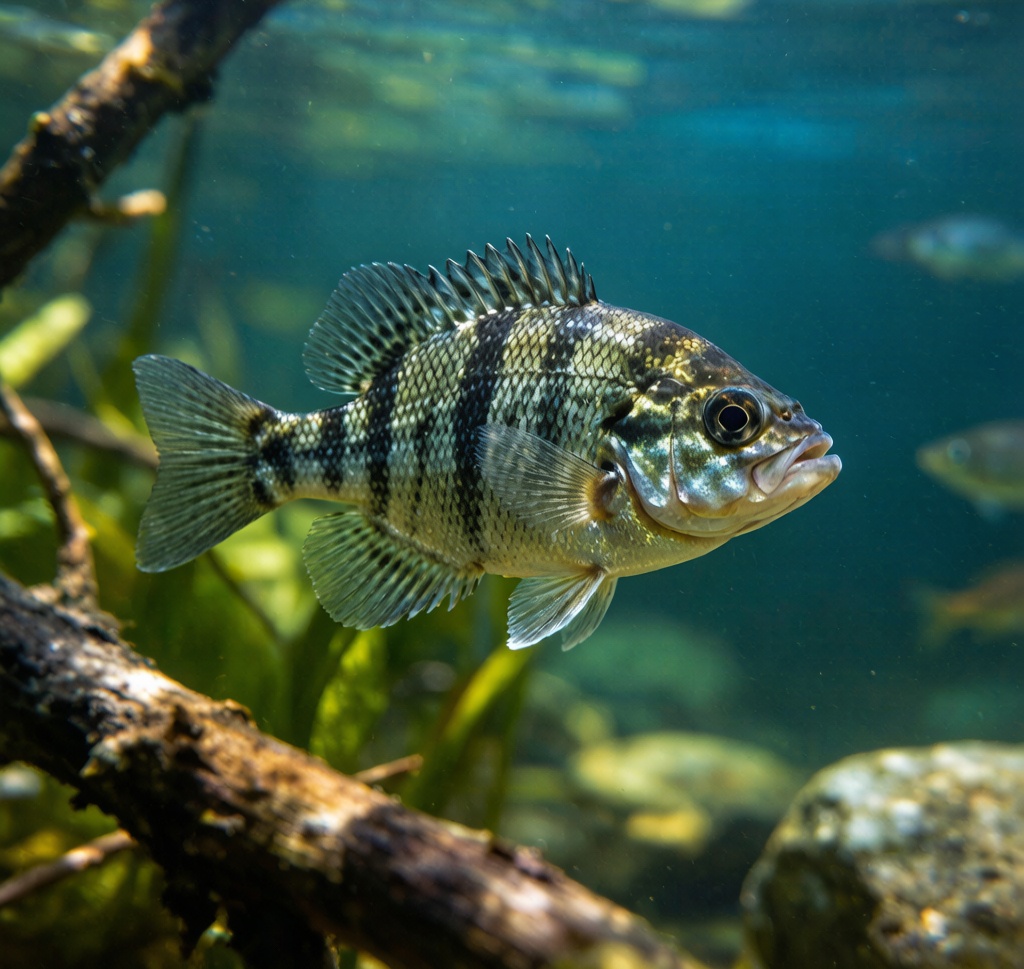
The white crappie (Pomoxis annularis) is a popular freshwater gamefish native to eastern and central North America, belonging to the sunfish family Centrarchidae. Known for its excellent table quality and sporting challenge to anglers, the white crappie is one of the most sought-after panfish across its native and introduced range. It is closely related to the black crappie (Pomoxis nigromaculatus), and the two species frequently hybridize where their ranges overlap. The crappie’s flattened, deep-bodied shape, large eyes, and impressive fighting ability when hooked make it a distinctive and rewarding target for fishermen. Native to the Mississippi River basin and Atlantic coastal states, the white crappie has been introduced to lakes and reservoirs throughout the continent, thriving in man-made impoundments with suitable structure and vegetation.
## Physical Characteristics
The white crappie is a laterally compressed, deep-bodied fish with a profile that is more elongated and less rounded than its close relative the black crappie. Its most distinctive feature is its tall dorsal fin — actually two connected fins: an anterior spiny section with six to eight spines and a posterior soft-rayed section — which gives the fish a sail-like profile. Coloration is silvery-white to olive-green on the back and sides, overlaid with five to eight distinct vertical dark bars that extend from the dorsal surface downward across the sides. The belly is white to silvery. The eye is notably large, an adaptation to low-light feeding conditions in vegetated or turbid waters. The mouth is large relative to body size, terminal and slightly upturned, reflecting its habit of feeding on smaller fish that it swallows whole. Maximum size is approximately 53 centimeters and 2.4 kilograms, though typical catches are considerably smaller.
## Habitat and Distribution
White crappie are native to the slow-moving, vegetated backwaters, sloughs, and oxbow lakes of the Mississippi River system from Pennsylvania to South Dakota and from Minnesota to Texas. They have been widely introduced throughout eastern and central North America and now inhabit most major river systems and reservoirs in the continent. Preferred habitat includes standing or slowly flowing water with abundant submerged vegetation, standing timber, fallen logs, or man-made structures such as pilings and riprap. These features provide both ambush hunting sites and protection from predators. White crappie are more tolerant of turbid water and warmer temperatures than black crappie, allowing them to colonize a wider range of habitats.
## Diet and Feeding
The white crappie is an opportunistic carnivore whose diet shifts throughout its life. Fry feed primarily on zooplankton and tiny aquatic insects, transitioning to larger invertebrates as they grow, and eventually to a predominantly fish-based diet as adults. Adult white crappie are ambush predators, lying motionless in the shadows of submerged vegetation or structures, then darting forward to engulf small prey — primarily small fish including minnows, shad, and juvenile sunfish — in their large, upturned mouth. They are crepuscular feeders, being most active during dawn and dusk when they move into shallower water to hunt. Their large eyes provide excellent low-light vision, enabling them to locate prey in the dim conditions of heavily vegetated waters.
## Spawning and Life History
White crappie spawn in spring when water temperatures reach approximately 16 to 20 degrees Celsius. Males construct shallow nests — simple depressions cleared from substrate — in one to four meters of water, often adjacent to submerged vegetation or other structure. The female deposits between 3,000 and 30,000 eggs depending on her size, which the male guards aggressively until hatching approximately three days later. Fry remain in a dense school near the nesting site for several weeks before dispersing. Sexual maturity is reached in one to two years, and maximum lifespan is approximately eight to ten years. Like other sunfish, white crappie are known for their relatively slow growth rates in northern populations and faster growth in southern waters.
## Angling Significance
White crappie is one of the most popular panfish targets in North America. Ice fishing for crappie in northern states is a major winter recreational activity, and open-water fishing during spring spawning aggregations draws large numbers of anglers. Common techniques include using small jigs, minnows, and crankbaits fished under bobbers around submerged structure. Crappie populations in managed reservoirs benefit from size and creel limits that protect larger, older individuals — which produce disproportionately more eggs — to maintain sustainable fisheries.