 By Iris
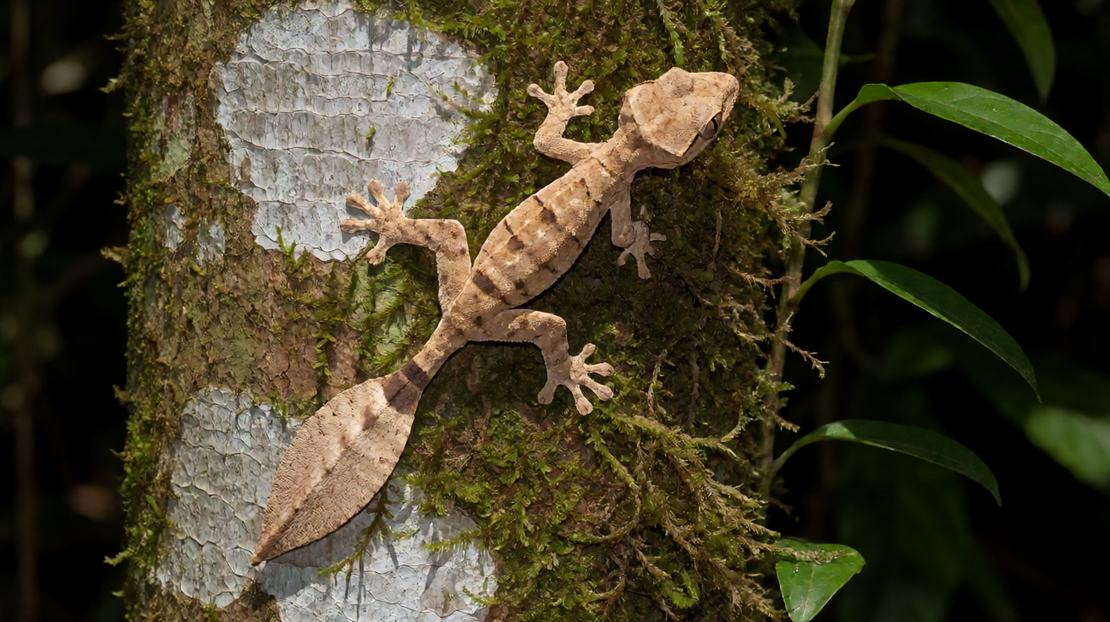
Uroplatus fimbriatus | Giant Leaf-tailed Gecko
Species Profile · Gekkonidae
Giant Leaf-tailed Gecko
A gecko that copies a sheet of bark, down to the lichen.
Least Concern
Length
Weight
Clutch
Hatch
Range
Rating
Thirty centimetres of bark
A lizard shaped like a leaf
Bark coloured skin and a flat tail let this gecko vanish against a trunk in full daylight. Length reaches 30 cm, which makes it the largest member of a family of small lookalikes. Body stays flat against the wood, and skin fringes along the jaw and legs soften the outline. Lowland rain forest in north eastern Madagascar holds the species.
Nosy Mangabe island carries a dense group, since the forest there stays whole. Insects and snails form the diet, and the gecko hunts after dark. Two eggs are glued to bark, and the female then leaves them. A threatened animal raises the tail and rocks, so the shape looks like a dry leaf in wind.
Few geckos grow so large, yet the species hides in plain sight. Forest clearance removes the trunks that the animal needs, although the global rating stays low.
Family tree
Gekkonidae, the typical geckos
Uroplatus fimbriatus sits in Gekkonidae, the family of typical geckos. Schneider named the species in 1797. Leaf tailed geckos form a genus of about twenty species, and most of them live on the same island.
The Leopard Gecko lives in Asian desert, while this animal keeps to wet forest. Both hunt insects at night, and both store fat in the tail. Their tails differ, though, because one is fat and banded and the other is flat and veined.
Genetic work places the group among the Madagascar geckos. No subspecies is named today. Old accounts called the animal the fringe gecko, and the name points straight at the flaps of skin.
Largest of the leaf tailed geckos
How to tell one
Length reaches 30 cm from snout to tail tip. Weight stays under 100 g. Skin looks grey brown, and lichen patches match the wet bark, so the whole outline disappears. Flat tail carries a notch at each side, and the outline copies a dead leaf on the forest floor.
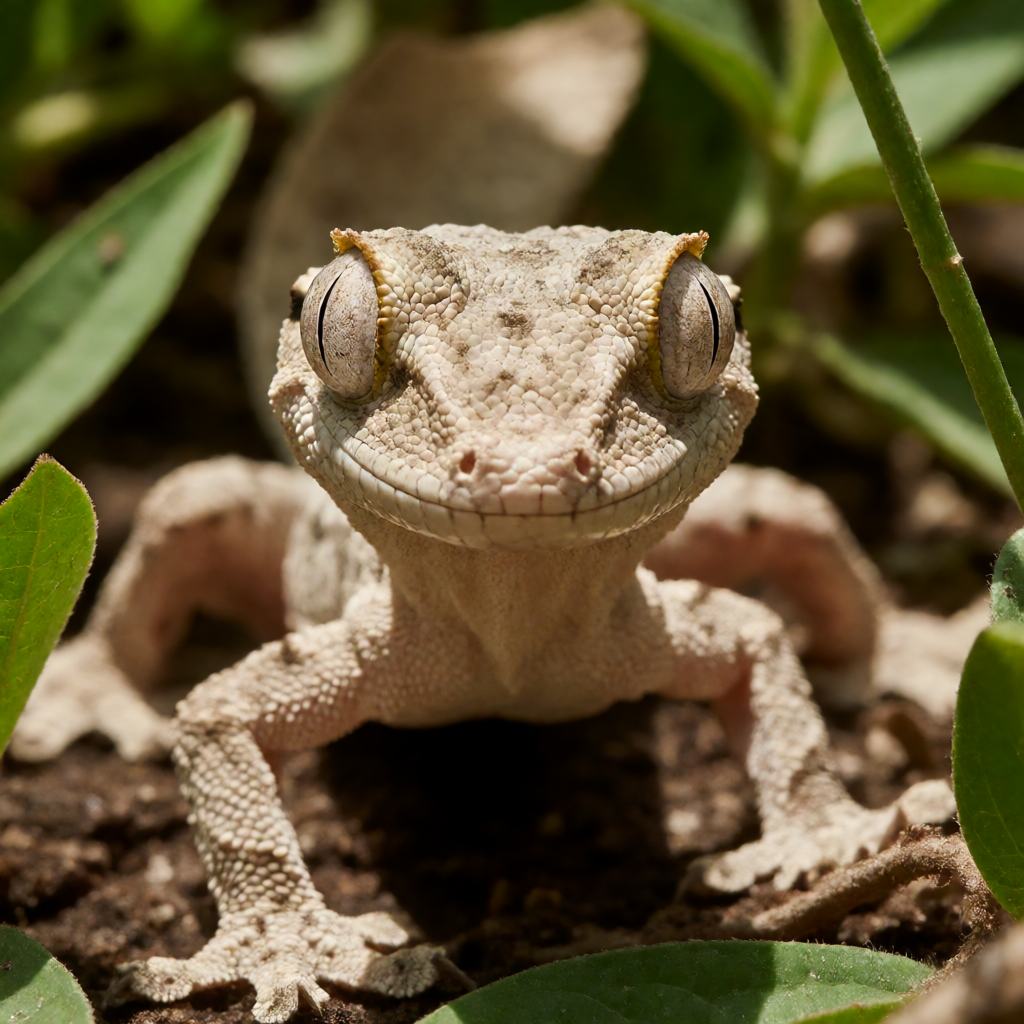
Fringes of skin run along the jaw, the legs and the tail. Eyes look large and lidless, and a slit pupil opens at night. Toes carry pads, so the animal grips smooth bark. Body flattens when the animal rests, and the shadow then disappears.
Skin sheds in patches. The flakes add to the ragged outline. Held still, the animal becomes nearly impossible to see, even from a metre away.
1
2
3
Flat body, lidless eyes
Where it lives
Lowland rain forest holds the species. Trunks of large trees give the resting place. Rough bark matters, since the animal needs a surface that matches its skin. Range covers the north east coast and the island of Nosy Mangabe.
Humidity matters. The forest keeps the air damp through the year. Canopy cover keeps the trunk cool in the afternoon. Clear cutting removes the trees that the animal needs.
Selective logging opens the canopy, so the trunk then dries in the sun. Cyclones fell trees, although the forest regrows around the gaps.
Wet forest and rough bark
What it eats
Insects form the base of the diet. Snails, spiders and small geckos fill the rest. Hunting happens after dark, when the animal moves onto thin branches. Hunting starts with the head down, although the animal will strike at anything that passes.
The jaws hold firmly, and the prey is swallowed whole. Feeding slows in cold weather. The animal cannot digest without warmth. Captive diets of crickets keep animals alive, although such food lacks snails.
Keepers add calcium, because growing bones need it. A gecko may eat once every few days and stay healthy.
Insects after dark
The breeding cycle
Mating happens in the wet season. Two eggs are laid, and they are glued to a trunk or a rock. Eggs stay hard, and they survive a dry spell, although a long drought may still kill them. Eggs hatch after two to three months.
Hatchlings look like small adults, and they hide on the same bark. Females may lay several pairs in a season. Parents take no care of the young, so most hatchlings vanish. Predators include snakes, birds and larger geckos.
Few young reach a second year, and the species breeds slowly. Every adult taken from a trunk leaves a gap that takes years to fill.
Least Concern, and forest bound
Conservation
IUCN lists the species as Least Concern. Range stays inside a small area, and the forest there keeps shrinking. Logging removes the large trunks that the animal needs. Slash and burn clears forest for rice and for cattle.
Collectors take animals for the pet trade, although the law bans export. Guarded areas cover part of the range, and Nosy Mangabe holds a reserve. Rangers patrol the reserve, and they count animals on marked trunks. Surveys happen at night, since the animal hides by day.
Keeping tall trees standing matters most, because a gecko cannot live on a sapling. One reserve now carries much of the species, and a single bad season could hurt the whole group.
Side by side
How It Compares
| Trait | Giant Leaf-tailed Gecko | Leopard Gecko |
|---|---|---|
| Length | up to 30 cm, with a flat leaf tail | about 20 cm, with a fat banded tail |
| Weight | under 100 g | 45 to 80 g |
| Home | lowland rain forest in Madagascar | dry rock and sand in southern Asia |
| Skin | grey brown with lichen patches and fringes | yellow with dark spots and soft scales |
| Food | insects and snails after dark | insects, taken at night |
| Clutch | two eggs glued to bark | two eggs in a burrow |
Common misreadings
What People Get Wrong
- Many people think the gecko changes colour to hide, yet its skin only matches bark.
- Some guides place the species across Madagascar, although the east coast holds it.
- A common claim says the tail grows back whole, yet the new one stays short.
Going further
Sources and Further Reading
Quick hits
Five things to remember
- The tail looks like a dead leaf.
- Skin fringes break up the outline.
- Two eggs are glued to bark.
- The species grows to 30 cm.
- Nosy Mangabe holds a dense group.