 By Iris
Tylototriton shanjing | Emperor Newt
Species Profile · Salamandridae
Emperor Newt
A dark newt with orange ridges and ribs that carry poison to the skin.
Vulnerable
Length
Weight
Eggs
Larvae
Range
Rating
Twenty centimetres of nerve poison
Warning colours on a wet bank
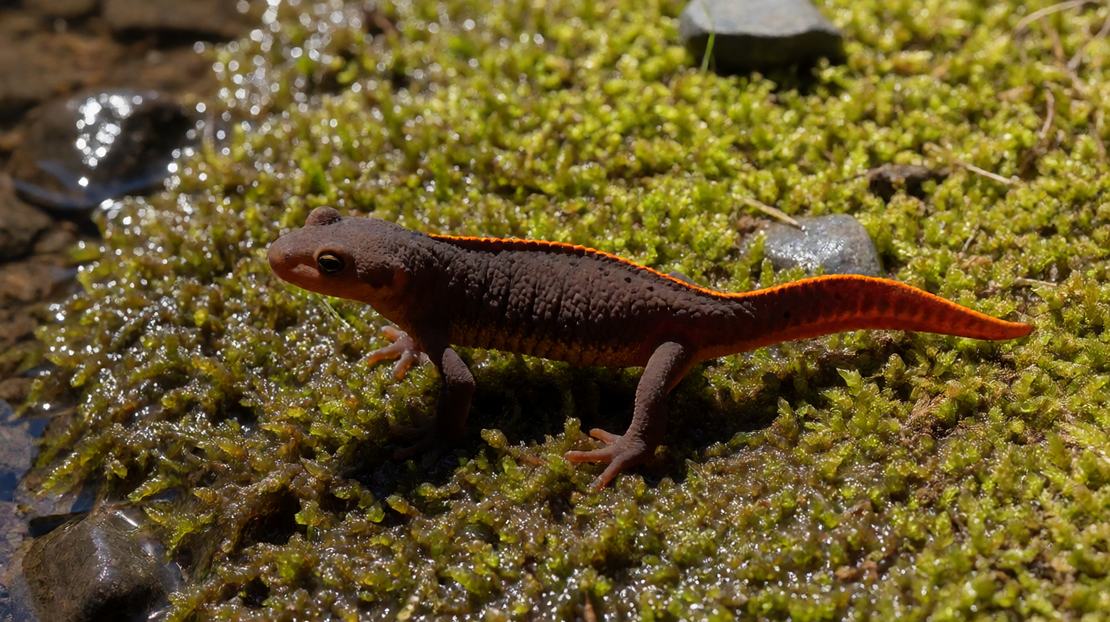
Orange ridges run along a body of dark brown skin. The colour warns other animals to keep their distance. An adult reaches 15 to 20 cm from head to tail. Few salamanders carry such bright marks.
Emperor newts live in the hills of Yunnan, and nowhere else in the world. Land between 1,000 and 2,500 m holds the species. Forest streams and wet banks make the best home, since the skin dries fast in open ground. Most of the year the animal stays on land.
Rain brings it out, and the newt then moves toward water. Seeing one means walking a wet hill path after dark, since the species hides by day.
Family tree
Salamandridae, the newts
Tylototriton shanjing sits in Salamandridae, the family of newts. The name means shining, which suits the orange skin. Some workers treat the animal as a form of the Himalayan newt, though the two sit far apart. Others keep it as a full species, and the debate continues.
Crocodile newts form the group, and all of them carry skin glands along the back. The Rough-skinned Newt lives in western North America, while this one stays in China. Both carry strong nerve poison, and both warn with bright skin. Their homes differ, though, since one breeds in cold lakes and the other in hill streams.
Genetic work supports a split from the neighbouring forms. No worldwide count exists, and the wild numbers stay unknown.
A name that means shining
How to tell one
Body length runs 15 to 20 cm. Weight stays under 30 grams. Skin is dark brown above, and the belly is a lighter brown. A ridge of orange skin runs along the back and the tail, and it stands out against the brown.
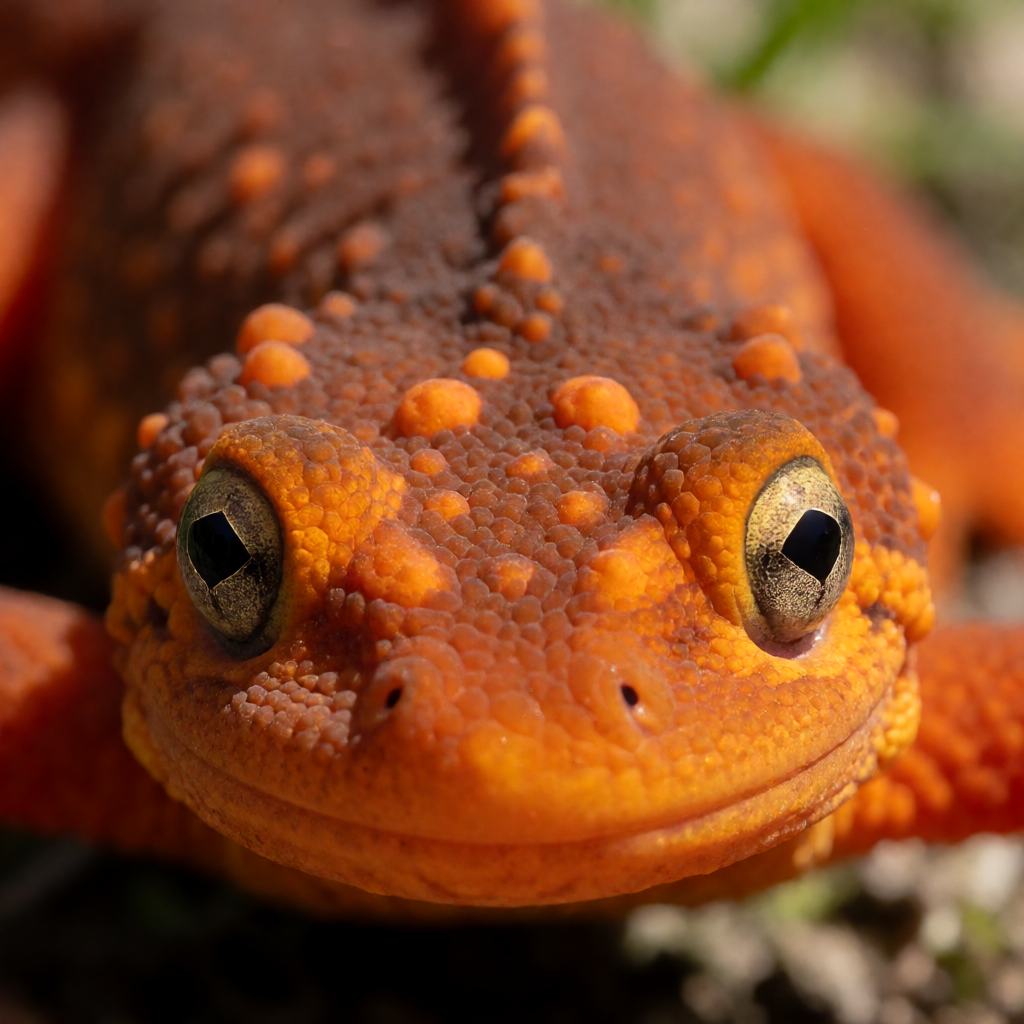
Warts on the head and the flanks carry glands filled with a strong nerve poison. Ribs end in sharp tips, and the tips press through the skin whenever a predator takes hold of the body. That trick puts poison straight into a predator’s mouth, which is why few animals try a second bite. Tails are flattened, which helps in water, and they also store fat for the winter.
Legs are short and strong, and the toes grip wet rock. Females grow heavier than males, especially before breeding.
1
2
3
Ribs that carry poison
Where it lives
Hill forest holds the species through most of its range. Records come from western and central Yunnan. Streams with slow water and mossy banks suit it best, because larvae need still water. Tea plantations and farm edges also carry animals.
Leaf litter gives cover through the dry months. Breeding pools sit beside quiet water. Water must stay clean, since silt smothers both the eggs and the larvae. Winter cold slows the animal, and it then hides deep in litter until the rains return.
Forest loss removes both cover and breeding sites. A single valley may hold a group, and the groups rarely mix because ridges and dry slopes block the way.
Mossy streams in the hills
What it eats
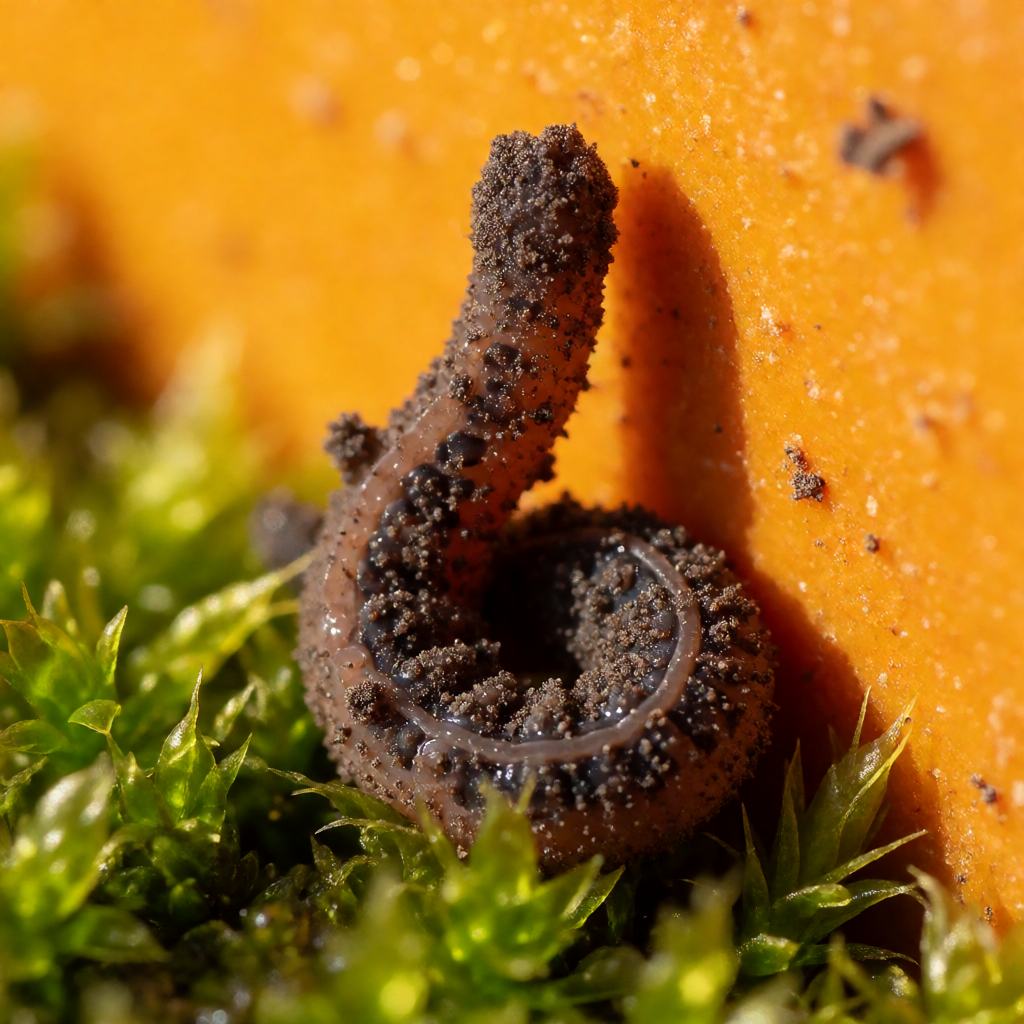
Worms and slugs form the base of the diet. Insects, larvae and small snails fill out the list. Hunting happens at night on wet ground, since the skin needs damp air to work well. The animal walks rather than runs.
Prey is seized with a quick bite and swallowed whole, though a large slug takes longer. A newt can go weeks without food in cold weather, and it loses little weight. Damp ground matters more than food, since the skin loses water fast. Rain brings the animals out in numbers.
Captive animals take worms from forceps within days of arriving. Poison protects the newt from most predators, so it hunts in the open.
Worms on wet ground
The breeding cycle
Breeding follows the spring rains. Males reach the pools first and wait. A male courts by fanning his tail near a female. Eggs are laid one at a time and stuck to water plants.
A female may lay 100 eggs in a season, and she places each one on a plant stem. Larvae hatch in about two weeks, though cold water slows the process. Larvae carry gills and stay in the water for months before they change. Metamorphosis comes in late summer, and the young then leave the pool.
Young newts then leave the water and hide in litter. Slow growth and late breeding make the species slow to recover.
Vulnerable, and taken for trade
Conservation
IUCN lists the species as Vulnerable, in an assessment from 2021. CITES Appendix II covers the animal, so trade needs a permit. The pet trade is the main pressure, and collectors take animals from the wild for sale abroad. Forest loss adds a second pressure across the range, and the two act together.
Tea and coffee planting clears the banks where the animals breed. Pollution from farms reaches the streams, and the larvae die first. Climate change may dry the pools that the larvae need, since rainfall now comes in shorter bursts. Protected areas cover part of the range in Yunnan, although enforcement stays light.
Captive breeding now supplies some of the trade, which takes pressure off wild groups in Yunnan. A slow breeder cannot replace a heavy loss, because a female lays few eggs and breeds late.
Side by side
How It Compares
| Trait | Emperor Newt | Rough-skinned Newt |
|---|---|---|
| Length | 15 to 20 cm | 13 to 22 cm, and the female grows larger |
| Weight | under 30 grams | 10 to 30 grams |
| Home | hill forest in Yunnan, at 1,000 to 2,500 m | coastal forest and ponds in western North America |
| Skin | dark brown with an orange ridge along the back | brown above with an orange red belly |
| Food | worms, slugs and insects on wet ground | worms, snails and insects in shallow water |
| Eggs | up to 100, placed one at a time on plants | a few hundred, in jelly masses on plants |
Common misreadings
What People Get Wrong
- Many people believe the orange skin is harmless decoration, yet it marks a strong poison.
- Some texts treat the animal as a form of the Himalayan newt, although the two differ in range and colour.
- A common tale says the newt lives in water all year, yet it stays on land outside the breeding season.
Going further
Sources and Further Reading
Quick hits
Five things to remember
- Orange ridges run along the back.
- Adults reach 15 to 20 cm.
- Rib tips press through poison glands.
- A female may lay 100 eggs.
- Larvae stay in water for months.