 By st20113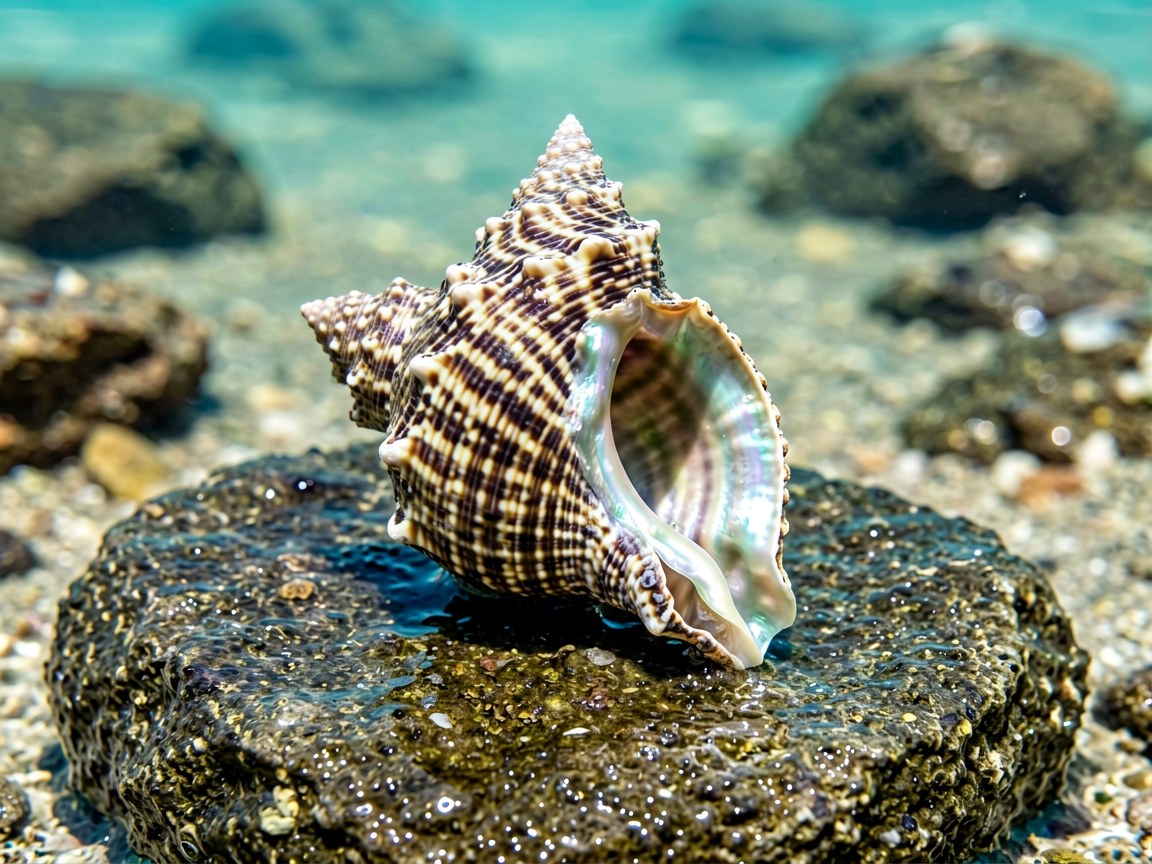
Trochus lineatus | Striped Top Shell
Introduction
The striped top shell (Trochus lineatus) is a neat, conical sea snail of the lower shore and shallow subtidal, decorated with spiral bands of colour that give it its name. A member of an ancient group of “top shells,” it grazes algae on rock and sits high on the list of familiar shells tossed up on the beach. Common in the warmer parts of the north-east Atlantic and the Mediterranean, it is a small but characteristic inhabitant of the rocky sea floor.
Taxonomy
Trochus lineatus is a mollusc in the class Gastropoda—the snails and slugs—within the family Trochidae, the top shells. It is a relative of garden snails and of more celebrated molluscs such as Octopus vulgaris, the common octopus, sharing the molluscan body plan of a muscular foot, a coiled shell, and a rasping radula.
Physical Characteristics
The striped top shell has a solid, conical shell 2–4 cm tall, with a sharp spire and a broad base, marked by alternating bands of reddish, grey, and white spirals. The inside of the shell opening is pearly and iridescent. The animal has a broad foot, a short snout, and a pair of tentacles with eyes at their bases. A horny, slit-like operculum seals the shell when the snail withdraws.
Habitat
Top shells live on hard substrata from the low shore down into subtidal water, on rocky reefs, in seagrass beds, and among rocks where algae are plentiful. They favour clear, fairly warm water and are common in the Mediterranean and along the Atlantic coasts of southern Europe. They cling to rock with their foot and graze the surfaces around them.
Diet
Striped top shells are herbivores that scrape microscopic algae and diatoms from rock and shell with their radula. They roam the surfaces of the reef, cropping the thin film of life, and in turn are food for crabs, starfish, and birds. They do not hunt; their entire diet is the vegetable scum of the seabed, which they harvest tirelessly as the tide covers them.
Reproduction
Top shells have separate sexes and spawn by releasing eggs and sperm into the water, where fertilisation takes place. The larvae drift as plankton before settling and growing into tiny shelled snails. The pearly inner layer of the shell is laid down as the animal grows, and a healthy top shell can live for several years, slowly enlarging its spiral.
Conservation
The striped top shell is common and not considered threatened. It is gathered in some places for food and for its attractive shell, but populations are generally robust where rocky habitats remain. As a grazer it helps keep reef surfaces clear, and its shell—with its pearly interior—has been used decoratively for centuries.
Fun Facts
- Its shell is banded in spirals, which is why it is called the “striped” top shell.
- The inside of the shell opening glows with a pearly, iridescent sheen.
- It seals itself in with a horny “door” when it pulls back from danger.
- Top shells have been collected for their pretty shells since ancient times.
- It scrapes algae with a tongue of tiny teeth, like a living file.