 By st20113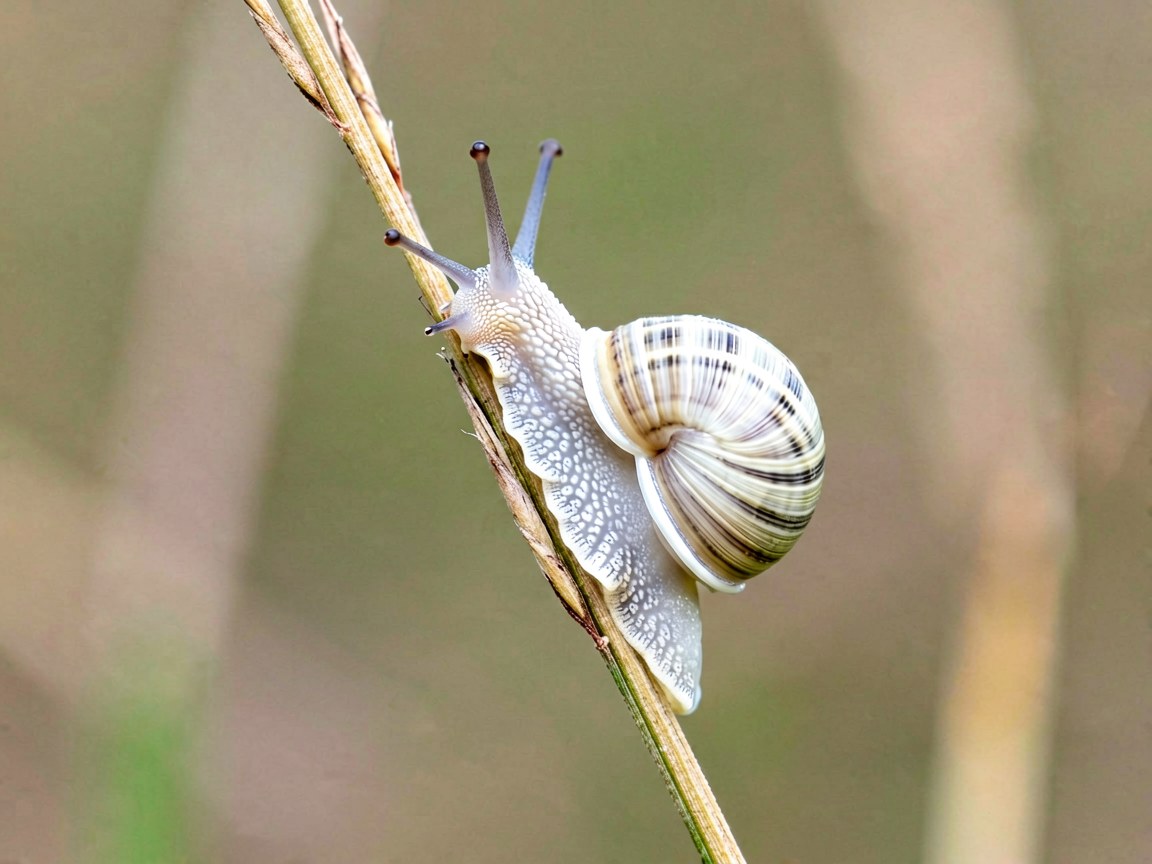
Theba pisana | White-lipped Snail
Introduction
The white-lipped snail (Theba pisana) is a small, pale, striped snail of coastal grasslands and dunes, easily told apart by the bright white lip around the opening of its shell. In warm, dry places it can be extraordinarily abundant, coating grass stems and fence posts in their hundreds, especially near the sea. A Mediterranean and Atlantic species, it has spread along coasts and into sandy hinterlands, where its chalky shells are a familiar summer sight.
Taxonomy
Theba pisana is a mollusc in the class Gastropoda—the snails and slugs—within the family Helicidae, the typical land snails. It is a relative of garden snails and of more celebrated molluscs such as Octopus vulgaris, the common octopus, sharing the molluscan plan of a muscular foot, a coiled shell, and a rasping tongue.
Physical Characteristics
The white-lipped snail has a flattened, disc-like shell about 1.5–2.5 cm across, with several whorls and a variable pattern of brown stripes over a pale ground. Its most obvious feature is the broad, white or creamy lip bordering the shell opening. The animal itself is pale grey and retracts behind a thin, chalky door when it dries out. The shell is thin but strong for its size.
Habitat
This snail favours dry, open, grassy places—coastal dunes, sandy pastures, scrub, and roadside verges—often on calcareous or sandy soils. It thrives in hot, sunny sites and is especially common near the sea, where it climbs grass and stems to aestivate in summer. It is found around the Mediterranean, the Atlantic coasts, and has been carried by trade to parts of Australia, South Africa, and the Americas.
Diet
White-lipped snails are herbivores that graze on a film of algae, lichens, and dead plant matter on grasses and stones with their radula. They favour dry grassland and can damage crops and pasture in outbreak numbers, scraping living and dead tissue alike. They do not chase prey; like other land snails they are slow, moisture-dependent grazers of the surface they live on.
Reproduction
Like most land snails, Theba pisana is a hermaphrodite, each animal carrying both male and female parts, though individuals usually cross-fertilise. They lay clusters of round, white, chalky eggs in the soil, which hatch into miniature snails. In warm regions they can produce several batches a year, and their numbers can boom after mild, damp winters.
Conservation
The white-lipped snail is abundant and not threatened; in some regions it is even a minor agricultural pest. Its abundance tracks open, dry grassland and disturbance, so it prospers where the land is grazed or bare. It is a useful food for songbirds and thrushes, and its sheer numbers make it a small but busy part of coastal food webs.
Fun Facts
- The white “lip” around its shell opening gives the species its common name.
- In hot summers it clusters by the hundred on grass stems to wait out the dry spell.
- It can be a crop pest in outbreak years, scraping living pasture plants.
- Each snail carries both male and female organs, yet usually mates with another.
- Its pale, striped shell helps it blend with sun-bleached coastal grass.