 By Iris
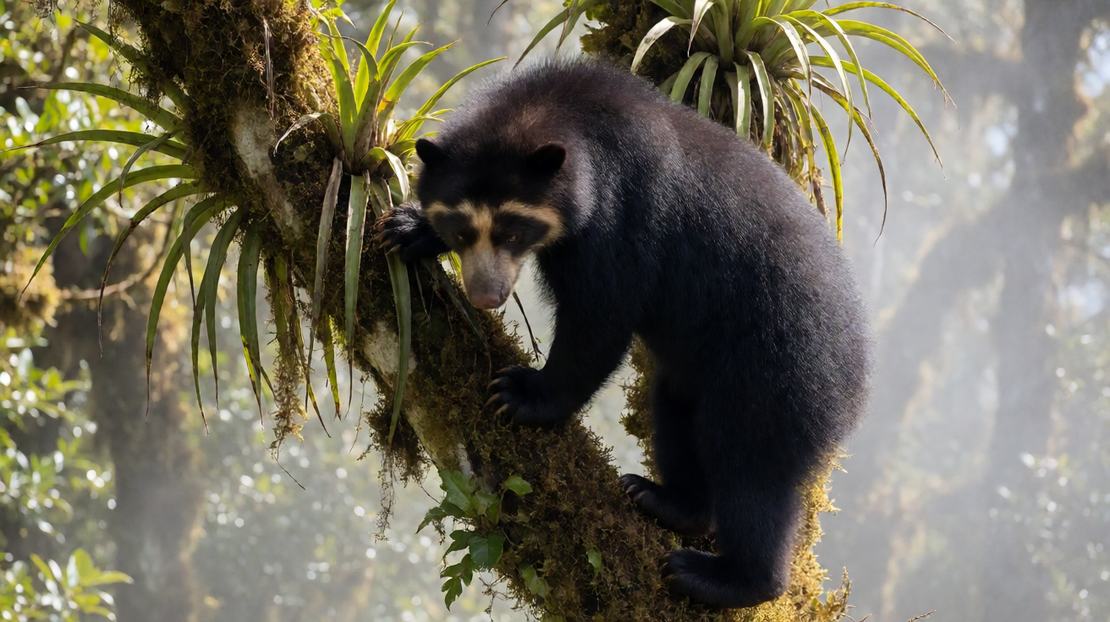
Tremarctos ornatus | Spectacled Bear
Species Profile · Ursidae
Spectacled Bear
The only bear in South America, marked with pale spectacles.
Vulnerable
Length
Weight
Markings
Range
Altitude
Rating
One and a half metres of Andean fur
A bear with spectacles
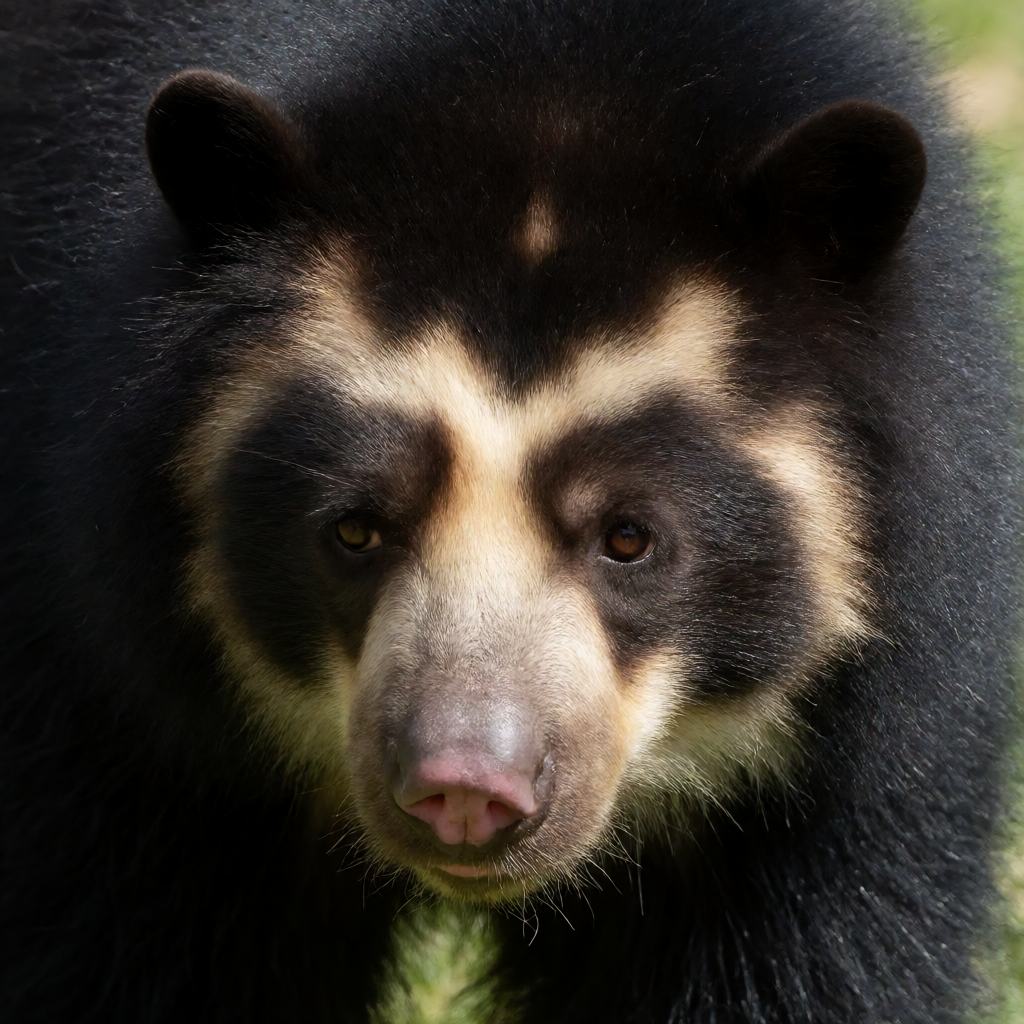
Spectacled bears carry pale rings around the eyes. Those rings look like spectacles, and they give the species its name. South America holds this bear and no other, although fossils show that cousins once lived far to the north.
Andes mountains run through the range, from Venezuela down to Bolivia, and they decide where the bear can live. Cloud forest suits it, and so does dry scrub at high altitude. Shaggy dark fur covers a body that climbs well, since the legs are long and the claws hook into bark.
Some animals build a platform of branches to rest on, and they return to the same tree for years. Few people ever see one, and numbers keep falling, since the forest shrinks each year. Vulnerable is the current rating.
Family tree
Ursidae, the bears
Tremarctos ornatus belongs to Ursidae, and it is the last of the short faced bears. Its nearest relative on this site is the Sun Bear, the smallest bear alive. Both live in tropical forest, and both climb with ease.
Yet one carries pale face marks, while the other shows a chest patch. Tremarctinae, the short faced group, once held several large species across the Americas. Every one of those died out, and this animal survived them all, though nobody knows why.
Scientists described the species in 1825 from a museum skin. No subspecies is recognised, although markings differ between regions.
The last short faced bear
How to tell one
Body length runs 1.2 m to 2 m, and weight reaches 175 kg. Males grow much heavier than females. Fur is black brown, and it looks shaggy around the neck and shoulders. Cream markings cross the face, the throat and the chest, though each animal wears them differently.
Each animal carries a different pattern, so individuals can be told apart. Its snout is shorter than a brown bear’s. The head looks round from every angle. Front legs are long, and the claws curve for climbing.
Bears walk on the whole foot, which is why a track shows every toe. Teeth suit a mixed diet. Flat molars grind plants, while the front teeth cut meat.
1
2
3
Built for climbing
Where it lives
Cloud forest, paramo and dry scrub all hold animals. The species ranges from 200 m to 4750 m. Steep ground matters, since the bear needs cover and escape routes. Bamboo thickets supply food and shelter. The stems also hide a moving bear.
Range runs through Colombia, Ecuador, Peru and Bolivia. Forest fragments now sit between farms and roads. Each one holds only a few animals. A single home range can cover 100 square km. Males wander further than females do.
Bears cross open ground at night, and they keep away from people. Mining and oil work open new roads into the forest, although the companies promise to restore them. Cattle graze the high grassland, and that pressure pushes the bear uphill.
Mist, bamboo and steep ground
What it eats
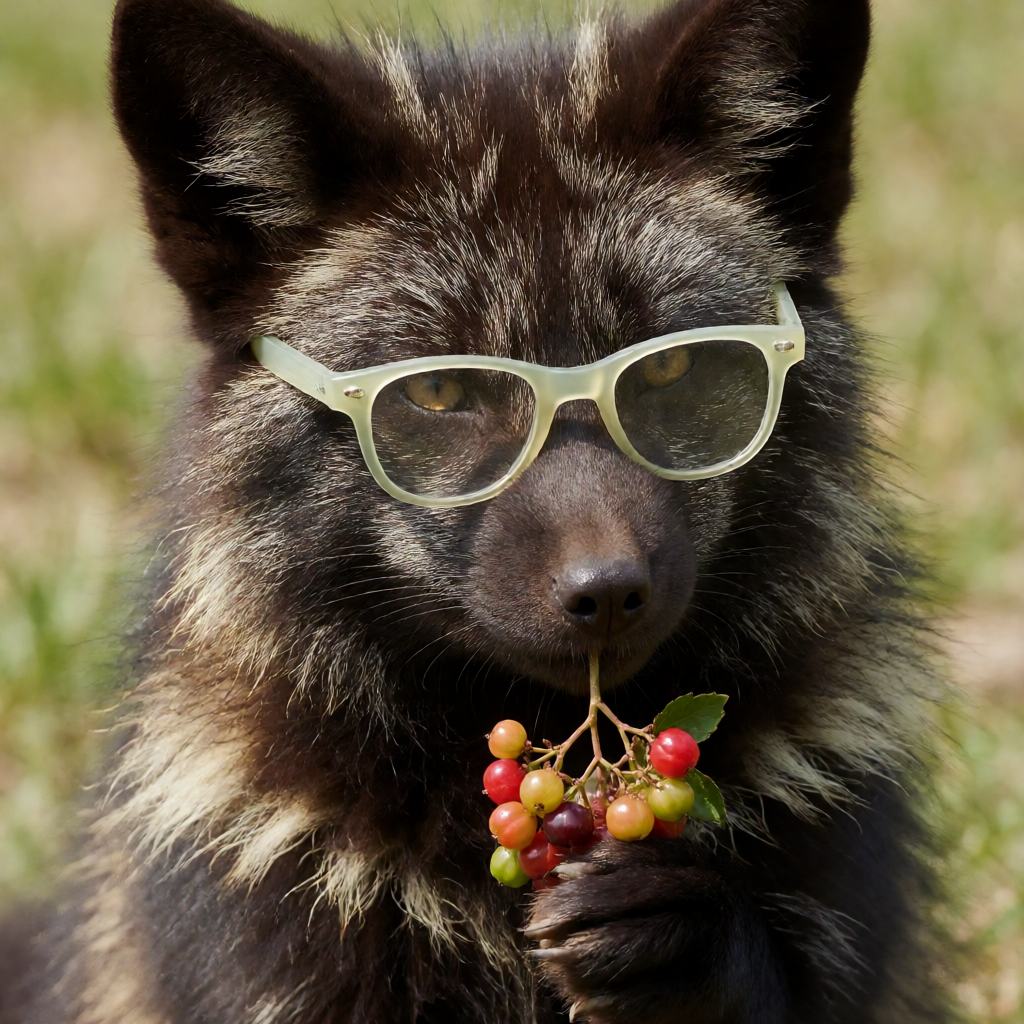
Plants form most of the diet, while meat remains a small part of it. Bromeliads, fruit, cactus and bamboo form the bulk. The animal eats little else. Claws strip a bromeliad, then the animal eats the soft heart at the centre.
Small amounts of meat are taken, although a few bears learn to kill livestock. That habit brings the species into conflict with farmers. Bears climb 30 m to reach a fruiting tree. Feeding happens at dawn and again in the evening, since the animal rests through the middle of the day.
The animal bends saplings to reach the crown, and it leaves a platform behind. Water comes from streams, and the bear drinks daily when the forest stays dry.
Bromeliads and fruit
The breeding cycle
Females give birth after a gestation of about seven months. One or two cubs arrive, and each weighs under 500 grams. Dens sit in a cave or under roots, where the temperature stays steady. Cubs stay with the mother for more than a year, and they follow her on every route.
They learn which plants to eat by watching her, and they copy her feeding sites. Males take no part in raising the young. Females breed every two or three years, so a population grows slowly. Sexual maturity comes at four or five years, although few cubs reach that age.
That slow rate limits how fast numbers recover. The limit holds even where habitat stays intact.
Vulnerable, and fragmented
Conservation
Vulnerable is the current rating, and the population may sit below 20000 animals. Habitat loss drives the decline across the Andes, since forest falls to farms and pasture each year. Hunting continues, since farmers kill bears near livestock.
Roads split the range into fragments, and each fragment loses animals over time. Guarded areas cover part of the mountains, and the species breeds in zoos. Corridors between fragments would help, and so would payment for lost stock.
Local communities now monitor some populations, and ranger teams count tracks along ridge trails. Without those efforts the decline would be far steeper than it is today.
Side by side
How It Compares
| Trait | Spectacled Bear | Sun Bear |
|---|---|---|
| Length | 1.2 m to 2 m, and up to 175 kg | 1.2 m to 1.5 m, and up to 65 kg |
| Markings | cream rings around the eyes | a pale chest patch in a horseshoe |
| Home | Andean cloud forest and paramo | lowland forest in South East Asia |
| Food | bromeliads, fruit and bamboo | honey, insects and fruit |
| Claws | long and curved, for climbing trees | long and curved, for tearing open dead wood |
| Range | Venezuela to Bolivia | from Myanmar to Indonesia |
Common misreadings
What People Get Wrong
- Many people think the bear is a meat eater, yet plants fill most of its diet. Fruit and bromeliads supply the bulk, and livestock is taken only now and then.
- A common tale says the animal sleeps through the cold months, although the Andes has no such season. It moves up and down the slope instead, and it feeds through the year.
- Some reports claim the markings fade with age, yet each animal keeps its own pattern for life. Researchers use the face rings to tell individuals apart in photographs.
Going further
Sources and Further Reading
Quick hits
Five things to remember
- It is the only bear in South America.
- Each face pattern is unique.
- It builds platforms in trees.
- A cub weighs under 500 grams.
- It is the last short faced bear.