 By Iris
Theloderma corticale | Vietnamese Mossy Frog
Species Profile · Rhacophoridae
Vietnamese Mossy Frog
A frog whose warty skin looks like wet moss.
Least Concern
Length
Skin
Range
Altitude
Eggs
Rating
Nine centimetres on wet limestone
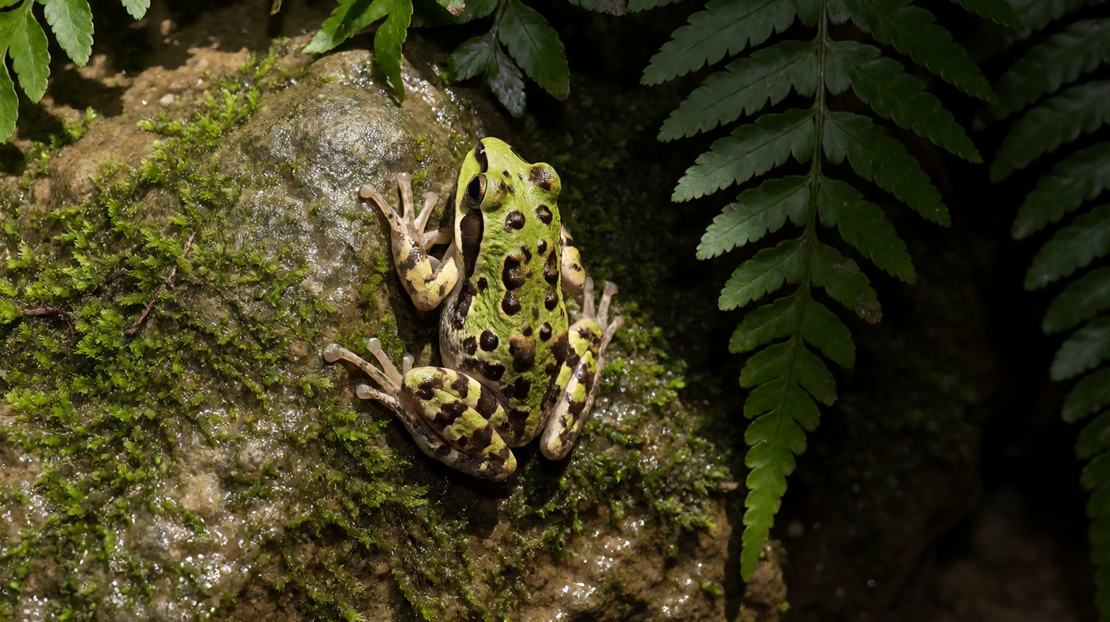
A lump of moss with eyes
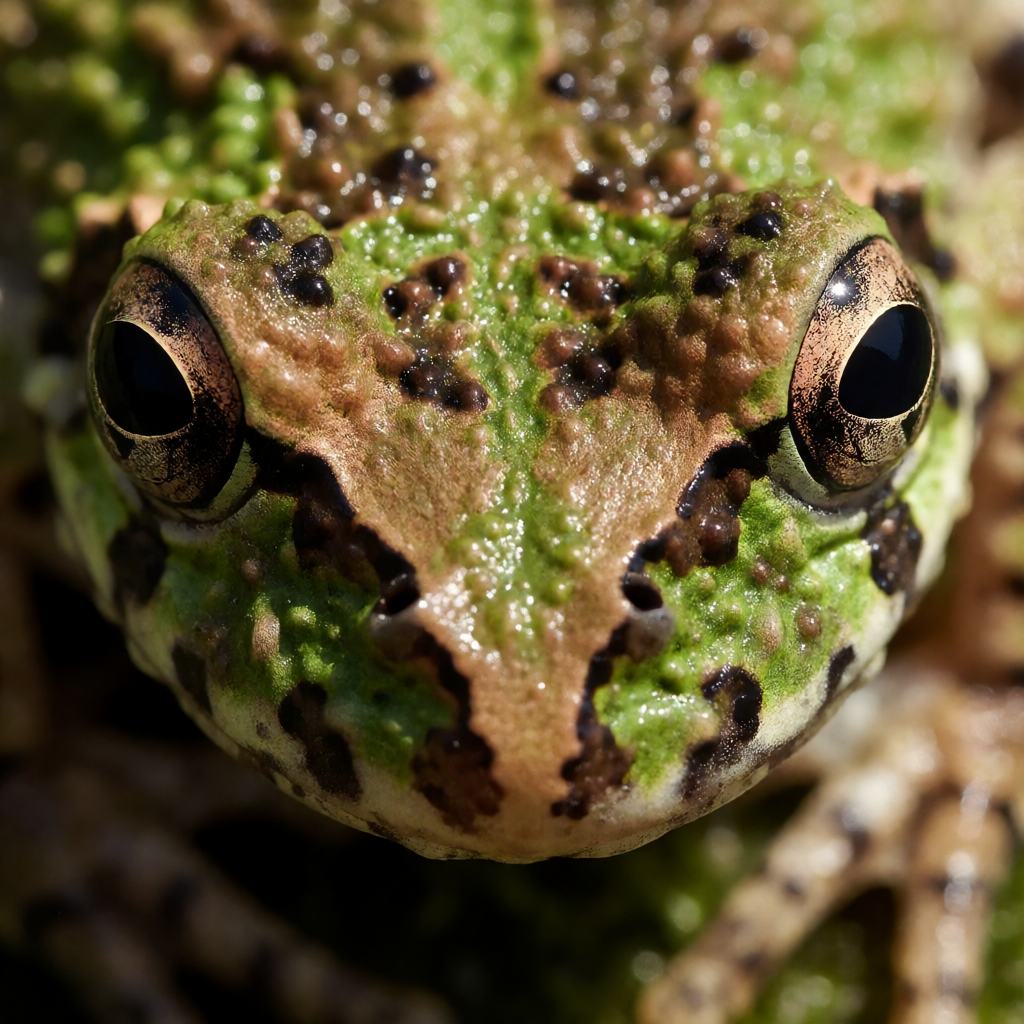
A mossy frog on a wet rock looks like a lump of green stone, and the shape holds still for hours. Soft warts cover the skin, and each wart mimics a clump of moss. Only the round eyes give the animal away.
Limestone country in northern Vietnam holds the species. Streams cut through the rock, and caves hold the water through the dry months. Animals cling to walls above the pools.
Colour shifts with the light, from olive green to dark brown within minutes. Collectors value the animal highly, because it breeds well in captivity. Wild populations are still sold in numbers, although the trade is barely monitored.
Family tree
Rhacophoridae, the Old World tree frogs
Theloderma corticale sits in Rhacophoridae, the Old World tree frogs. Its nearest relative on this site is the Dyeing Poison Dart Frog, a toxic frog of the Guianas. Both live in wet forest.
Both are popular with collectors in Europe and Japan. Yet one hides with camouflage, while the other warns with colour. About 25 species sit in the genus, and new ones keep appearing.
Its name refers to the bark like skin. Scientists described the species in 1903 from northern Vietnam. Records from southern China remain uncertain, and some of them may belong to another species.
A genus of mossy frogs
How to tell one
Body length runs 7 cm to 9 cm, and females grow larger. Skin is covered with soft spines and warts. Colour runs from moss green to dark brown, with black patches.
Belly is paler, and the throat shows dark mottling. Eyes are large, and the vertical pupil sits in a marked iris that shines under a torch. Toe pads are wide, and they grip wet stone.
Hind legs are strong, and the animal jumps short distances. Males call with a low rattle, and the note carries through a cave. Skin feels damp, yet it holds water well.
1
2
3
Warts that copy a plant
Where it lives
Limestone karst of northern Vietnam holds the species. Caves, rock walls and forest streams all carry animals. Water must stay clean, since the tadpoles develop in it for months. Humidity stays high throughout the year, and the rock sweats through the day.
Animals sit above the waterline, often on a vertical face where spray from the stream keeps the skin wet. Forest cover keeps the stream cool, and logging changes the flow. Altitude runs from 300 m to 1500 m. Most records come from below 1000 m.
Range is small, and it sits inside a few provinces. Quarrying removes the habitat outright.
Karst streams and caves
What it eats
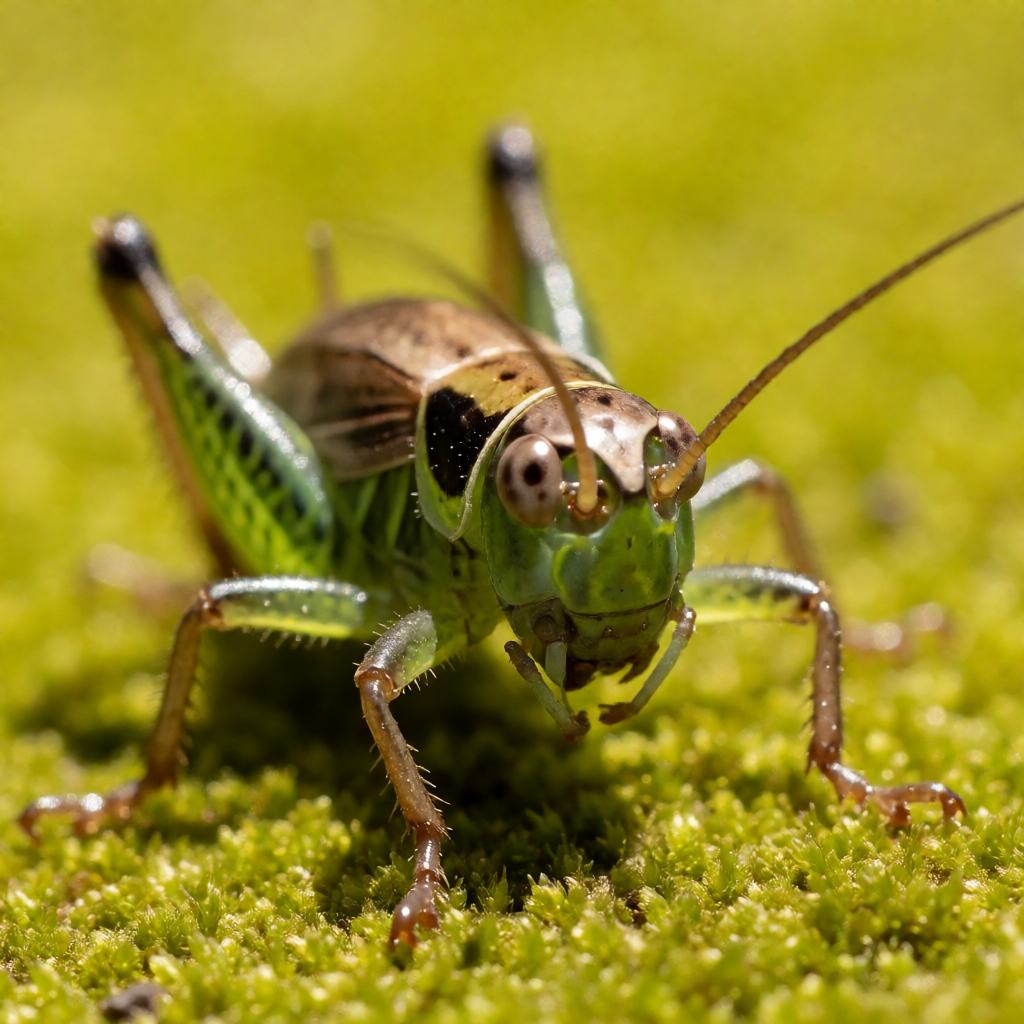
Crickets, roaches and moths make up most of the diet, since all three live on wet rock. Hunting happens at night, when insects move across the rock and the frog can reach them easily. A quick lunge takes the prey, and the tongue does the rest.
Smaller animals are taken whole, and large ones are held with the front feet. Feeding stops in cold weather. The animal may wait weeks for a warm night.
Captive animals take almost any insect offered. Wild animals need moving prey, yet they ignore dead food completely. Diet shifts with the season, since insects follow the rains into the caves.
Insects on wet stone
The breeding cycle
Males call from rock walls above water. A female approaches, and the pair moves to a damp hollow. Eggs are laid in a small clutch, and each one sticks to the rock. A clutch holds 10 to 30 eggs, and they develop above the water.
Tadpoles hatch and drop into the pool below. Larvae carry a strong tail, and they feed on plant matter until the legs appear, which takes months. Metamorphosis takes several months in cool water. Young frogs climb out and stay near the water, while the adults move deeper into the cave.
Breeding happens more than once a year in captivity. It probably happens twice in the wild too.
Least Concern, and traded
Conservation
Least Concern is the current rating, from an assessment in 2015. Numbers trend downward, although no count exists. Collection for the pet trade removes animals from a small range, and the law rarely follows the trade.
Habitat loss follows logging and quarrying across the karst, and both are hard to stop. Guarded areas cover part of the range, and the species breeds in captivity. Captive breeding could reduce pressure, yet wild caught animals still sell at high prices.
Surveys are few, so the total population stays unknown outside a handful of caves. That rating may change once better counts exist.
Side by side
How It Compares
| Trait | Vietnamese Mossy Frog | Dyeing Poison Dart Frog |
|---|---|---|
| Length | 7 cm to 9 cm, and females larger | about 4 cm, and females larger |
| Skin | soft warts in moss green and brown | smooth black and yellow skin |
| Defence | camouflage against wet limestone | alkaloid poison in the skin |
| Home | limestone caves in northern Vietnam | lowland forest in the Guianas |
| Eggs | 10 to 30, fixed above the water | a few eggs, carried to a pool |
| Trade | collected in numbers for the pet market | collected less, since captive stock is common |
Common misreadings
What People Get Wrong
- Many people think the warts are armour, yet they are soft and easily damaged. The skin copies moss, and the disguise works only while the animal stays still.
- A common tale says the species lives in trees, although it keeps to rock walls and cave mouths. Water must stay clean, and the tadpoles develop in the pool below.
- Some keepers claim the frog is hardy in any tank, yet it needs cool water and high humidity. Warm, dry air kills it within days, and that fact drives much of the trade loss.
Going further
Sources and Further Reading
Quick hits
Five things to remember
- Its warts look like moss.
- The tadpoles drop into cave pools.
- The species was described in 1903.
- The eyes give the animal away.
- It breeds well in captivity.