 By st20113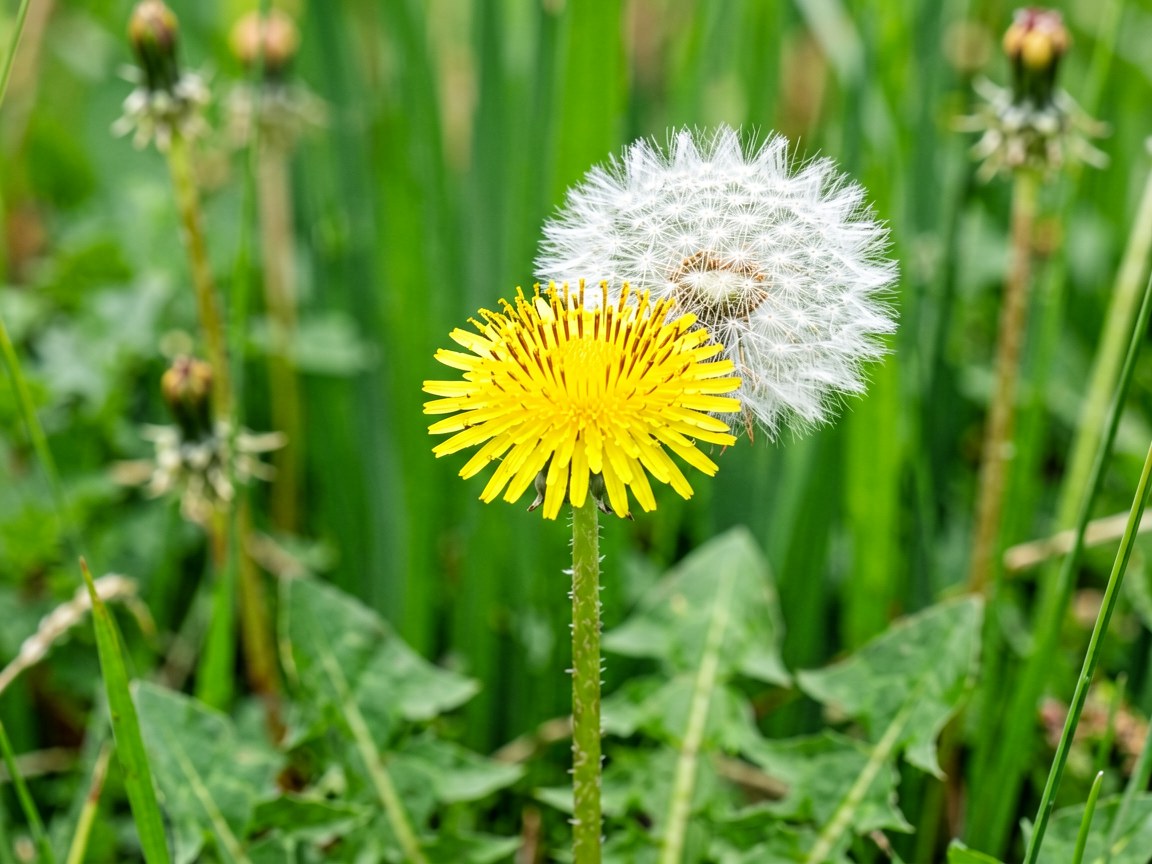
Taraxacum officinale | Dandelion
Introduction
The Dandelion (Taraxacum officinale) is one of the most recognised plants in the world—a low rosette of jagged leaves, a bright yellow flower head, and a seed ball that turns every breeze into a flurry of parachutes. Dismissed as a lawn weed by many, it is in fact a botanical masterpiece and one of the most useful wild flowers for pollinators in early spring.
Found from pavements to pastures across the temperate world, the dandelion is a generalist that thrives wherever the ground is disturbed. Far from being mere nuisance, a single plant can feed dozens of bee species, nourish birds with its seeds, and enrich soil with its deep taproot, making it a quiet cornerstone of urban and agricultural ecosystems alike.
Taxonomy
Taraxacum officinale was named by the botanist Friedrich Gottlieb Bartling in the nineteenth century; the genus name Taraxacum comes from Arabic and Greek roots for the bitter herb, and officinale marks it as a plant with a medical “office” or use. It belongs to the family Asteraceae, the daisy family, the largest family of flowering plants.
Like all green plants, the dandelion relies on the process described in our article on Photosynthesis (the plant energy process), capturing sunlight in its leaves to power a rapid life cycle that can produce several generations of seed in a single season. Within Asteraceae it is a composite-flower specialist, packing hundreds of tiny florets into what looks like one bloom.
Physical Characteristics
The dandelion has no true stem; instead a hollow flower stalk rises directly from a rosette of deeply lobed, tooth-edged leaves, each lobe pointing back toward the base like a lion’s tooth (the origin of its name). Both leaves and stalk bleed a milky white latex when cut, and the leaves are a glossy, hairless green.
The flower head is a composite of many narrow yellow florets, and after pollination it closes, the stalk lengthens, and the seeds mature into a spherical clock of white plumed parachutes, each carrying a single seed (achene) away on the wind. The root is a deep, fleshy taproot that anchors the plant and stores food, making it hard to pull entire.
Habitat
The dandelion occupies almost any open or disturbed ground: lawns, meadows, roadside verges, arable field margins, and bare soil in towns. It favours full sun and tolerates a wide range of soils, though it does best on fertile, moist ground and is quickly outcompeted in dense, tall vegetation.
Its success lies in opportunism: a long taproot lets it survive drought and mowing, and it flowers almost continuously from early spring to late autumn, seizing every gap. In cities it is often the first substantial nectar source for awakening insects, and in farmland it persists in margins that escape the plough.
Diet
The dandelion is autotrophic, fixing carbon by photosynthesis in its leaves and drawing water and minerals—especially calcium and potassium—from deep soil via its taproot. It is a powerful net producer, fuelling rapid leaf, flower, and seed production through the growing season.
Its deep root also performs a quiet service: by mining nutrients from subsoil and then dying back and decomposing, the dandelion helps cycle minerals to the surface, enriching the topsoil for neighbours. The sugars it makes support not only the plant but the many pollinators that visit its flowers and the birds that later eat its seeds.
Reproduction
The dandelion’s headline trick is apomixis: most populations produce seed without fertilisation, so each plant is effectively a clone of its parent, and countless local “microspecies” exist that are almost impossible to tell apart. The wind-dispersed seeds are prodigious—one plant can release over a hundred, each capable of travelling far on its parachute.
Seedlings establish readily on bare ground and the taproot lets young plants survive dry spells that kill shallower-rooted competitors. Combined with continuous flowering, this makes the dandelion one of the most reliably reproductive wild plants of the temperate zone, present in force wherever soil is laid bare.
Conservation
The dandelion is ubiquitous and of no conservation concern as a species; indeed its abundance is a resource rather than a worry. The real story is the reverse—intensive lawn care and herbicide use erase it from gardens and parks precisely where it does the most good for early pollinators.
Because it is such a valuable nectar and pollen source in the hungry early season, and because its seeds feed goldfinches and other birds, allowing dandelions to flower in lawns and margins is one of the easiest biodiversity gains available. Conservation effort here means tolerance—letting some “weeds” stand—rather than protecting a rare plant.
Fun Facts
- A single dandelion flower head is not one flower but up to 200 tiny florets, each capable of making a seed.
- Its seeds can travel several kilometres on their parachutes, though most land close by.
- The deep taproot was traditionally used as a coffee substitute and a diuretic (giving the plant its “piss-en-lit” French nickname).
- Dandelions are among the first mass-flowering plants in spring, critical for bees emerging from winter.
- Every part is edible—leaves in salad, flowers for wine, and root for roast “coffee.”