 By st20113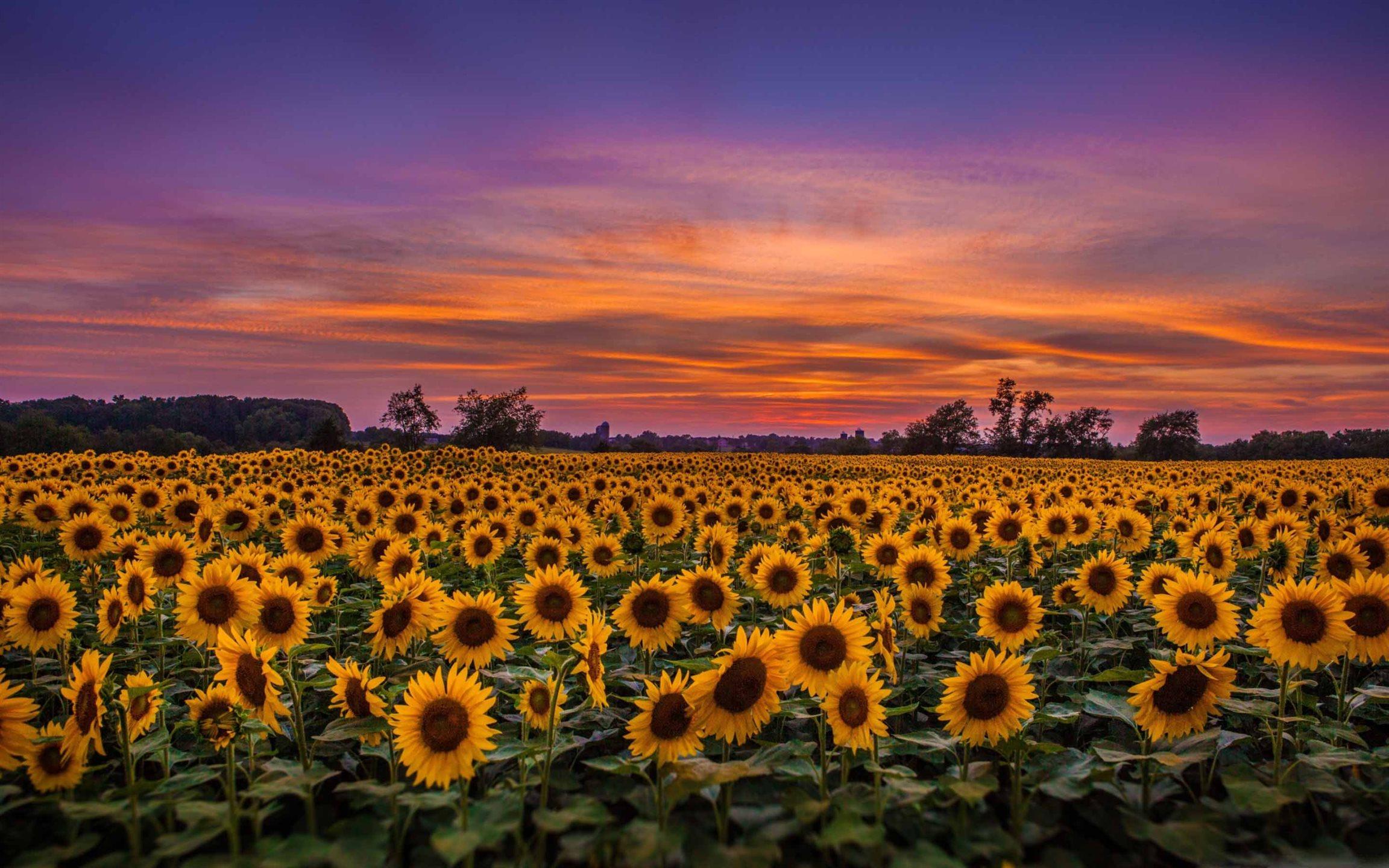
The Sunflower (Helianthus annuus), known scientifically as the Common Sunflower, is one of the most visually striking and economically significant flowering plants on Earth. Originating in North America and now cultivated worldwide, this cheerful annual has become deeply embedded in human agriculture, art, cuisine, and culture. Its name derives from the ancient Greek belief that sunflowers turned to follow the sun across the sky — a behavior called heliotropism that occurs primarily in the bud stage.
Physical Characteristics
A mature sunflower plant typically reaches heights of 1 to 5 meters, with some giant varieties exceeding 8 meters. The most recognizable feature is its large flower head, technically called a pseudanthium or composite flower head, which can span 7 to 30 centimeters in diameter. What appears to be a single flower is actually a dense cluster of 1,000 to 2,000 individual flowers — known as florets — arranged in two interlocking spiral patterns following the Fibonacci sequence. The outer ring of showy “petals” are technically individual ray florets, while the central disk contains the seed-producing disc florets.
The plant’s tall, rough, hairy stem supports large, rough, heart-shaped leaves arranged alternately. The root system consists of a deep taproot supplemented by fibrous lateral roots that can spread extensively. Each sunflower head tracks the sun from east to west during the day via differential growth of cells on the stem’s shaded and sunlit sides — a remarkable feat of plant movement controlled by circadian rhythms and auxin hormone redistribution. Once the florets are fully open, the head typically faces east permanently, warming faster in the morning to attract pollinators.
Reproduction and Pollination
Sunflower reproduction depends almost entirely on insect pollination, particularly by bees. A single sunflower head requires visits from hundreds of pollen-collecting bees to achieve full seed set. The plant’s bright yellow ray petals serve as visual attractants, while the dark central disk provides a contrasting landing platform. Honey bees and native wild bees are the most effective pollinators, though the flowers also attract butterflies, hoverflies, and other insects. The mutualism between sunflowers and their pollinators is so strong that bees actively prefer sunflower patches and can significantly increase agricultural yields of nearby crops.
Ecological and Agricultural Importance
Beyond human agriculture, sunflowers support diverse ecological communities and their ecosystem communities. Their pollen and nectar provide food for bees, butterflies, and other insects throughout the growing season. Birds — particularly finches and sparrows — flock to sunflower fields during seed maturation, consuming enormous quantities of seeds and acting as dispersal agents. In natural settings, wild sunflowers play important roles in soil stabilization, phytoremediation (absorbing toxic heavy metals from contaminated soils), and as host plants for numerous moth and butterfly larvae.
Commercially, sunflower seeds are processed into cooking oil, sunflower butter, and snack foods. The oil is valued for its light flavor and high smoke point, containing approximately 90% unsaturated fats and being rich in vitamin E. Sunflower seeds are also a major component of poultry and wild bird feed. More recently, sunflower oil has gained prominence as a biofuel feedstock.
Cultural Significance
Sunflowers have held symbolic meaning across cultures for centuries. The 16th-century Spanish conquistadors brought them to Europe, where they quickly became popular in gardens and eventually spread globally. In Chinese culture, sunflowers symbolize longevity, vitality, and good fortune — often associated with respect for elders and aspirations toward a bright future. In Western art, Vincent van Gogh’s celebrated Sunflower series of paintings elevated the flower to an icon of optimism, warmth, and the transformative power of nature. In Ukrainian tradition, the sunflower is the national flower, symbolizing hope, peace, and resilience — a symbolism that took on profound significance during the 2022 conflict, when sunflowers became an emblem of Ukrainian resistance and national identity.
Growth and Cultivation
Sunflowers are remarkably adaptable and easy to grow, thriving in temperate to warm climates across six continents. They are warm-season crops that germinate rapidly (within 5 to 10 days) in soil temperatures above 10°C, grow quickly under full sun, and reach maturity in 80 to 120 days depending on the variety. They prefer well-drained, fertile soils with neutral pH and full sunlight exposure. Sunflowers are moderately drought-tolerant once established, thanks to their deep root systems, but produce the best seed yields with adequate moisture during flowering. Modern cultivation has developed compact dwarf varieties for gardens, giant oilseed varieties for commercial agriculture, and ornamental cultivars in diverse colors including orange, red, burgundy, and white.
