 By st20113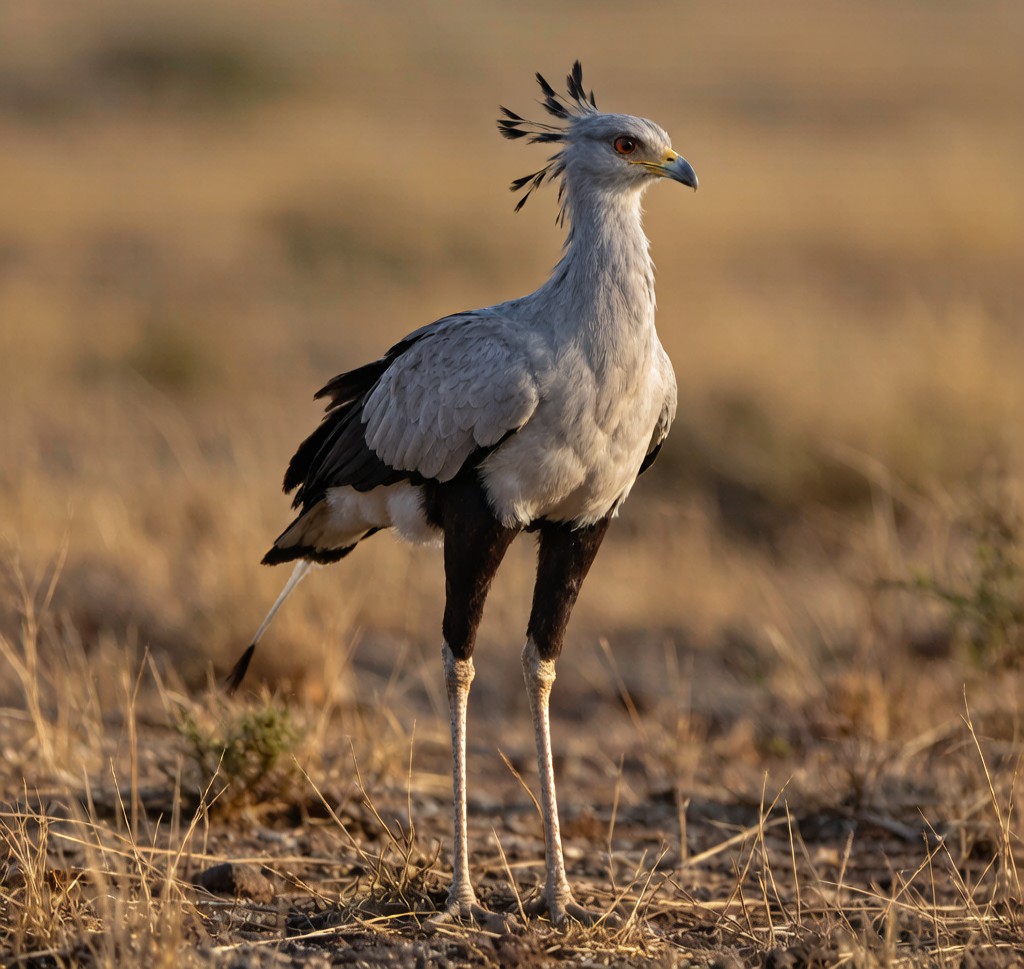
The Secretarybird (Sagittarius serpentarius) is one of the most distinctive and extraordinary birds of prey in Africa – a large, long-legged raptor that has abandoned the skies for the ground and now stalks the African savanna on legs that would be more at home on a crane than on a bird of prey.
Overview
The Secretarybird (Sagittarius serpentarius) is one of the most distinctive and extraordinary birds of prey in Africa – a large, long-legged raptor that has abandoned the skies for the ground and now stalks the African savanna on legs that would be more at home on a crane than on a bird of prey. Standing up to 1.3 meters tall with legs that are longer, relative to its body, than those of any other raptor, the secretarybird looks like an eagle that has been sent to finishing school and taught to walk – a peculiar, almost surreal combination of features that has made it one of the most sought-after birds by wildlife tourists across Africa and the national emblem of Sudan and South Africa.
The secretarybird’s taxonomy is as unusual as its appearance: the species is placed in its own family (Sagittariidae) and is the only remaining member of a once-diverse lineage of terrestrial birds of prey that once included the extinct mihirungs of Australia. The species’ common name is thought to derive from the Arabic “saqr et-tair” (hunter bird), corrupted over centuries into “secretarybird” – an apparent reference to the 17th-century clerical workers (secretaries) who wore grey coats and knee-breeches that resembled the bird’s plumage. Alternatively, the name may refer to the crest of black feathers on the bird’s head, which resemble the quill pens that secretaries historically tucked behind their ears.
Habitat and Hunting
The Secretarybird is found across the grasslands, savannas, and open woodlands of Sub-Saharan Africa, from Senegal in the west through the Horn of Africa to South Africa in the south. The species is strongly associated with open habitats – particularly the long-grass savannas and grassland steppes where it can see prey from a distance and employ its distinctive terrestrial hunting strategy. Secretarybirds are largely sedentary within their territories, which may cover 20 to 50 square kilometers or more depending on habitat quality and prey availability. The species avoids dense forest and arid desert environments, preferring areas with a mix of open grassland for hunting and scattered trees or rocky outcrops for nesting.
The secretarybird’s hunting strategy is unlike that of any other bird of prey: rather than swooping on prey from the air, the bird walks through the grassland in a distinctive, deliberate manner, sometimes covering 20 to 30 kilometers per day, and either flushes prey by walking toward it or detects prey by the movement of its long legs through the grass. Once prey is located, the secretarybird delivers a devastating kick – a strike so powerful that it can break the neck or spine of a snake, small mammal, or bird on the first attempt. Research using high-speed cameras has shown that the secretarybird’s kick can deliver an impact force of approximately 195 newtons, delivered with a motion that combines the momentum of the bird’s entire body weight with the leverage of its long legs. The species is particularly famous for its ability to kill venomous snakes including cobras and adders, using its long legs to avoid the snake’s strike while delivering rapid, powerful kicks.
Behavior and Nesting
Secretarybirds are monogamous and mate for life, with pairs maintaining a territory throughout the year and performing elaborate aerial displays – including calling, swooping, and talon-grappling – during the breeding season. The nest is built at the top of a flat-topped acacia or other suitable tree, and is constructed of sticks and grass over several weeks to several months, with pairs often returning to the same nest year after year. The nest is large – up to 2 meters across and 30 centimeters deep – and is lined with grass, leaves, and other soft materials.
The female lays 1 to 3 eggs (most commonly 2) and incubates them for approximately 42 to 46 days while the male provides food. Both parents feed the chicks, which fledge at approximately 75 to 80 days but continue to be fed by the parents for several more weeks. Secretarybird chicks are highly vulnerable to predation by other raptors and to falling from the nest during their early weeks, and sibling competition can be intense when multiple chicks are present. The species has a long breeding cycle – pairs typically raise only one clutch per year – and pairs that fail early in the breeding season may attempt a replacement clutch.
Conservation
The Secretarybird is listed as Endangered on the IUCN Red List, reflecting significant population declines across its range driven primarily by habitat loss, degradation, and fragmentation. The conversion of Africa’s grassland and savanna habitats to agriculture, the expansion of pastoral activities, and the intensification of grazing pressure are reducing the quality and extent of secretarybird habitat across the continent. The species is also vulnerable to accidental poisoning – both deliberate pesticide poisoning of predator species that target livestock, and unintentional poisoning from agricultural chemicals that accumulate in the secretarybird’s prey.
Secretarybirds are also frequently killed on roads: the species’ preference for open habitats and its tendency to run along the ground when flushed makes it particularly vulnerable to vehicle strikes. In South Africa, road mortality is a significant cause of secretarybird deaths, and several organizations have begun implementing road mitigation measures – including wildlife fencing and underpasses – to reduce vehicle collisions with large birds. The secretarybird is protected under international law (CITES Appendix II) and national legislation in most of its range countries, but enforcement is inconsistent. Conservation efforts focus on protecting key grassland habitats, reducing the impact of pesticides, and monitoring populations through nest surveys and road mortality studies.