 By Iris
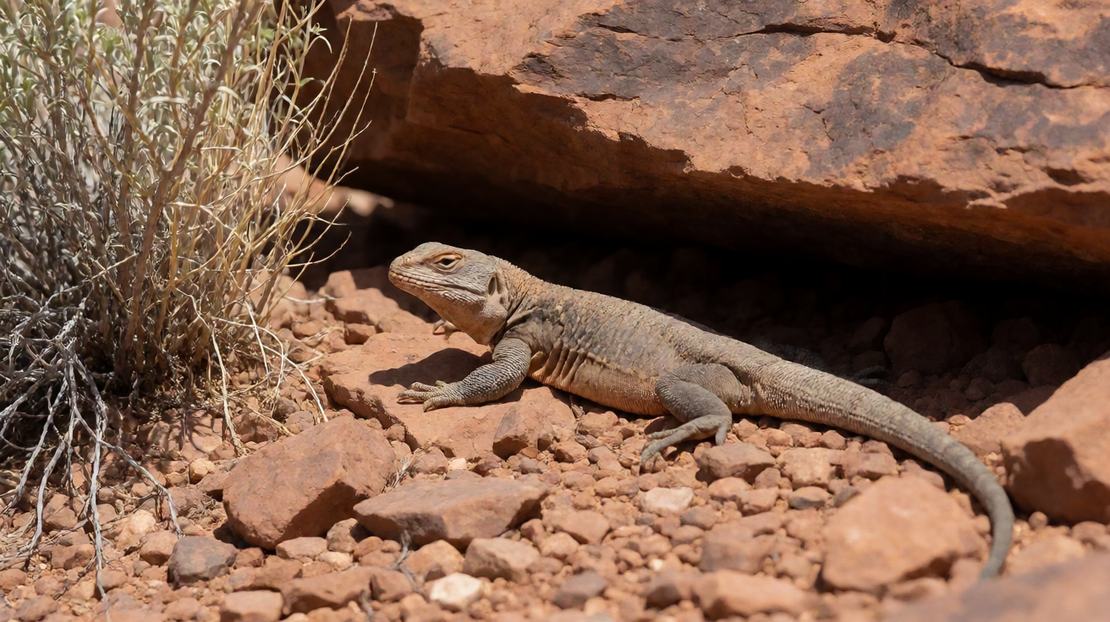
Sauromalus ater | Common Chuckwalla
Species Profile · Iguanidae
Common Chuckwalla
A chuckwalla fills its lungs with air to lock itself into a crack.
Least Concern
Length
Weight
Clutch
Lifespan
Range
Rating
Three hundred grams in a crevice
A lizard that becomes a wedge
Loose wrinkled skin and a thick round tail mark this desert lizard. Length reaches 50 cm, and a large male may pass 300 g. Males turn black with an orange tail, whereas females stay grey and banded. Rocky slopes in the south west of North America hold the species.
Lava flows and granite piles suit the animal, since it needs deep cracks to hide in. Leaves, flowers and fruit form the whole diet. Frightened animals dive into a crevice, and the lungs then fill with air until the body jams tight. Basking takes much of the morning, and the animal may reach 40 C on hot stone.
Few lizards are so strictly plant eating, yet few are so safe once inside a crack. The species still holds a wide range, although the desert around it changes faster than the lizards can move.
Family tree
Iguanidae, the iguanas
Sauromalus ater sits in Iguanidae, the family of iguanas. Dumeril and Bibron named the species in 1856. Six chuckwallas are recognised today, and this one covers the largest range. The Green Iguana lives in tropical forest, while this animal keeps to dry rock.
Both eat plants, and both bask for hours. Their homes differ, though, because one sleeps in a tree and the other in a crack. Genetic work puts the group close to the desert iguanas. No subspecies is named today.
Older accounts called the animal the fat lizard, and the name describes the puffed body. One species now spans the Mojave and Sonoran deserts, although the populations stay apart.
One of six chuckwallas
How to tell one
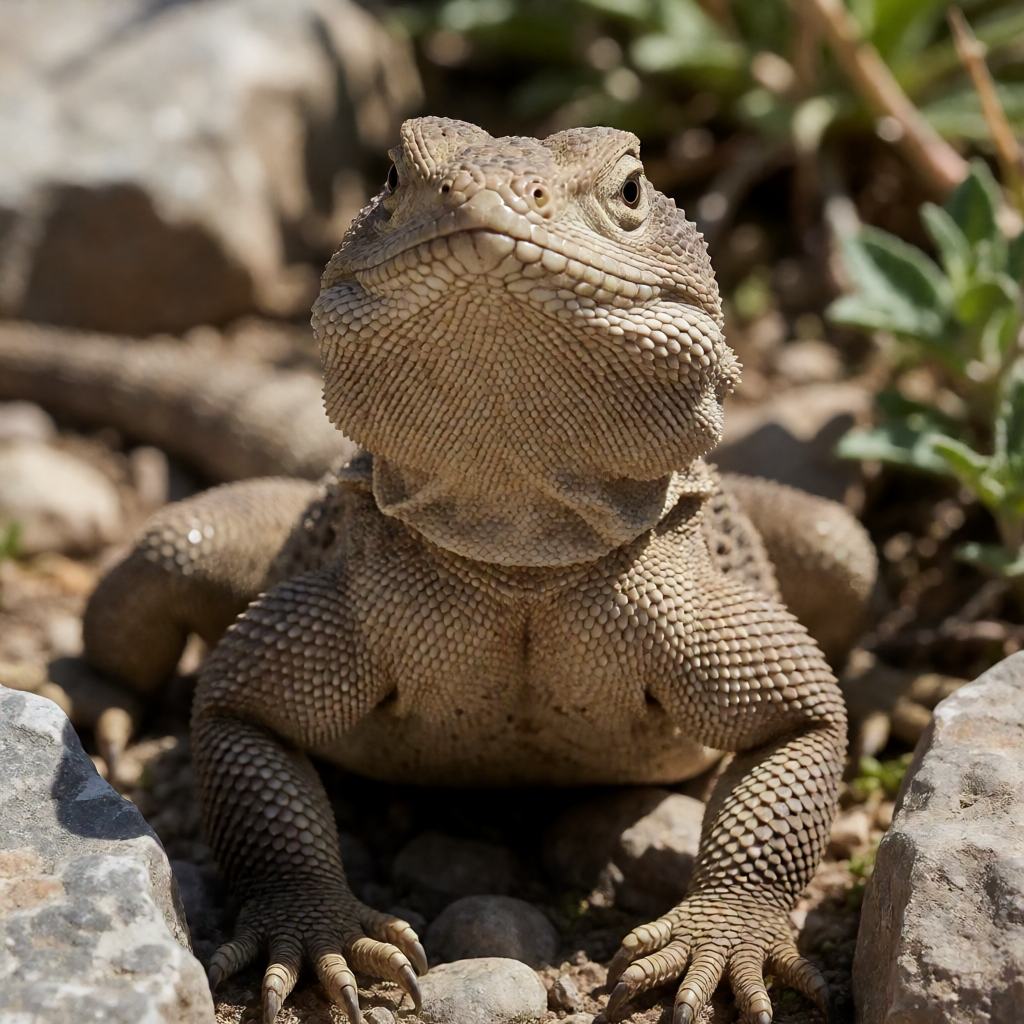
Length reaches 50 cm in a large male. Skin hangs loose over the flanks. The folds widen when the animal fills with air. Males wear black over the body, with an orange or red tail.
Females and young show grey bands and a paler tail. Tail looks thick and round, and it stores fat that carries the animal through the cold months. Legs stay short, and the claws grip rough rock. Head looks blunt, with a jaw built for cropping leaves.
Scales stay small and smooth, unlike the spiny skin of a horned lizard. A puffed body wedges into a crack, and the lizard then waits until danger passes.
1
2
3
Loose skin and a fat tail
Where it lives
Rock piles and lava flows hold the main groups. Crevices give shade through the hottest hours, since the rock holds heat long after dusk. Range covers southern California, Nevada, Arizona and northern Mexico. Desert scrub around the rocks supplies the food.
Rain comes in two short seasons, and the plants flush fast. Winter sends the animal deep into a crack, and it sleeps for months. Cattle and off road vehicles crush the desert plants. Mining removes whole hills.
Each colony needs several rock piles within walking distance, since a lizard will not cross open sand at all. Losing one pile costs more than losing the same area of flat sand.
Lava flows and rock piles
What it eats
Leaves form the base of the diet. Flowers, buds and fruit fill the rest. Feeding happens near the rock, so the animal can retreat in a second. Climbing a bush comes easily, and the animal reaches the newest growth at the tips of the stems.
Water comes from plants, and the animal rarely drinks. Growth slows with the food supply. A small animal may be old. Growth slows with the food supply, so a small animal may be old.
Young lizards take softer leaves and flowers. Captive animals need a varied plant diet, because one green food causes illness.
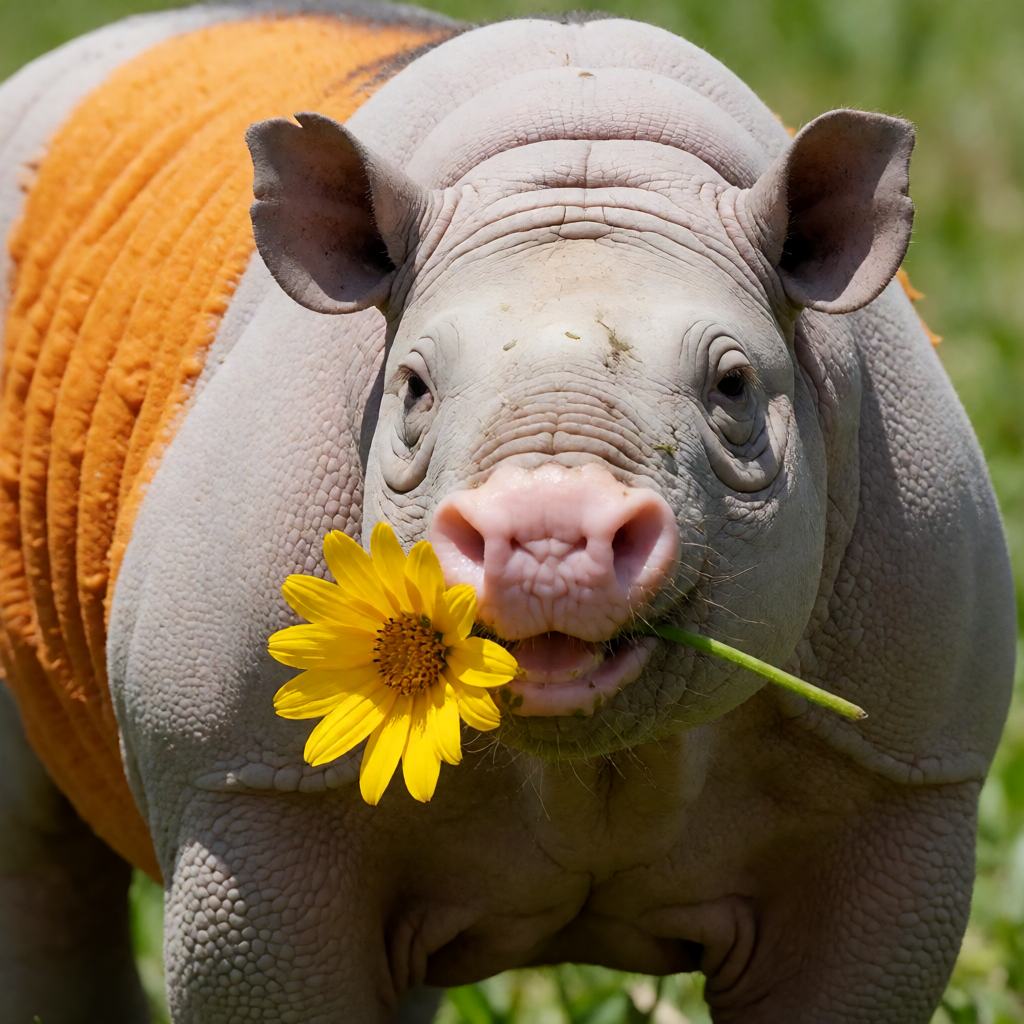
Leaves, flowers and fruit
The breeding cycle
Mating happens in spring, soon after winter rest ends. A male defends a rock pile, and he bobs his head at every rival that comes near the stones. Five to sixteen eggs are laid in a burrow. Eggs hatch in late summer.
Hatchlings look like small females, and they hide in narrow cracks. Females may skip a year when the plants fail. Females need fat stored in the tail, because breeding costs more than the desert can supply. Predators take eggs, so a clutch often fails.
Young lizards face hawks, snakes and road traffic. A chuckwalla may live 15 years, and it breeds for most of that time.
Least Concern, and quietly pressed
Conservation
IUCN lists the species as Least Concern. Range stays wide, and the animal survives on land that people cannot farm. Off road vehicles crush plants and break rock. Mining and gravel pits remove whole colonies.
Collectors take animals for the pet trade, although the law limits the take in some states. Cattle trample the desert scrub. Guarded areas cover part of the range, and the animals live well inside parks. Surveys rely on rock piles, since a lizard in a crack cannot be counted.
Warming may push the species uphill, where the rock runs out. Keeping the desert around each rock pile matters more than guarding a single hill.
Side by side
How It Compares
| Trait | Common Chuckwalla | Green Iguana |
|---|---|---|
| Length | about 50 cm, with a thick round tail | up to 1.5 m, with a banded tail |
| Weight | 200 to 300 g | up to 4 kg |
| Home | rock piles in the south west deserts | rain forest canopy in Central and South America |
| Diet | leaves, flowers and fruit | leaves, flowers and fruit |
| Defence | swallows air to jam in a crevice | lashes with the tail and drops from branches |
| Clutch | five to 16 eggs in a burrow | 20 to 70 eggs in a burrow |
Common misreadings
What People Get Wrong
- Many people believe the animal bites when cornered, yet it only wedges itself in rock.
- Some guides say the species eats insects, although leaves make up the whole diet.
- A common claim says the lizard lives in trees, yet it stays on rock piles.
Going further
Sources and Further Reading
Quick hits
Five things to remember
- Males wear black with an orange tail.
- The animal swallows air to jam in a crack.
- Females lay up to 16 eggs.
- The tail stores fat for winter.
- A chuckwalla may live 15 years.