 By Iris
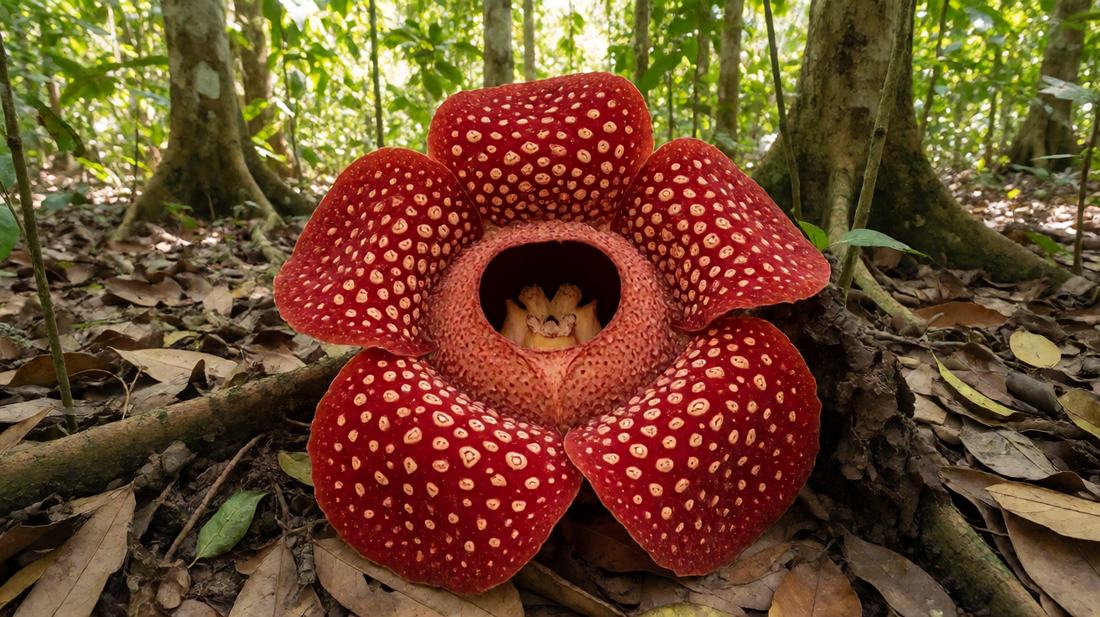
Rafflesia kerrii | Kerri’s Rafflesia
Species Profile · Rafflesiaceae
Kerri’s Rafflesia
A flower with no leaves, no stem and no roots, which steals everything it needs from a vine and smells of rotting meat.
No global IUCN rating
Flower
Bloom
Bud growth
Host
Elevation
Rating
The Kerri’s Rafflesia
The flower that smells of meat
This plant grows in the rainforests of southern Thailand and Malaysia. It has no leaves, no stem and no roots. A single flower can measure 70 cm across.
The bloom lasts only 3 to 5 days. Because the plant gives off a smell of rotten meat, it draws the flies that carry its pollen. A local name, bua phut, is used in Thailand.
The flower appears on the forest floor without warning. As a result, logging threatens the vine that keeps it alive. It carries no global IUCN rating.
Family tree
Rafflesiaceae, the rafflesias
The plant belongs to the family Rafflesiaceae. Meijer described it in 1984. Its relatives include the larger corpse lily of Sumatra. That species holds the record for the widest single flower on Earth.
Although gene work has moved the family around the tree of life several times, most workers now place it near the spurges. A cousin, the Corpse Lily, grows on the same island chain and draws the same flies. Both plants share a strange habit, because neither one builds any green tissue of its own.
No leaves at all
How to tell one
The flower can reach 70 cm across. Petals are thick, fleshy and blood red. Pale warty spots cover the surface.
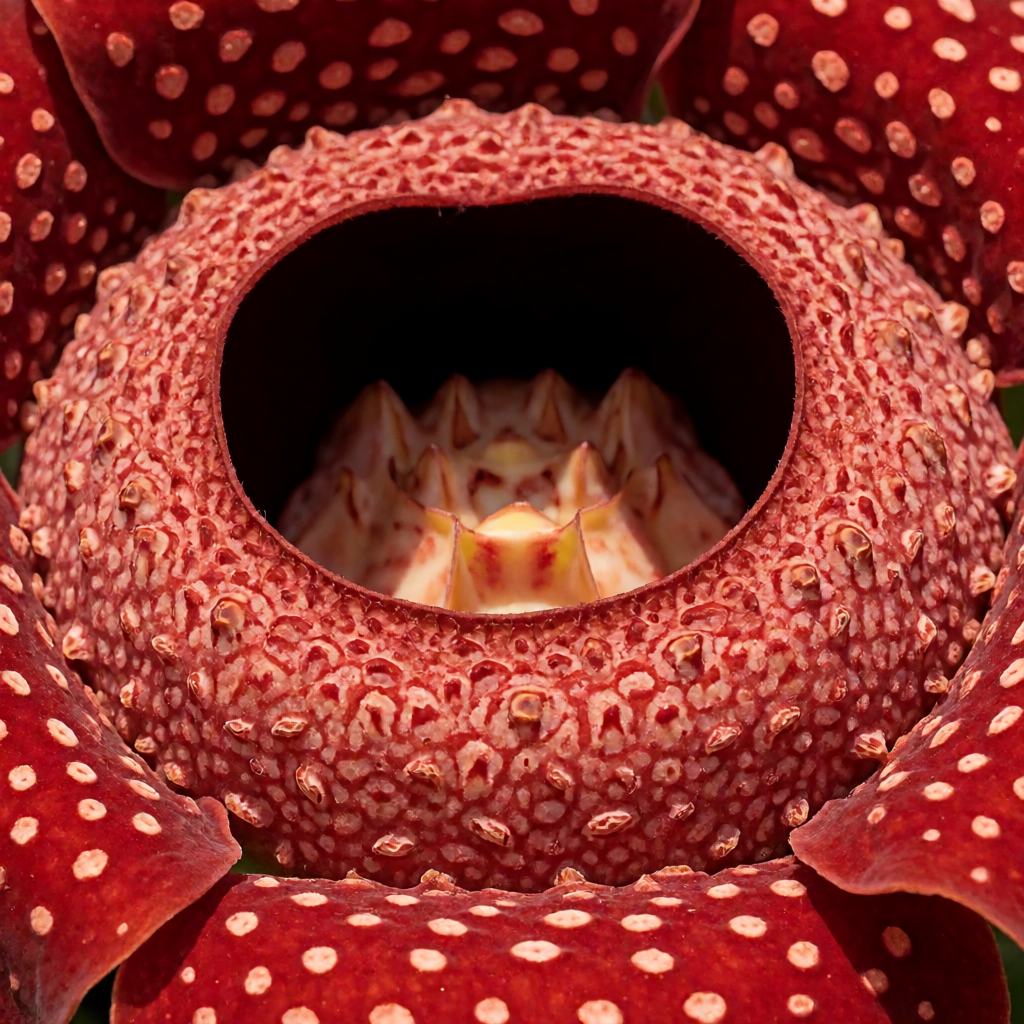
A dark chamber sits at the centre. No leaves ever form. In fact, no green stem ever forms.
The whole body is a web of threads inside the host vine. Because the plant has given up leaves and roots alike, it depends on another living plant for every drop of water and every grain of sugar.
1
2
3
Host vines
Where it lives
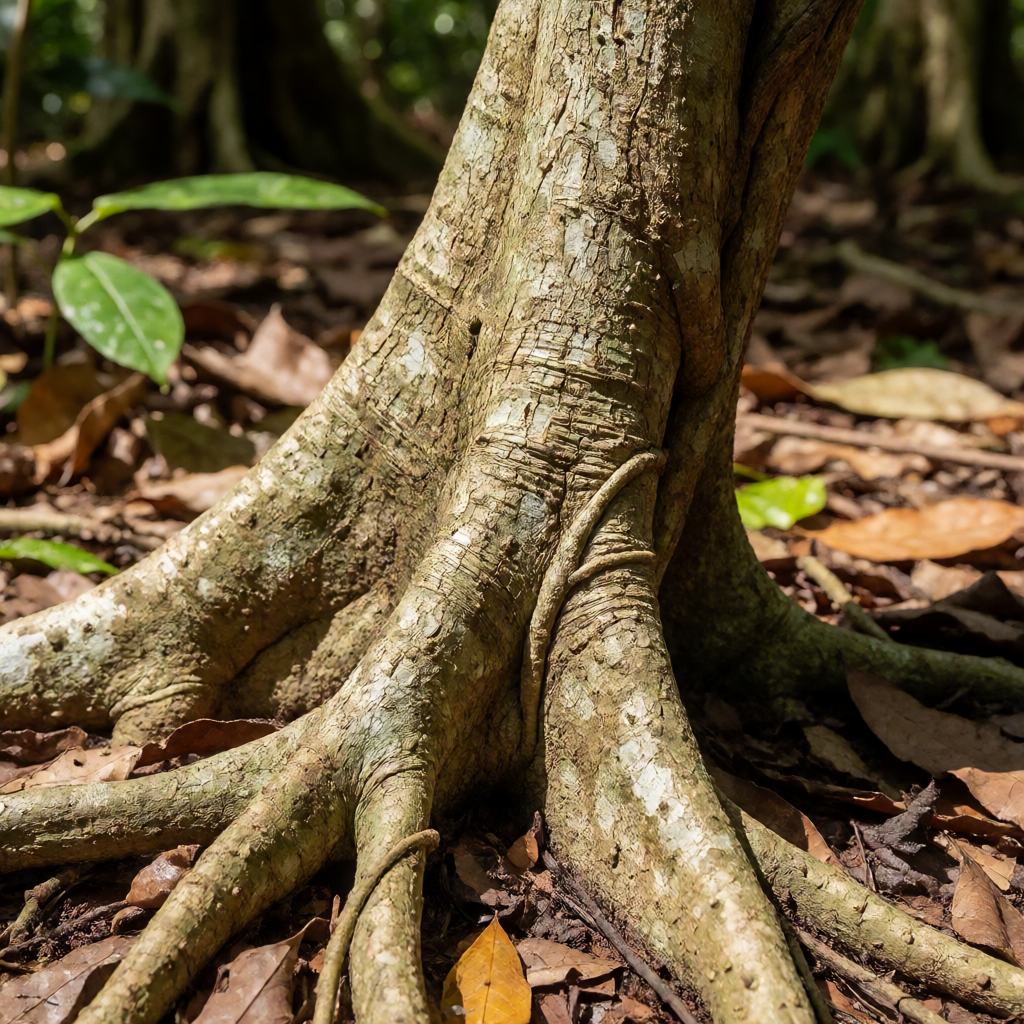
Lowland rainforest is the main home. Some plants grow in hill forest up to 1,000 m. It needs a host vine of the genus Tetrastigma.
That vine must be thick and old, since young stems cannot feed a bud. Shade and steady moisture suit both. Because the host vine needs large trees to climb, a logged forest loses the rafflesia long before the last tree falls.
Moreover, few sites hold more than a handful of blooms. Roads open the forest to collectors.
Stolen sugar
What it eats
No food comes from the soil. Water comes from the host vine. Sugar comes from the host as well.
Threads spread through the stem of the vine. Those threads steal both water and food, since the host cannot stop them. Because the plant has no way to make its own sugar, it lives as a parasite for every day of its life.
A flower needs months to form. For most of the year, nothing shows at all.
Five days
The breeding cycle
A bud pushes out through the bark of the vine. Growth takes 9 months or more. The flower opens at last and stays open for 3 to 5 days.
Flies arrive, drawn by the smell. Pollen sticks to the flies and travels to another bloom. Fruit follows on the same flower.
Tree shrews eat the fruit and drop the seeds. Each seed is smaller than a grain of rice. Because the sexes sit on separate flowers and a bloom lasts less than a week, the odds against any one seed are enormous.
No global rating
Conservation
No global IUCN rating exists for the plant. Thailand gives the species legal protection, however. Several parks guard the best sites.
Logging remains the main threat. Clearance for rubber and oil palm removes the host vine. Meanwhile, collectors dig up buds for sale.
Because the plant needs an old vine, deep shade and a pollinator that may travel far, no single reserve can guarantee its future on its own. However, tourism brings money and also feet.
Side by side
How It Compares
| Trait | Kerri’s Rafflesia | Corpse Lily |
|---|---|---|
| Range | southern Thailand and Malaysia | Sumatra |
| Flower width | up to 70 cm | up to 105 cm |
| Bloom length | 3 to 5 days | 5 to 7 days |
| Elevation | up to 1,000 m | 500 to 1,000 m |
| Local name | bua phut | padma raksasa |
| Bloom season | after the rains | at any time of year |
Common misreadings
What People Get Wrong
- Many people call the flower a fungus. It is a plant with no leaves of its own.
- Field guides are said to show a stem. It has none at any stage.
- Its scent is said to keep animals away. It brings the flies that carry pollen.
Going further
Sources and Further Reading
- GBIF Backbone Taxonomy, Rafflesia kerrii Meijer
- Meijer, W. 1984. New species of Rafflesia. Blumea 30.
- Barcelona, J. F. et al. 2009. Rafflesiaceae. Flora Malesiana.
- IUCN Red List of Threatened Species. No global assessment published for this species.
Quick hits
Five things to remember
- A bloom lasts less than a week.
- A bud takes 9 months to grow.
- Its scent is rotting flesh.
- Carrion flies carry the pollen.
- The plant lives only inside its host.