 By Iris
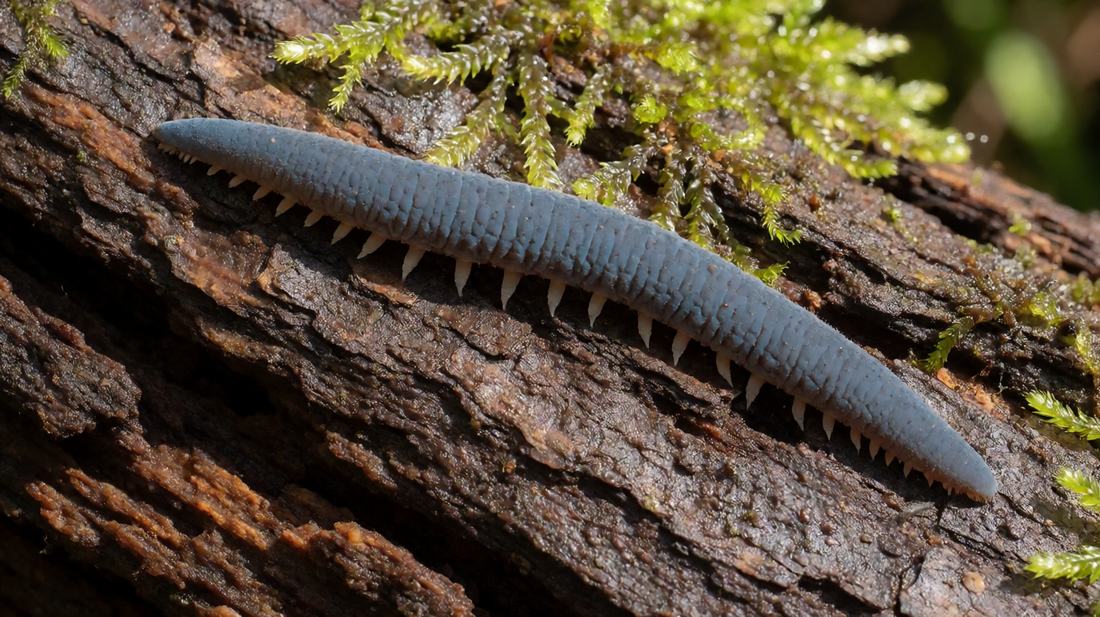
Peripatoides novaezealandiae | New Zealand Velvet Worm
Species Profile · Peripatopsidae
New Zealand Velvet Worm
A velvet-skinned hunter of damp logs that fires glue at its prey and gives birth to live young.
No global IUCN rating
Length
Legs
Glue
Pregnancy
Global species
Rating
The New Zealand Velvet Worm
A hunter that fires glue
This velvet worm lives on the forest floor of New Zealand. A soft skin covers its body. Tiny bumps give that skin a velvety feel. The animal moves on many pairs of short legs.
Hunting happens only after dark. Because the animal breathes through tubes that open all over its skin, it dries out fast and cannot survive in open ground. Prey is caught with a jet of glue. Logging and land clearance have cut its range.
The species has no global IUCN rating. Local surveys suggest that several close relatives are in trouble.
Family tree
Peripatopsidae, the velvet worms
The velvet worm sits in the family Peripatopsidae. Its relatives include spiders, insects and crabs. Older workers linked the group to the worms. Modern work places it with the insects and their allies.
Fossils are 500 million years old. They look much like the living animal. In fact, only about 200 species are known worldwide. About 30 of them live in New Zealand.
European scientists named this one in the 1800s. A distant relative, the Velvet Worm, lives in the same kind of damp litter in Australia. Both belong to an old line, although neither animal is a true worm in the modern sense.
Legs and glue
How to tell one
Adults measure 2 to 5 cm in length. The body carries 15 pairs of stubby legs. Each leg ends in a pair of small claws.
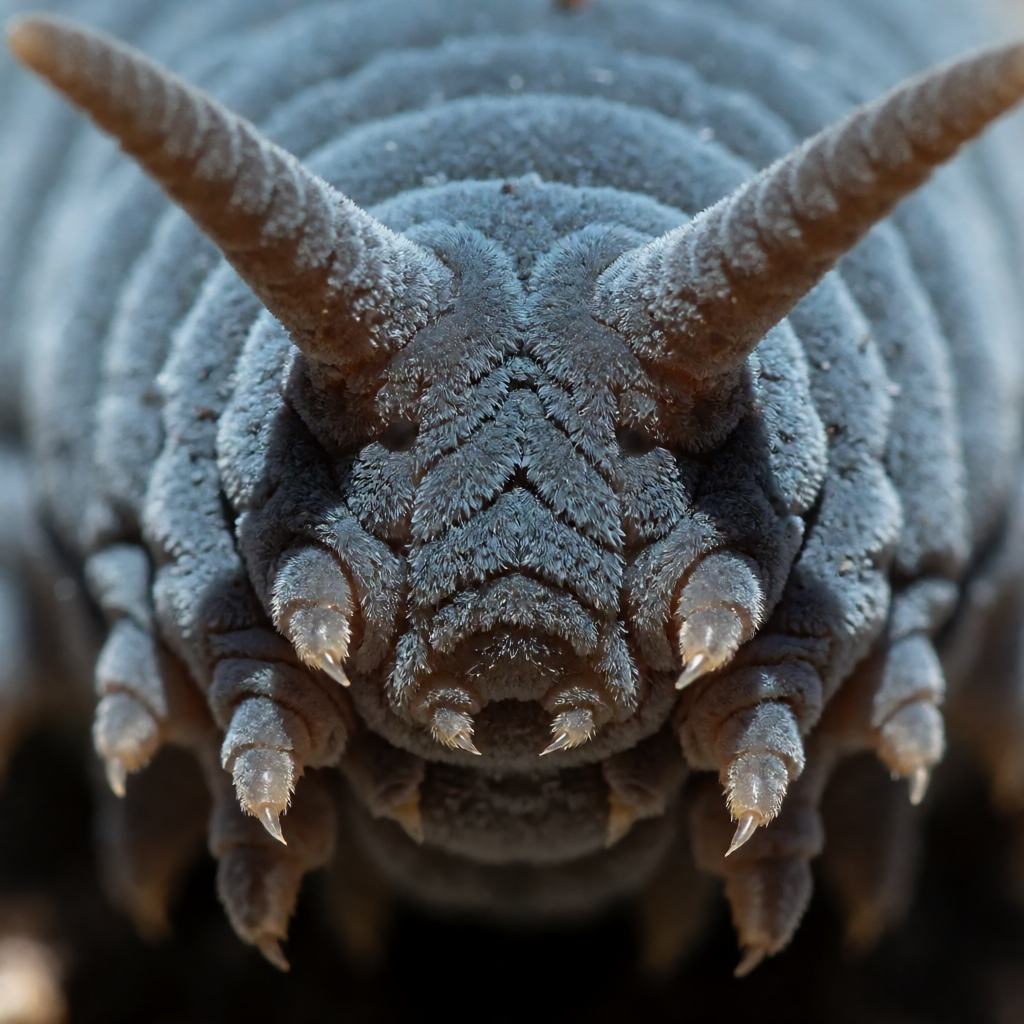
Skin holds rows of tiny scales. Those scales give the animal its name. A pair of antennae sits on the head.
Simple eyes see little more than light and dark. Slime glands open beside the mouth, since the animal needs them to feed. Because the legs are short and the body is soft, the animal walks slowly and relies on surprise rather than speed.
1
2
3
Damp litter
Where it lives
Damp forest litter is the main home. Rotting logs and moss hold the best cover. It needs damp air all year.
Temperature must stay mild. Disturbed forest loses the logs. It also loses the moisture.
Because a single clearing can dry out a whole patch of litter, the animal often vanishes from a wood long before the trees do. Moreover, pasture and pine plantation hold almost none. Fragments of native forest matter a great deal.
Glue and bite
What it eats
Small insects make up most of the diet. Beetles, crickets and spiders are all taken. First it taps its antennae over the ground.
When prey touches the skin, 2 glands fire. A jet of sticky glue pins the victim down. The hunter then bites through the cuticle, since the glue holds the prey still.
Therefore, gut fluid softens the body from the inside. Because the glue sets in seconds and can be fired more than once, a slow hunter can still bring down prey far livelier than itself.
Live young
The breeding cycle
Males and females look much alike. A male leaves a small packet of sperm. He places it on the female’s skin.
Tissue beneath the skin takes the sperm in. In fact, young develop inside the mother. A pregnancy can last 10 months or more.
The newborn looks like a small adult. As a result, litters are small. Because the mother carries her young for so long and has few at a time, the animal cannot rebuild numbers quickly after a bad year.
No global rating
Conservation
No global IUCN rating exists for the species. However, New Zealand keeps its own threat list. Several close relatives there are ranked as threatened.
Land clearance removes the damp litter that the animal needs. Meanwhile, forestry and farming both take a toll. Introduced rats and deer trample the floor.
They also dry it out. Because the animal cannot cross dry ground or travel far, a single road can split one group into isolated pockets that never meet again. Protecting old forest is the main remedy.
Side by side
How It Compares
| Trait | New Zealand Velvet Worm | Australian Velvet Worm |
|---|---|---|
| Range | New Zealand | eastern Australia |
| Body length | 2 to 5 cm | 2 to 6 cm |
| Leg pairs | 15 | 15 or 16 |
| Social life | usually alone | often in family groups |
| Prey | small insects | larger insects and spiders |
| Cover | damp litter and rotten logs | damp litter under logs |
Common misreadings
What People Get Wrong
- Many people call it a worm. It belongs with the arthropods instead.
- Glue is thought to dry and drop off. It stays sticky and can be fired again.
- Some say it crosses dry ground. It dies within minutes in the open.
Going further
Sources and Further Reading
- New Zealand Department of Conservation, peripatus
- Trewick, S. A. 2000. Onychophora. New Zealand Inventory of Biodiversity.
- Giribet, G. & Edgecombe, G. D. 2020. The Invertebrate Tree of Life. Princeton University Press.
- GBIF Backbone Taxonomy. Peripatoides novaezealandiae (Hutton, 1876).
Quick hits
Five things to remember
- Sticky glue stops a cricket in its tracks.
- About 15 pairs of legs carry the body.
- Young arrive alive, not as eggs.
- It has no lungs at all.
- Its line goes back 500 million years.
[…] velvet worm hunts the same wet litter, though it takes living prey. Most food lies within a metre or two of the […]