 By st20113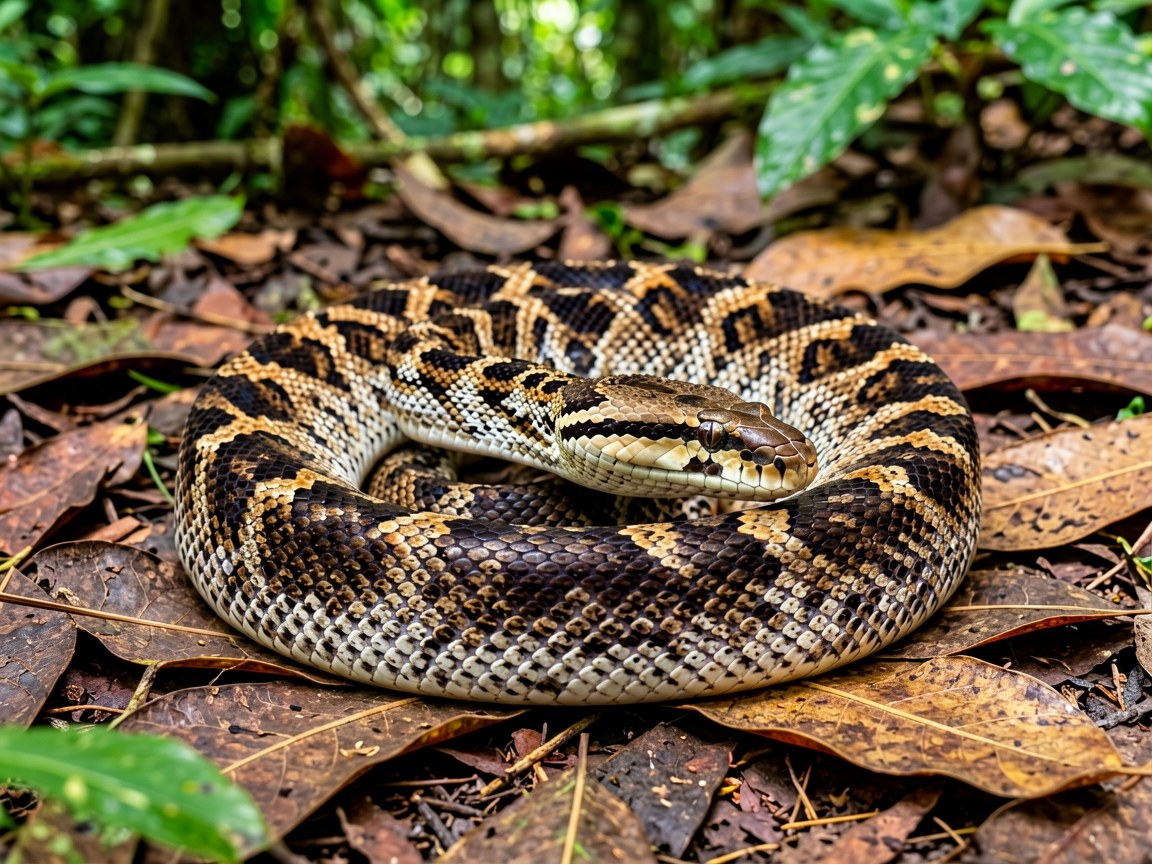
Python reticulatus | Reticulated Python
Introduction
Python reticulatus, the reticulated python, is the longest snake in the world, with wild individuals regularly exceeding 5 metres and record holders approaching 7 metres or more. Native to the forests, grasslands, and wetlands of Southeast Asia, from Indonesia and the Philippines to Myanmar and Thailand, it is a powerful constrictor that kills prey by coiling around it and tightening until the animal can no longer breathe. Its name comes from the net-like (reticulate) pattern of its scales, which provides superb camouflage among dappled leaf litter and water. Although formidable, it is generally shy and avoids people; most bites occur when the snakes are provoked or when very large individuals are handled carelessly. It is also one of the few snakes kept commonly in zoos and, regrettably, in the exotic pet trade.
Taxonomy
Python reticulatus is the type species of the genus Python in the family Pythonidae, the Old World constricting snakes. It is a close relative of the Python sebae (African Rock Python) and shares the python hallmark of heat-sensing pits along the lips and the retention of a pelvic spur near the cloaca. The genus Python sits among the alethinophidian (advanced) snakes but, unlike venomous families, kills by constriction. The species name reticulatus refers to the intricate network pattern on its skin. Recent genetic work recognises that the “reticulated python” may include several regional forms across its vast range, though they are commonly treated as one widespread species across the islands and mainland of Southeast Asia.
Physical Characteristics
The reticulated python’s most obvious trait is its length, supported by a slender but muscular body built for both climbing and swimming. Its colour pattern is a complex mesh of gold, brown, grey, and black with irregular diamond and chain markings outlined in pale scales, breaking up its outline in forests and streams. The head is distinct, with arrow-shaped markings and light stripes running back from the eyes. Like all pythons it has small, forward-facing heat pits that detect the infrared glow of warm-blooded prey in darkness. The jaws are hinge-linked to swallow prey far wider than the head, and the body scales are smooth. Hatchlings are only about 60 cm long but grow rapidly, and the largest females can be heavy enough to overpower deer, pigs, and, in extremely rare cases, humans.
Habitat
Reticulated pythons occupy a remarkable range of habitats across tropical Southeast Asia: primary and secondary rainforests, woodland, grasslands, riverbanks, mangrove edges, and even agricultural land and villages where prey is abundant. They are strong climbers and swimmers, equally at home in a tree or a stream, and they often rest near water where they can ambush drinkers. They tolerate human-modified landscapes better than many forest snakes, which is why they persist around plantations and rural settlements. However, they prefer areas with cover and abundant rats, birds, and mammals, and they retreat from intensive, open cultivation. Across their range they occur from sea level to moderate uplands, with island populations sometimes smaller than mainland ones.
On islands such as Sulawesi, Borneo, and the Philippines the reticulated python uses a mix of forest, riverine edge, and coastal habitat, and it is notably tolerant of mangroves and brackish creeks where it can swim between islands. In agricultural landscapes it shelters in rice fields, palm plantations, and drainages, emerging at night to hunt the abundant rats and chickens that thrive around people. This flexibility explains why it remains common in parts of Southeast Asia despite heavy human pressure, even as intact forest shrinks. However, very large individuals are increasingly rare outside protected areas, because big snakes are the ones most targeted for skin and sale. Seasonal patterns matter too: during wetter months the snakes move more freely and breed, while in dry spells they concentrate around permanent water.
Scales along the back are iridescent under direct light, and the net-like pattern varies so much between individuals that no two are marked alike, a feature used by researchers and keepers to identify specific snakes. The heat-sensitive pits, set in a row between the nostril and the eye and along the lower jaw, let the python locate warm-blooded prey in total darkness with striking accuracy. Hatchlings are boldly patterned in contrasting black and yellow, gradually shifting to the subtler adult scheme as they grow. The muscular body is surprisingly light for its length, an adaptation that lets the snake climb branches and swim strongly without exhausting itself. Even large adults retain a slender build, which is why a 5-metre python can be lifted and handled by a single experienced person, albeit with great caution.
Diet
As constrictors, reticulated pythons eat a wide variety of vertebrate prey. Juveniles take lizards, frogs, and small birds; adults graduate to rats, mice, monkeys, civets, pigs, deer, and domestic fowl and livestock when available. The snake strikes, seizes the prey in its teeth, and throws coils around the body, tightening with every exhaled breath until the prey suffocates, then swallows it whole head-first. Because a large meal can sustain the python for weeks or months, it is an intermittent feeder that may fast for long periods. In some regions it has adapted to human settlements, where abundant rats make easy hunting, which brings it into conflict with people who keep poultry and small livestock.
Reproduction
Reticulated pythons are oviparous: the female lays a clutch of 15 to 80 leathery eggs in a sheltered cavity and coils around them to incubate, shivering her muscles to raise the temperature a few degrees above the surroundings. The eggs hatch after roughly two to three months, and the independent young emerge ready to hunt small prey. Females may breed every year or two, and clutch size scales with the mother’s size, so the biggest individuals produce the largest clutches. Males compete for females and may locate them by scent trails. Hatchlings face heavy mortality from predators such as monitor lizards, birds, and even larger snakes, so only a fraction survive to adulthood despite the large number of eggs laid.
Conservation
The reticulated python is listed as Least Concern by the IUCN because of its wide range and adaptability, but local populations are pressured by habitat loss, road kill, and heavy exploitation for skin, meat, and the pet trade. Its beautifully patterned skin is valued in the leather industry, and millions of animals have been taken from the wild, though sustainable-use programmes and farms now supply much of the demand. In some areas it is also killed on sight from fear. Conservation rests on habitat protection and regulated harvest, since the species is too widespread to be globally threatened yet too heavily used in places to ignore. Education to reduce needless killing and controls on illegal wildlife trade are the main management tools across its range.
Fun Facts
- The reticulated python is the longest snake in the world, reaching over 6 metres routinely.
- Its name comes from the net-like scale pattern that hides it in leaf litter.
- It kills by constriction, not venom, tightening its coils until prey cannot breathe.
- The female broods her eggs and shivers to keep them warm.
- It can swallow prey far wider than its own head thanks to stretchy jaws.