 By st20113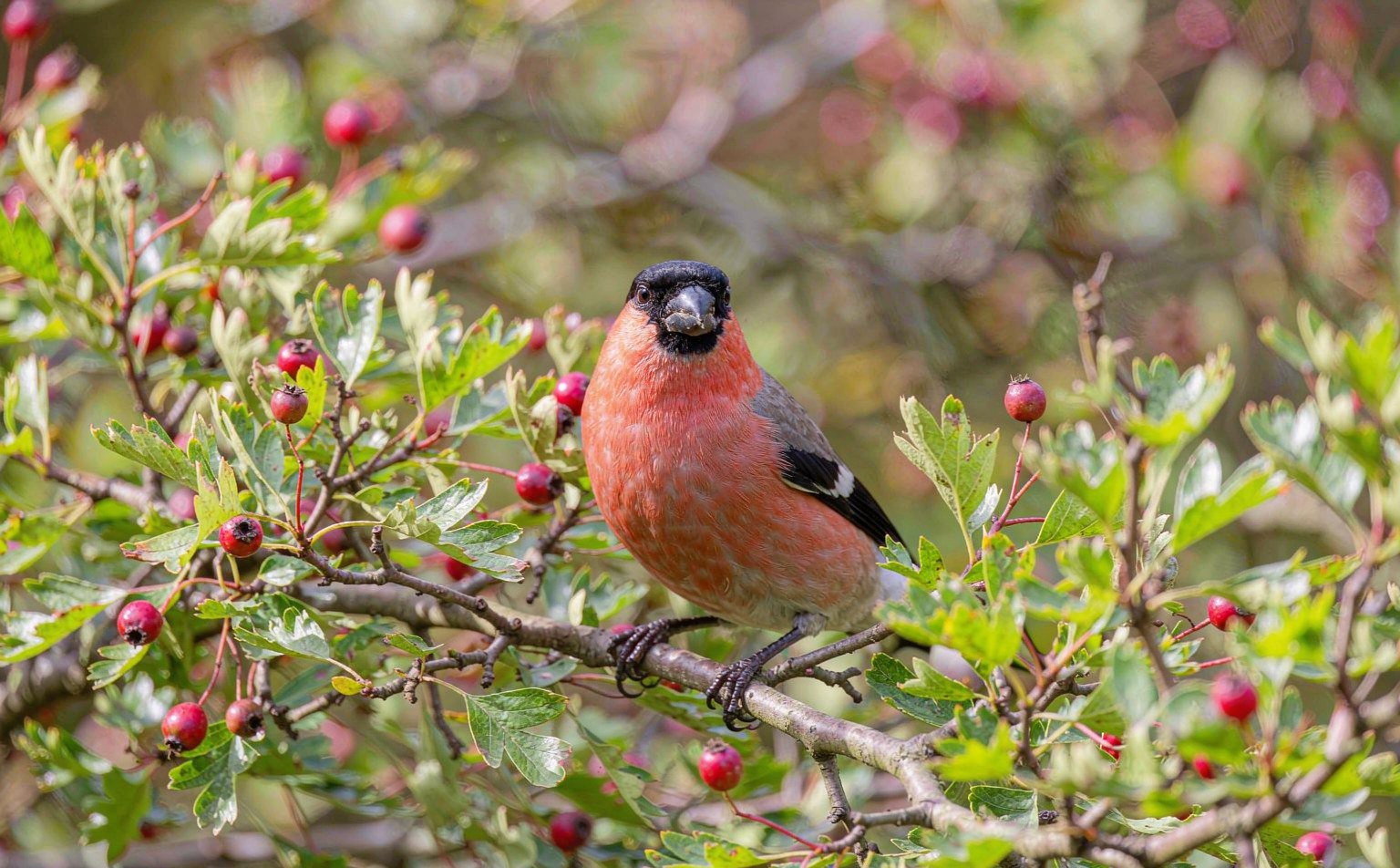
Pyrrhula pyrrhula | Eurasian Bullfinch
Introduction
The Eurasian bullfinch, Pyrrhula pyrrhula, is a shy, brightly marked finch of woodlands, orchards, and gardens across temperate Eurasia. The male’s deep pink-red breast and black cap make it unmistakable, while its soft, melancholic whistle is often heard before the bird is seen. Though not rare, the bullfinch’s secretive habits and preference for dense cover mean it is more often located by ear than by eye.
Traditionally regarded as a minor orchard pest for its taste for fruit buds, the bullfinch is today appreciated as one of Europe’s most handsome garden finches and a welcome winter visitor to feeding stations.
Taxonomy
Pyrrhula pyrrhula was described by Carl Linnaeus in 1758, and the genus Pyrrhula derives from the Greek for “flame-coloured,” apt for the male’s glowing breast. Among garden finches it is a relative of the Common Chaffinch and the European Goldfinch, all belonging to the family Fringillidae.
Physical Characteristics
The bullfinch is a stocky finch of 15–17 cm with a wingspan of 22–26 cm and a weight of 21–27 g. The adult male has a black cap, face, and wings, a grey back and rump, and a rose-red to pink underparts; the female is similar but replaced with a duller grey-brown breast. A prominent white rump and broad, rounded wings are visible in flight.
The bill is short, deep, and black — a powerful tool for crushing buds and seeds. The tail is relatively short, and the posture is often hunched. Juveniles are predominantly grey-brown, acquiring adult coloration gradually through their first winter.
Habitat
Bullfinches inhabit deciduous and mixed woodland, forest edges, coppiced hazel, orchards, overgrown hedgerows, and large gardens. They favour structure and dense shrubby understory, where they can forage and nest out of sight. In winter they may move into parks and suburban plantings in search of buds and berries.
They are less tied to open ground than many finches, spending much time in the canopy and among twigs. The presence of fruiting and budding shrubs strongly influences local abundance through the year.
Diet
The bullfinch feeds chiefly on plant material. In late winter and spring it consumes the flower and leaf buds of trees such as hawthorn, cherry, and apple, sometimes damaging orchard crops. At other times it eats seeds, berries, and the soft parts of a wide variety of plants, and it visits feeders for sunflower and other oily seeds.
Young bullfinches are fed largely on insects and larvae, which the parents gather from foliage. The species’ strong bill enables it to extract seeds from tough capsules, and pairs often forage quietly together within a loosely defended territory.
Reproduction
The breeding season begins in spring. The nest is a frail, open cup of twigs, moss, and lichen, lined with fine roots and hair, placed low in a shrub or dense tree. The female lays four to six pale blue-green eggs sparingly marked with purple, and she incubates them for about two weeks while the male feeds her.
Both parents feed the chicks, which fledge after roughly two weeks. Bullfinches may raise two broods in favourable years, and family groups remain together into the autumn before joining loose winter flocks.
Conservation
The Eurasian bullfinch is listed as Least Concern and remains widespread, though some national populations have declined with the loss of traditional orchards, hedgerows, and coppiced woodland. Its inconspicuous nature means trends are best tracked through systematic surveys rather than casual observation.
Maintaining diverse, shrub-rich habitats — including untrimmed hedgerows and native fruiting trees — supports the species through the lean late-winter period when buds form its main food. The bullfinch’s sensitivity to habitat structure makes it a useful indicator of woodland and orchard quality.
Fun Facts
- The male’s red breast and the female’s grey one are the only easy way to tell the sexes apart.
- Its soft, piping call is often the first sign the bird is nearby.
- Bullfinches can damage fruit crops by eating the buds before they open.
- The genus name means “flame-coloured” in Greek, a nod to the male’s glow.
- They feed their chicks insects rather than seeds in the first days of life.