 By st20113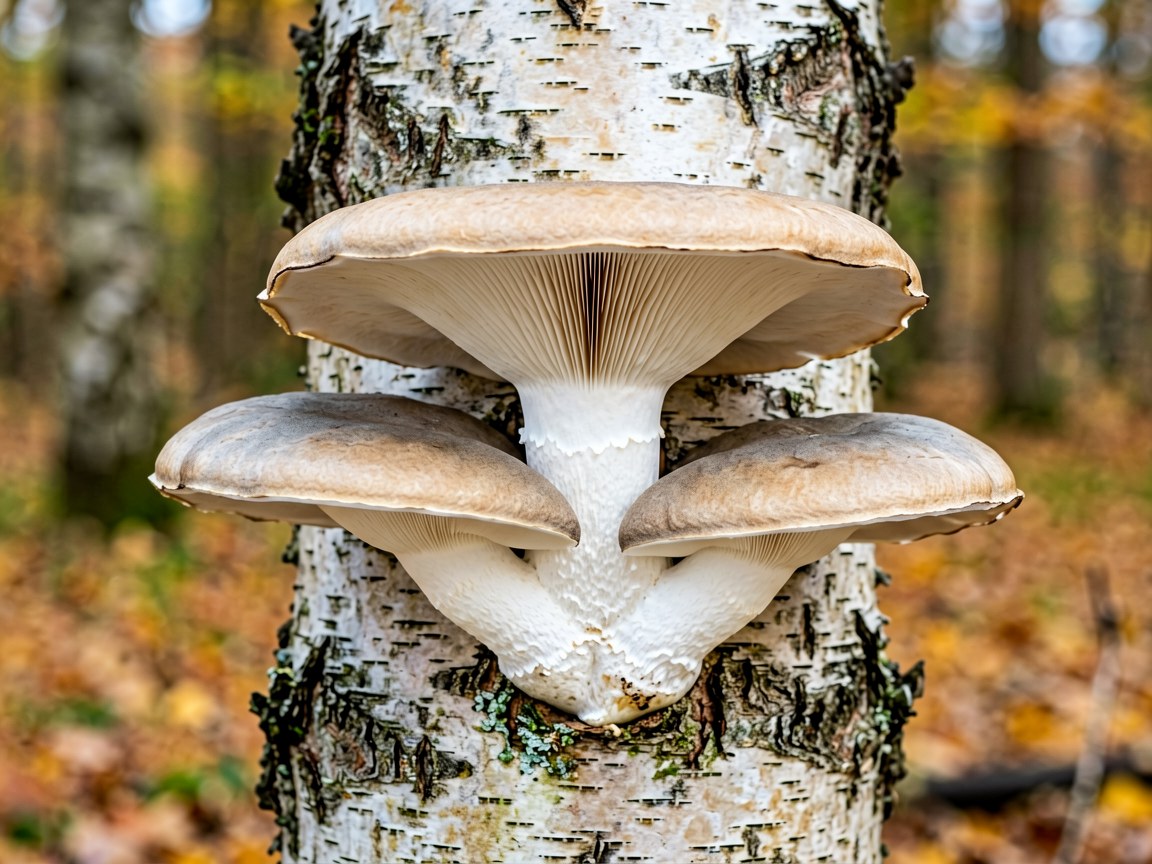
Piptoporus betulinus | Birch Polypore
Introduction
The birch polypore (Piptoporus betulinus) is the soft, pale, rubbery bracket fungus that grows almost exclusively on birch, and it is one of the most distinctive and most frequently seen of all bracket fungi. When young it is a rounded, pale brown, bun-shaped lump with a smooth, slightly velvety cap and a pure white underside; as it expands it becomes a thick, fleshy, hoof- or kidney-shaped bracket with a corky, brownish upper surface and a blunt, rounded, inrolled margin. It is annual, soft rather than woody, and short-lived, and it is one of the very first fungi to break down a dead birch. It is also famous for an archaeological discovery: the Iceman, the five-thousand-year-old mummy found in the Alps in 1991, was carrying pieces of it, and it is thought to have been used as a medicine, as tinder, or as both.
Taxonomy
Piptoporus betulinus is a basidiomycete in the order Polyporales and the family Fomitopsidaceae, a group of brown-rot fungi that also includes the tinder fungus and several important timber-decay species. The genus name comes from the Greek for “falling pore”, a reference to the way the tube layer separates from the flesh of the cap, and the specific epithet betulinus records its association with birch. It has been placed at times in Polyporus and in Fomitopsis, and older books may use any of these names. Its host specificity is unusually strict: unlike most bracket fungi, which will grow on a range of trees, this species is found almost entirely on birch, and a bracket on any other tree is worth checking carefully. As a basidiomycete it produces its spores externally on club-shaped basidia, as does Amanita muscaria, but here the basidia line the insides of fine vertical tubes that open as pores on the underside rather than hanging from gills.
Physical Characteristics
The fruit body is annual, soft, and fleshy when fresh, drying to a light, corky, brittle consistency; it is typically five to twenty centimetres across and two to six centimetres thick. It is usually semicircular, hoof-shaped, or tongue-shaped, attached to the trunk by a narrow, often slightly stalk-like base, and the margin is thick, blunt, and strongly rounded or inrolled, especially when young. The upper surface is smooth, at first pale buff, fawn, or pale grey-brown, becoming dull brown, often with a slightly wrinkled or pimpled appearance and sometimes with a thin, greyish, separable skin; the margin remains pale. The underside is white when fresh and becomes pale brown or dingy with age; it is made of very fine, short, round pores, and one of the most useful characters is that the whole tube layer peels away cleanly from the flesh of the cap, like a soft white rubber sheet. The flesh is white to pale cream, thick, soft, and watery, with a mild smell and a slightly bitter taste. The spores are cylindrical, curved, and hyaline, and the spore print is white.
Habitat
It grows almost exclusively on birch: on dead standing trunks, on fallen logs, on stumps, on large branches, and occasionally on living trees that have been wounded or are otherwise in decline. It is one of the earliest fungi to appear after a birch dies, and a dead trunk is often covered with a dozen or more brackets within a year or two. It is found wherever birch grows, in birch and mixed woodland, on heathland, in parkland, in gardens, and along roadsides, and it is one of the most widespread bracket fungi of the northern hemisphere, occurring across Europe, Asia, and North America. It is common throughout Britain and Ireland, and especially abundant in the birchwoods of the Highlands and of heathy, acid ground. Fruiting is from late summer into autumn, though the tough, dry, empty brackets often persist on the trunk for a year or more afterwards.
Diet
The birch polypore is a brown-rot fungus and, for the most part, a saprotroph, decomposing the wood of dead birch. Brown-rot fungi break down the cellulose and hemicellulose of the wood while leaving the lignin largely untouched, so that the attacked timber becomes brown, dry, and crumbly and cracks into cubical blocks — a very different end result from the pale, stringy decay produced by white-rot fungi. It is also a weak parasite, and it can colonise a living tree through a wound and cause a brown butt rot, though it is much less important in this respect than as a decay organism of dead wood. Because it is so early an arrival and so abundant on a single host species, it plays a very large part in the recycling of birch timber in northern and upland woodland, and the speed with which it reduces a fallen trunk to brown crumble is remarkable.
Reproduction
The spores are produced inside the fine tubes on the underside of the bracket and are released in enormous numbers through the pores, dropping out and being carried away by air currents and by water. Because the fungus appears so quickly after a tree dies, its spores must already be present in the air almost everywhere that birch grows, and the chances of any individual spore landing on a suitable fresh substrate are correspondingly tiny. Those that do germinate produce a mycelium that colonises the sapwood and heartwood, and compatible mating types must meet before fruit bodies can form. The bracket itself is annual: it grows rapidly over a few weeks in late summer, releases its spores, and then dries out, decays, or is eaten by insects, and the following season a new crop of brackets appears from the mycelium within the wood rather than from the old fruit bodies. Several generations of brackets may therefore be produced from a single trunk over the years it takes to consume it.
Conservation
The species is common, widespread, and not threatened, and its fortunes are tied to those of birch, which is one of the most abundant and least conservation-dependent trees in the northern hemisphere. Because it fruits on dead wood and colonises fallen timber, standing dead trunks, and stumps, it benefits from any management that leaves dead wood in place, and it is one of the bracket fungi most likely to survive in managed woodland and in parkland. Its disappearance from a site usually means that dead birch is being cleared or burnt. It is regularly recorded in fungal surveys, and because it is tied to a single host it is a useful indicator species for dead-wood habitat in birch-dominated woodland.
Fun Facts
- Ötzi the Iceman, the five-thousand-year-old mummy found in the Alps, was carrying pieces of this fungus.
- It grows almost exclusively on birch, which is unusually strict for a bracket fungus.
- The white tube layer on the underside can be peeled off in one piece like a rubbery sheet.
- It is a brown-rot fungus, leaving the wood brown, dry, and cracked into cubes.
- It is often the first fungus to appear on a dead birch trunk, sometimes within a year of the tree falling.