 By st20113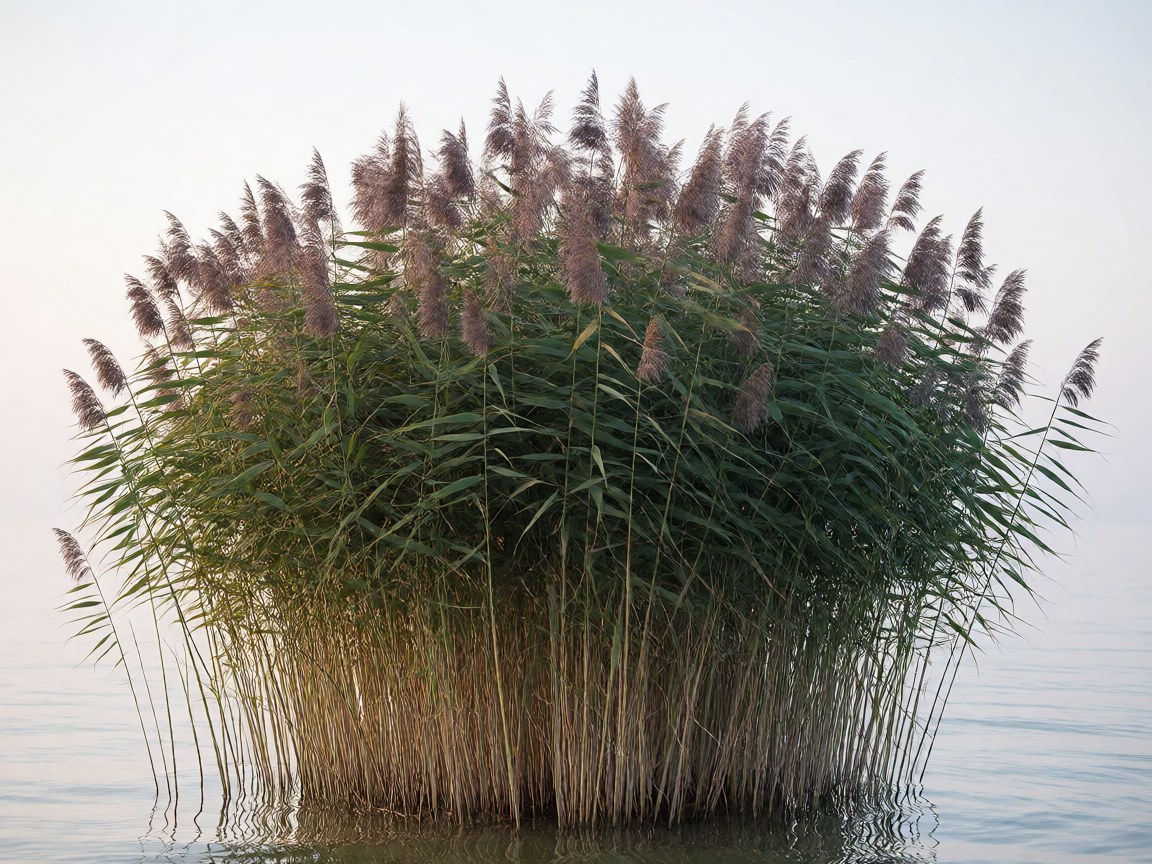
Phragmites australis | Common Reed
Introduction
The common reed (Phragmites australis) is the tall, feathery-headed grass that forms dense stands in marshes, fens, and along the edges of rivers and lakes across the world. Often taller than a person, with flat grey-green leaves and a silky-purple flower plume that persists through winter, it is the defining plant of the reedbed. Reedbeds shelter bitterns and warblers, filter water, and have supplied thatch, fencing, and even musical instruments for thousands of years.
Taxonomy
Phragmites australis is a large perennial grass in the family Poaceae, and the sole species of its genus in most of Europe. It is a true grass rather than a sedge or a rush, despite growing in water. As a green plant it depends on Photosynthesis, and it uses the efficient C3 pathway to build a great deal of growth very quickly, channelling the sugars down into a massive underground network of rhizomes that can spread for many metres.
Physical Characteristics
The stems are stiff, hollow, and upright, one to four metres tall, sometimes more, with flat, grey-green, tapering leaves fifteen to sixty centimetres long that turn brown but stay on the stem through winter. The flower head is a dense, feathery, silky plume fifteen to forty centimetres long, at first purplish and later grey-brown and shaggy. Underground, thick, branching rhizomes creep and spread horizontally, and roots grow from the nodes, allowing the plant to form dense single-species stands.
Habitat
It grows in marshes, fens, swamps, wet meadows, ditches, and on the margins of rivers, lakes, and estuaries, in standing or slow-moving fresh and slightly brackish water up to a metre or more deep. It is one of the most widespread plants in the world, found on every continent except Antarctica. It tolerates a very wide range of conditions, including moderate salinity and polluted water, which is why it often dominates disturbed wetland.
Diet
Common reed is autotrophic and unusually productive: its tall canopy captures a great deal of sunlight and it grows very fast through the summer. Nutrients are taken up from the sediment by roots and by the extensive rhizome network, and the plant can absorb large quantities of nitrogen and phosphorus, which is why it is used in constructed wetlands to clean wastewater. The sugars it makes are stored in the rhizomes over winter to fund rapid spring growth.
Reproduction
Most reproduction is vegetative. The rhizomes branch and spread, and broken pieces can float away and root elsewhere, so a single clone can cover a very large area and live for a very long time. Flowering occurs late in the season, from August to October; the plumes are wind-pollinated and set small, light seeds that are dispersed by wind and water. Germination needs bare, wet mud, so seedling establishment is uncommon in an established, closed reedbed.
Conservation
Globally the species is abundant and of no conservation concern. In Europe, reedbeds—the habitat it creates—are a priority for conservation because they support specialised birds such as bittern, marsh harrier, and reed warbler, and because many have been lost to drainage and development. Elsewhere the same plant can be invasive, especially in North American wetlands, where dense stands crowd out native species and are difficult and expensive to control.
Fun Facts
- It is one of the most widespread flowering plants in the world, found on every continent but Antarctica.
- A single clone, spreading by rhizome, can cover a huge area and live for centuries.
- The feathery purple plumes persist on the stems all through winter.
- Reedbeds are used to treat wastewater, since the plant absorbs large amounts of nitrogen and phosphorus.
- Dried reed has been used for thatching roofs for thousands of years and can last over half a century.