 By st20113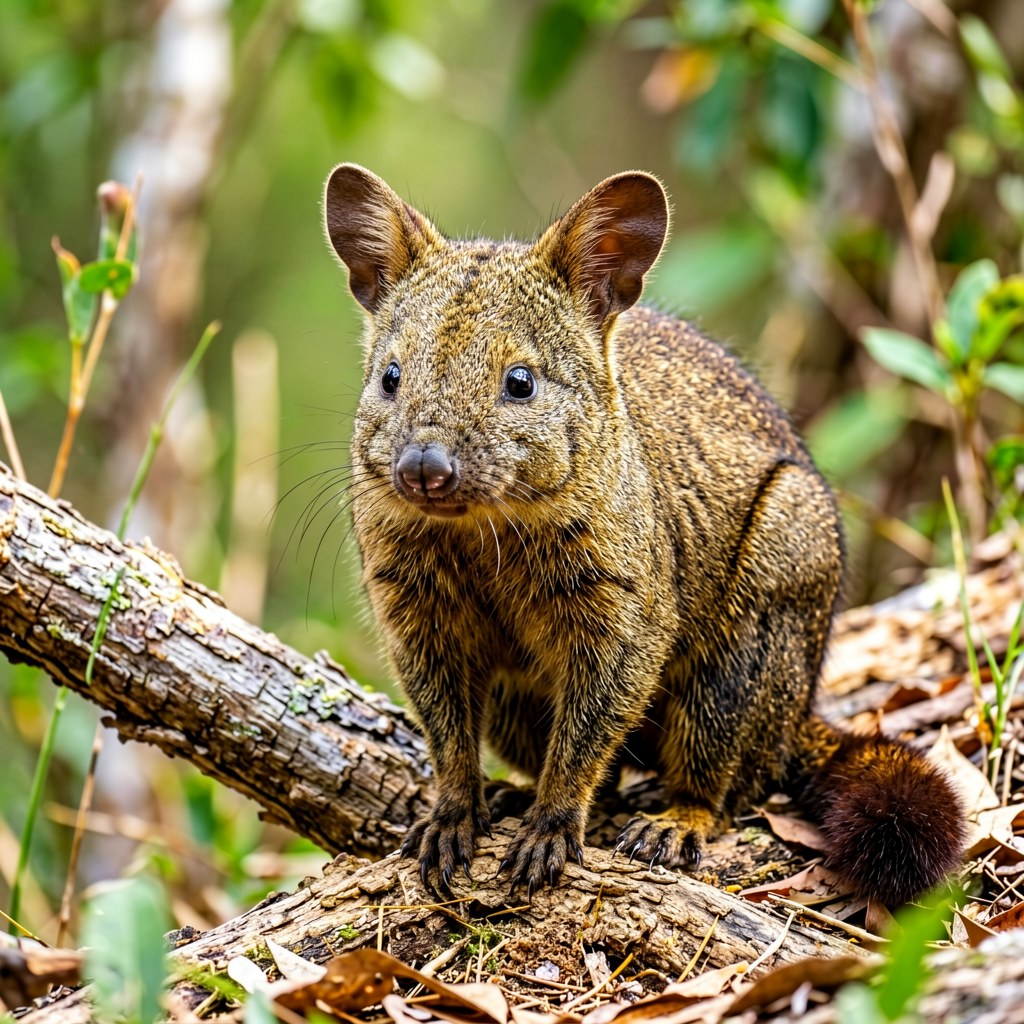
Perameles gunnii | Browns Bandicoot
Introduction
The Browns bandicoot, scientifically named Perameles gunnii and more commonly known as the eastern barred bandicoot, is a small marsupial in the family Peramelidae native to southeastern Australia, with a second, now separately recognized population in Tasmania. Nocturnal and largely solitary, it forages on the ground for invertebrates, fungi, and plant matter, using its strong foreclaws to dig conical holes in soil and leaf litter. Once common across the grasslands and grassy woodlands of Victoria and Tasmania, the species has declined on the Australian mainland because of habitat clearance and introduced predators such as foxes and cats, while Tasmanian populations remain more secure. It is a focal species for marsupial conservation, with captive-breeding and reintroduction programs aiming to re-establish it in its former range.
Taxonomy
Perameles gunnii was described by John Edward Gray in 1838, named in honor of the British botanist and collector Ronald Campbell Gunn, who worked extensively in Van Diemen’s Land (Tasmania) and sent specimens to European museums. The genus Perameles, established by Étienne Geoffroy Saint-Hilaire in 1804, includes the “long-nosed” or “short-nosed” bandicoots of Australia and New Guinea, and the species sits within family Peramelidae, the true bandicoots, order Peramelemorphia. Bandicoots are among the more unusual marsupials because, unlike most, they are omnivorous and have a relatively high metabolic rate, and their teeth are adapted for a mixed diet rather than strict herbivory or carnivory. P. gunnii is part of a complex that historically included the closely related Perameles bougainville (eastern barred bandicoot of the mainland, now sometimes split) and is distinguished by its barred hindquarters and smaller size. A useful comparative herbivore of the Southern Hemisphere is the springbok (Antidorcas marsupialis), described at https://www.gloencyc.com/springbok-antidorcas-marsupialis/, which, like the bandicoot, is a grazer of open country, though it is an African antelope rather than an Australian marsupial. Molecular work continues to clarify boundaries among Perameles species, with Tasmanian and mainland forms showing meaningful genetic divergence.
Physical Characteristics
The Browns bandicoot is a compact, ground-dwelling marsupial measuring about 26 to 36 centimeters from head to rump, with a sparsely furred tail of 8 to 12 centimeters, and weighing roughly 0.4 to 1.1 kilograms, females generally a little larger than males. Its coat is grizzled grey to fawn above, paler on the underside, and marked by three to five dark, horizontal bars across the rump and hindquarters—the “barred” feature that gives the species its common name. The snout is long, tapering, and naked at the tip, armed with a mobile nose used to locate food by smell; the eyes are small and the ears rounded. The forelimbs are short but powerfully built, with strong, flattened claws adapted for digging, while the hind limbs are longer, giving the animal its characteristic humped, shuffling gait. Like all bandicoots it has a backward-opening pouch, a marsupial adaptation that keeps the young clear of soil while the mother digs. The teeth are sharp and numerous, suited to an omnivorous diet. Overall, its build reflects a life spent probing and excavating in leaf litter and soil rather than running or climbing, and its coloration provides effective camouflage among grass tussocks and shadows.
Habitat
Historically, the Browns bandicoot occupied a variety of open and grassy habitats across southeastern Australia, including native grasslands, grassy woodlands, heathlands, and the margins of wetlands, from near sea level to moderate elevations. In Tasmania it remains relatively common in a range of lowland pastures, coastal heath, and agricultural edges, whereas on the Australian mainland its range has contracted to a few remnant grassland and reserve fragments, principally in Victoria. The species favors areas with dense ground cover—tussock grasses, leaf litter, and low shrubs—that offer both food and shelter from predators and extremes of weather. It avoids dense forest and treeless, heavily grazed open ground lacking refuges. Being largely terrestrial and nocturnal, it spends the day in shallow nests of grass and leaf litter concealed in vegetation, emerging after dark to forage. The loss of native grassland to agriculture, urban expansion, and altered fire regimes has been the dominant habitat driver of decline on the mainland, while in Tasmania the mosaic of pasture and remnant vegetation continues to support healthier populations. Maintaining grassy ground cover and connectivity between patches is critical to the species’ persistence.
Diet
The Browns bandicoot is an opportunistic omnivore whose diet shifts with season and availability but centers on soil and surface invertebrates. Primary foods include earthworms, beetle larvae, crickets, grasshoppers, spiders, snails, and other invertebrates dug from the soil with its claws, leaving the characteristic conical pits that signal its presence. It also consumes plant material such as roots, tubers, seeds, and fruits, and supplements its intake with fungi and the underground fruiting bodies of native plants. This mixed diet gives the bandicoot an ecological role similar to that of small rodents or hedgehogs elsewhere, turning over soil as it forages and helping to disperse fungal spores and seeds. In agricultural landscapes it may eat pest insects, potentially benefiting crops, though it can also dig in lawns and gardens, bringing it into conflict with some landowners.
Reproduction
Reproduction in the Browns bandicoot is notably rapid, a trait that has made it a candidate for recovery programs. Females can breed throughout much of the year when conditions are favorable, with peaks in spring and autumn, and they are polyestrous, able to produce several litters annually. After a short gestation of only about 12 to 15 days—among the briefest of any mammal—the tiny, altricial young are born and move into the mother’s backward-facing pouch, where they attach to teats and develop. Litters typically number two to four, occasionally more, and the young are weaned at roughly six to eight weeks, becoming independent soon after leaving the pouch. Females can mate again almost immediately, and because of this fast turnover, populations can increase quickly when mortality is low and habitat is suitable. There is no paternal care.
Conservation
The conservation picture for the Browns bandicoot is starkly different between its two main regions. In Tasmania the species is considered secure and is listed as Least Concern, occurring widely across lowland habitats. On the Australian mainland, however, the eastern barred bandicoot (the mainland form) is classified as endangered or critically endangered, with wild populations reduced to a handful of fenced reserves and reintroduced sites in Victoria after widespread loss of native grassland and predation by introduced red foxes and cats. Recovery efforts have become a model for marsupial conservation: predator-proof fenced sanctuaries, captive breeding at zoos, and translocations have re-established populations at several sites, and ongoing fox and cat control is essential outside fences. Habitat restoration that reinstates tussock grassland and reduces grazing pressure also supports the species. Climate change, through altered rainfall and fire regimes, adds uncertainty. The bandicoot’s fecundity gives hope, but without sustained predator management and protected grassland, mainland populations would likely persist only with continuing human intervention.
Fun Facts
- The Browns bandicoot has one of the shortest pregnancies of any mammal, about 12 to 15 days from mating to birth.
- It leaves neatly dug conical holes in lawns and soil as it probes for worms and grubs at night.
- Unlike most marsupials, its pouch opens backward, keeping dirt off the young while the mother digs.
- Three to five dark bars across its rump give the “eastern barred” bandicoot its name.
- Tasmanian populations remain common, while mainland groups survive mainly inside predator-proof fenced reserves.