 By Iris
Nymphalis antiopa | Camberwell Beauty
Species Profile · Nymphalidae
Camberwell Beauty
The big maroon butterfly with the cream border — a northern wanderer that sleeps through the winter as an adult and turns up in Britain only as a rare visitor.
Scarce in Britain
Range
Wingspan
Mark
Life
In Britain
The wanderer of the northern forest
Big, dark and hard to find
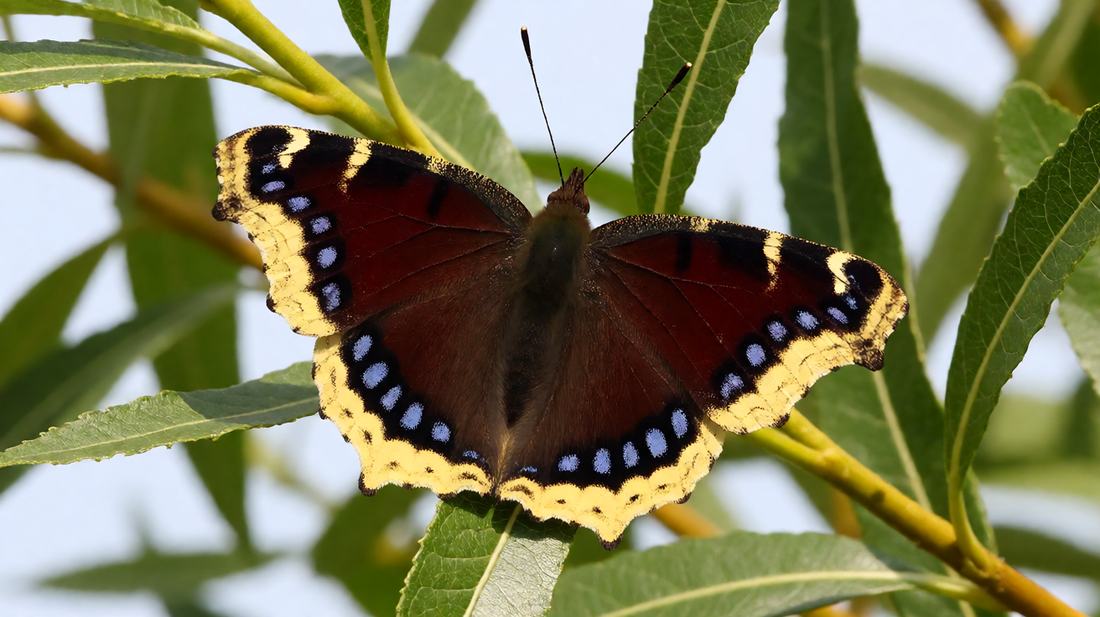
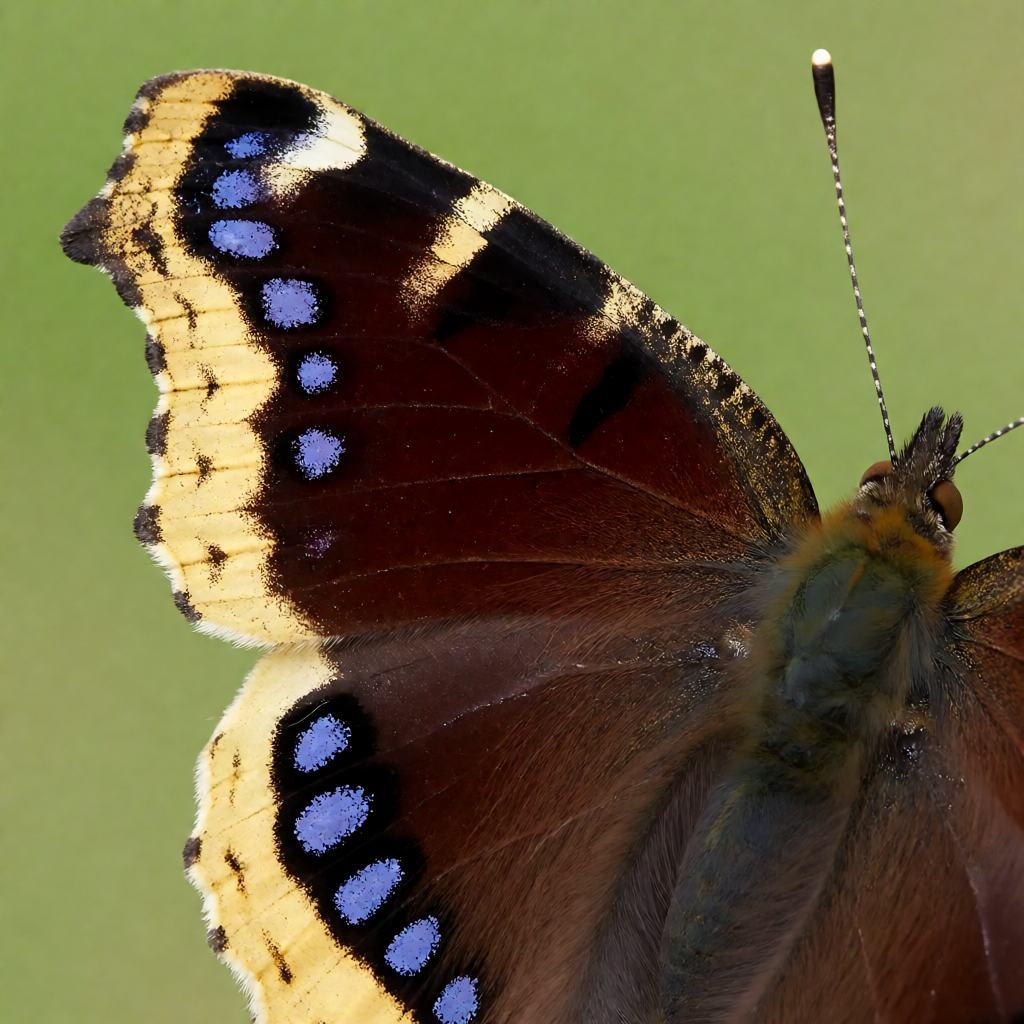
The Camberwell Beauty is one of the largest butterflies of the north. Its wings span 64 to 76 mm. The adult is a big insect with broad wings. In shade the deep maroon-brown looks almost black. A wide band of cream-yellow runs along the outer edge of each wing. Just inside that band sits a row of blue spots.
The spots shine when the light catches them. The wing edges are ragged and torn-looking. This ragged edge is the best way to know the species. The Camberwell Beauty is a butterfly of the far north. It is common in Norway, Sweden, Russia, Canada and the northern United States. In Britain it is a rare visitor rather than a resident.
The name comes from one insect caught in Camberwell, near London, in 1748. The adult lives for a very long time. It sleeps through the winter in a hollow tree. Then it breeds the next spring.
Family tree
Nymphalidae, the brush-footed ones
The Camberwell Beauty sits in the family Nymphalidae. It belongs to the genus Nymphalis. Linnaeus described it in 1758. At that time it was placed in the old genus Papilio. Nymphalidae is the largest family of butterflies. The adults hold the front legs folded away.
So the insect grips with only 4 of its 6 legs. The Camberwell Beauty sits in the subfamily Nymphalinae. Its close relatives are the tortoiseshells, the commas and the peacocks. All of these insects sleep through the winter as adults. They all feed on tree sap and on rotting fruit. The whole group lives across the northern lands rather than in the tropics.
The Camberwell Beauty shares its family with the comma butterfly. The comma is smaller and orange-brown. Its wings are also ragged at the edge. The 2 insects are easy to tell apart by size and colour. But they sit in the same family and share the same ragged wing edge. Both feed on sap, and both rest on bark.
Cream border, blue spots
How to tell one
The adult has a wingspan of 64 to 76 mm. This makes it one of the biggest butterflies in Europe. The upper wing is a deep maroon-brown. When the insect is fresh the colour is soft like velvet. When it is worn the colour looks almost black. A wide band of pale cream runs along the outer edge. Inside the band sit small blue spots.
On the hindwing there are often fewer spots, but they are brighter. The underside is quite different. It is a dark grey-brown with fine wavy lines. This pattern works as perfect cover when the insect rests on a tree trunk. The body is thick and furred. It is dark brown above and paler below. The antennae are dark with pale tips.
The caterpillar is black with fine white speckles. A row of rusty-red spots runs along its back. It also has branched black spines. The caterpillar grows to about 45 mm. The young ones feed together inside a silk web. The chrysalis is grey-brown and hangs head down. It looks rather like a curled leaf.
1
2
3
Willow scrub and open woodland
Where it lives
The Camberwell Beauty is a butterfly of the northern forest. It lives all across Norway, Sweden and the Baltic states. It is also common in much of Russia. In North America it lives in the forest belt of Canada and the northern United States. In the far north it flies in open birch and willow woodland. It also visits forest roads and wet clearings. Further south it stays close to the trees that feed its young.
Any place with willow, birch, poplar or elm will suit it. It also needs open ground for basking. In western Europe the insect is a wanderer rather than a resident. Fresh adults come out in late summer and move south and west. Some cross the North Sea in quiet weather. These are the ones that turn up in Britain. Most British records are of a single insect.
It is usually seen on a buddleia bush or a heap of rotting fruit. The insect cannot breed in Britain. The winters there are too mild. The sleeping adults wake too early, before the willows have leaves. Most records come in August and September. A few insects have flown in from the sea along the east coast.
Tree sap and rotting fruit
What it eats
The Camberwell Beauty feeds on sap rather than on flowers. This is the key to its whole way of life. The adult has a short tongue. It cannot reach deep into tube-shaped flowers. Instead it drinks the sweet liquid that leaks from damaged trees. A wounded birch or willow pulls in many insects. A heap of overripe plums will do the same.
In autumn the adults gather on fallen fruit in gardens and orchards. They also take the honeydew that aphids leave on leaves. In spring the adults need energy fast. Then they do visit flowers. They take any nectar that is easy to reach. They like blackthorn, dandelion and willow catkin. The caterpillar is a strict leaf eater.
It takes the leaves of willow, birch, poplar and elm. In Norway and Sweden the insect is most closely tied to the willows of wet ground. In North America it uses birch and elm far more widely. A group of young caterpillars strips a whole branch. Then it moves on and spins a fresh silk mat.
Eggs in a ring on a twig
The breeding cycle
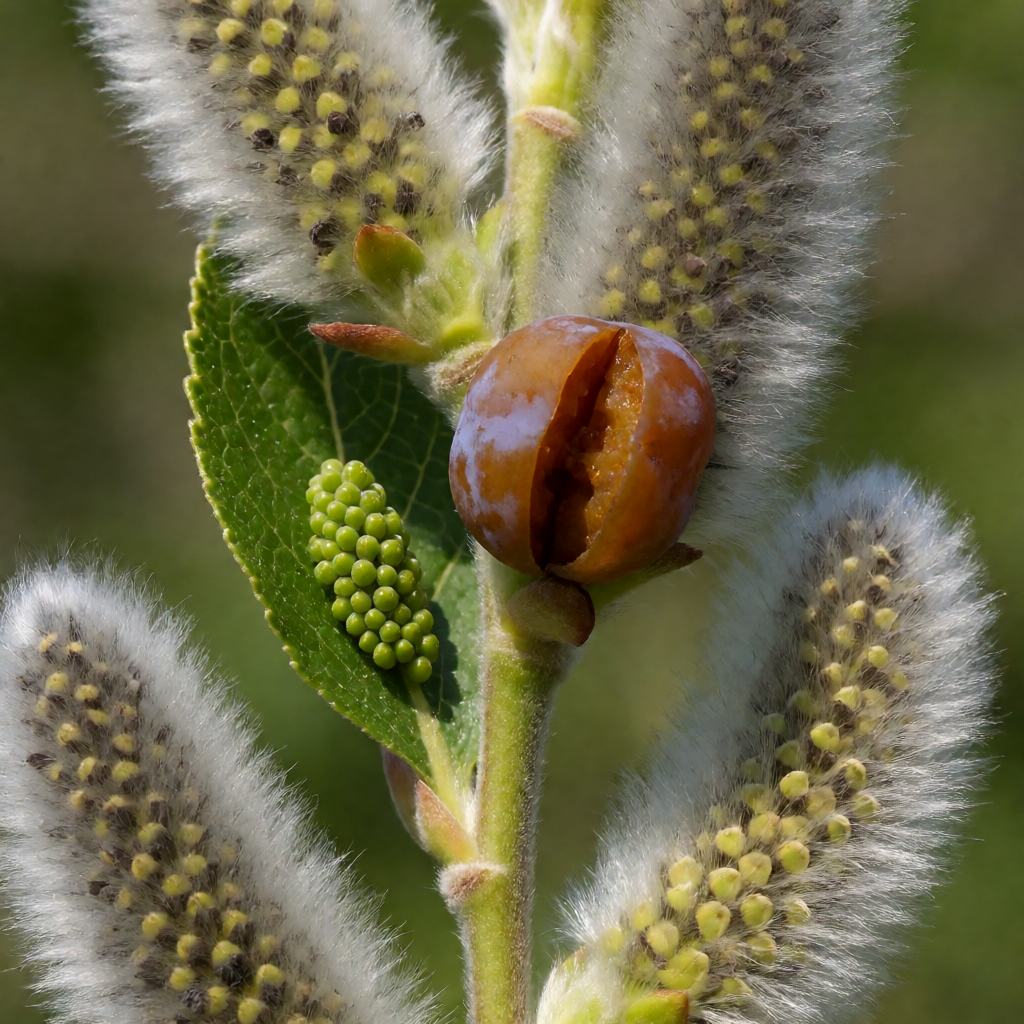
The Camberwell Beauty has 1 brood a year in the north. The cycle is long and slow. Adults that have slept through the winter wake in April and May. They mate within a few days of the first warm sun. The female lays her eggs in a large group. She often lays 100 to 200 at once. The eggs are wrapped in a tight ring around a twig. They hatch after 2 to 3 weeks.
The young caterpillars stay together in a group. They feed side by side inside a silk web. They grow through 5 stages. As they grow the group spreads out. By the last stage the caterpillars live alone. They pupate in June or July. The new adults come out in late July and August. These adults do not breed at once.
They feed hard on sap and fruit through the late summer. In this way they build up fat for the winter. Then they find a hollow tree, a wood pile or a shed. They sleep through the frost and wake the next spring. So a single adult may live for 10 or 11 months. Most butterflies live only a few weeks.
Rare visitor, no home here
Conservation
The Camberwell Beauty is not threatened worldwide. In Norway, Sweden, Russia and Canada it is still a common insect. The picture is different at the western edge of its range. In Britain it is a rare visitor. There is no breeding group there. Much of lowland western Europe is the same.
The main threats are the loss of wet woodland and willow scrub. The caterpillar needs those plants. The draining of bogs and fens has removed many of the willows. The tidying of gardens and orchards removes the rotting fruit that the adults feed on. Fallen fruit left in place is a real help. A heap of windfall apples can hold several insects at once.
Work in Britain is mostly about recording the visitors. The records are the only way to track the insect. In the north, where it lives all year, old mixed woodland must be protected. Willow, birch and dead wood must be left standing.
Quick hits
Five things to remember
- The English name comes from 1 insect caught near London in 1748, and the species has never bred in Britain since.
- An adult can live for 10 or 11 months, because it sleeps through the whole winter and breeds the next spring.
- The caterpillar has branched black spines and shares a silk web with its brothers and sisters for the first weeks.
- The pale band and the blue spots are hidden when the insect rests, because the underside looks like tree bark.
- The adult drinks tree sap and rotting fruit far more than nectar, and windfall plums pull in several at once.