 By st20113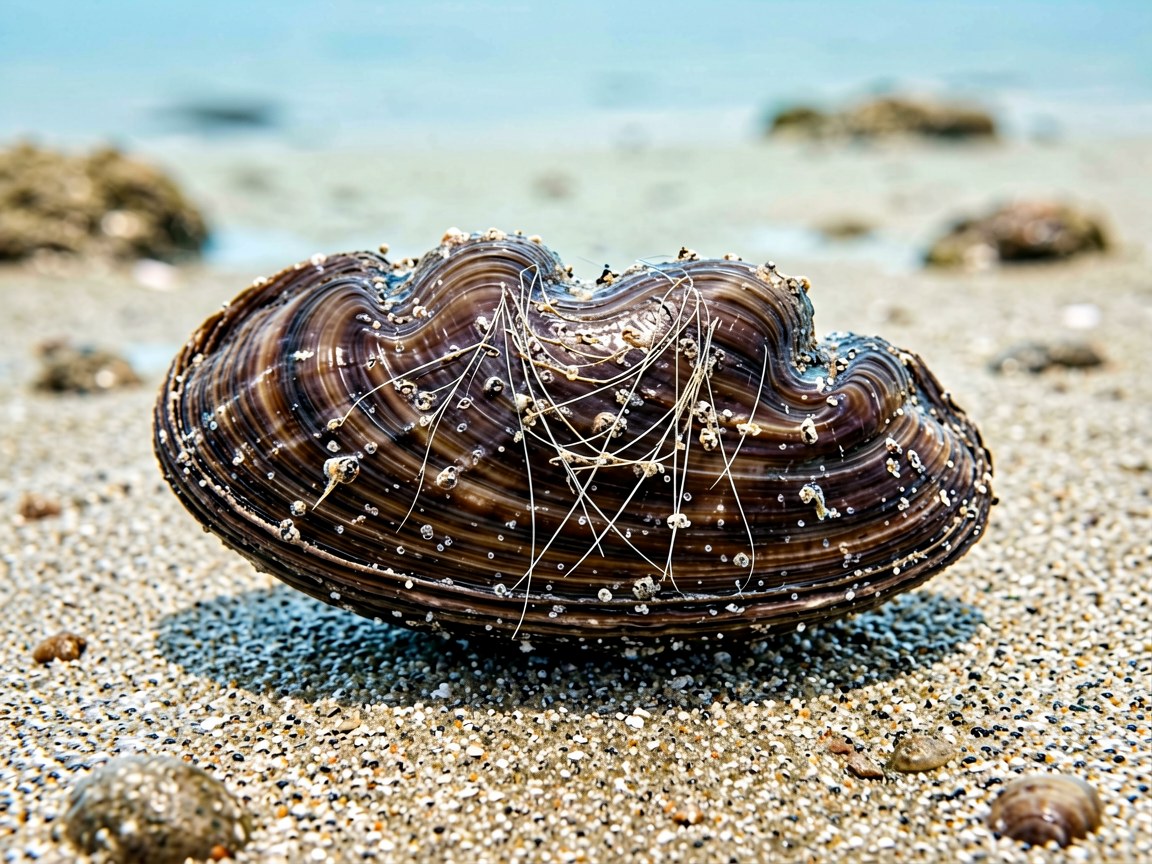
Modiolus modiolus | Horse Mussel
Introduction
The horse mussel (Modiolus modiolus) is the giant of the northern mussel beds—a much larger, browner cousin of the familiar edible mussel. It forms dense communities on subtidal muddy and rocky ground in cooler seas, where the clumps of shells provide shelter for a host of other creatures. Long-lived and sturdy, it is an important builder of habitat on the seabed.
Taxonomy
Modiolus modiolus is a mollusc in the class Bivalvia—the clams, oysters, and mussels—within the family Mytilidae. It is a close relative of Mytilus edulis, the common mussel, and looks much like an oversized, dark version of it, sharing the bivalve body plan of two hinged shells and a filtering gills.
Physical Characteristics
The horse mussel has a thick, elongate shell 10–20 cm long, sometimes more, dark brown to almost black, with a coarse, often fuzzy surface from the byssus threads and encrusting life. The two shells are unequal, the lower one flatter. Inside, the soft body has a large foot and a pair of siphon-like openings. Older animals are heavily fouled by sponges, worms, and barnacles that settle on the shell.
Habitat
Horse mussels favour subtidal grounds from a few metres down to dozens of metres, on muddy-sand, gravel, and rocky reefs in cold northern waters. They often gather in beds that can cover large areas, anchoring by tough byssus threads. These beds are most extensive in cleaner, current-swept water where food is plentiful, and they are a feature of northern Atlantic and Arctic-influenced coasts.
Diet
Like other mussels, the horse mussel is a filter feeder. It draws in water through one siphon, traps plankton and organic particles on its gills, and expels the filtered water through the other. In this way it sieves its food from the passing current and, in large beds, can clear a great volume of water, helping keep the seabed clear.
Reproduction
Horse mussels have separate sexes and spawn by releasing eggs and sperm into the water, where fertilisation takes place. The larvae drift as plankton before settling and growing into miniature mussels that anchor by byssus threads. They are slow-growing and long-lived, with some individuals surviving for decades, which lets their beds persist and grow over many years.
Conservation
The horse mussel is not globally threatened, but its beds are vulnerable to bottom trawling and to smothering by sediment and pollution, because the mussels are slow to recover once damaged. As a habitat former it matters beyond itself: the nooks between shells shelter young fish, crabs, and many small animals, so protecting horse mussel beds protects a whole community.
Fun Facts
- It can grow several times larger than the edible mussel and live for decades.
- Its shell often becomes a living raft for sponges, worms, and barnacles.
- Whole beds act like a reef, giving shelter to dozens of other species.
- It anchors with strong threads, much like its smaller mussel cousin.
- Because it filters so much water, a bed can visibly clarify the seabed around it.