 By st20113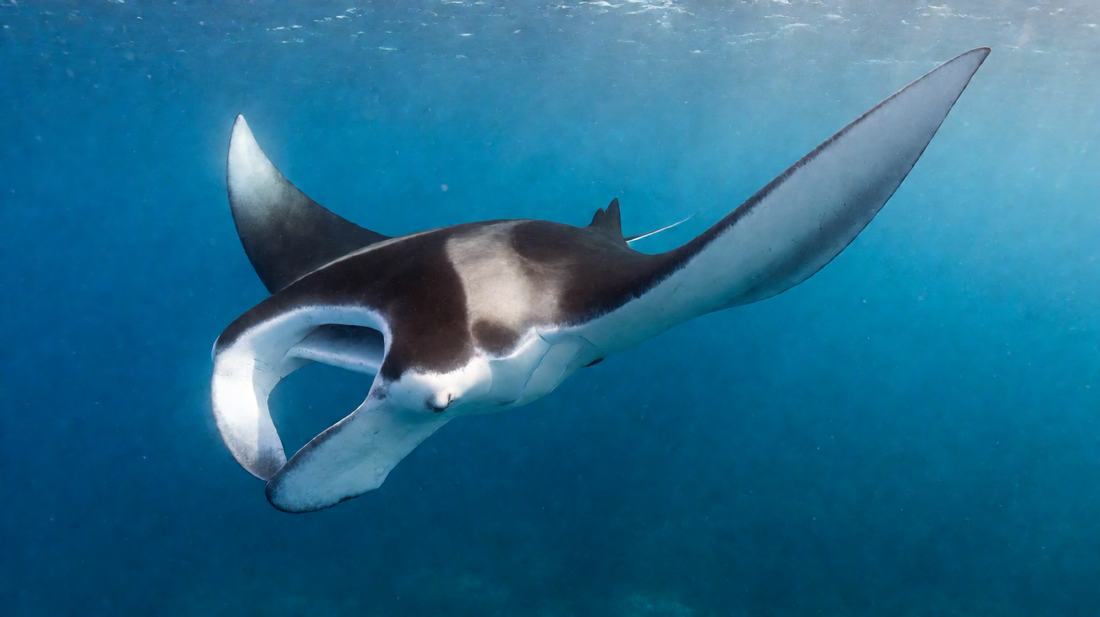
Mobula birostris | Giant Manta Ray
Species Profile · Mobulidae
Giant Manta Ray
The largest ray in the sea and one of the largest of all fishes, a harmless plankton feeder of the open ocean whose gill plates became a medicine — and whose numbers have crashed in a single human generation.
IUCN: Endangered
Range
Disc
Dive
Young
Interval
The giant of the rays
A plankton feeder of the open sea
The giant manta ray is the largest of all the rays. It is also one of the largest of all the fishes. A full-grown animal can carry a wing span of 7 metres across. It can weigh about 2,000 kilograms. The species is one of the most impressive of all the creatures of the sea. The animal is entirely harmless. It feeds on the plankton and the small fish of the surface layer. It has no spine and no sting and no tooth that could hurt a person. The shape of the animal is easy to know. The great flat diamond-shaped body carries 2 lobes that point forward. One lobe sits on either side of the mouth.
The 2 enormous wing-like pectoral fins beat slowly up and down in the water. That shape has made the species one of the best known of the marine animals. The animal performs a slow and graceful flight through the water. That flight has given the group the name of the devil ray in some languages. It has also made the animal one of the greatest attractions of the diving of the tropics. The giant manta ray is a filter feeder. It has evolved the largest brain of any of the fishes. Studies of its behaviour show that the animal can do very complex things. It visits the cleaning stations of the reef fish. It travels very long distances along the coast. It gathers in groups at the time of the feeding.
It also makes great leaps from the water that nobody has fully explained. The species is assessed as Endangered on the global Red List. The giant manta ray has declined very heavily over the last half century. The greatest cause of that loss is the fishery for the gill plates of the animal. Those plates are used in the old medicine of the east of Asia. So 2 things together explain the danger. The species breeds very slowly. The fishing pressure is very heavy. The animal is now one of the most threatened of the large fishes of the world.
Family tree
Mobula, the devil rays
The giant manta ray was described in the year 1792. Modern work places it in the genus Mobula. That genus sits in the family Mobulidae. The family is the group of the devil rays and of the mantas. It holds the 9 or the 11 of the living species. The whole of the group sits in the order Myliobatiformes. The stingrays and the eagle rays and the other rays of the warm seas sit there too. The genus was revised very heavily in the modern period. The genetic and the body-structure work of the present century showed something new. The 2 species of the family that sat in the separate genus Manta are nested inside the genus Mobula. So the 2 were moved to Mobula. The older genus has been abandoned.
That change is one of the best examples of a genetic result that overturned a classification. The old classification rested on the appearance alone. The giant manta ray is a close relative of the Giant Devil Ray (Mobula mobular). The 2 are the 2 largest of the family. They are also the 2 most widely spread of the group. Comparing the 2 is one of the most useful exercises for anyone who names the rays of the open sea. The giant manta is the larger of the 2. Its mouth sits at the front of the head. The giant devil ray is smaller and its mouth sits on the underside of the head. The position of the mouth is the single most useful mark of the family. Modern work treats the reef manta ray of the Indo-Pacific as the second living species of the group. Those are the mantas.
The 2 species were separated as recently as the year 2009. The giant manta ray and the reef manta ray look very similar. They are told apart by small details of the colour pattern. Their build and their size matter too. The discovery of the second species is one of the most important results of the modern study of the group. The species is monotypic. The groups of the different oceans are not split into subspecies. Yet genetic work has shown something else. The animals of the different ocean basins are largely separate. The group of the Atlantic is distinct from the group of the Indo-Pacific. The mixing between the 2 is very limited.
Horns, wings and a whip tail
How to identify one
An adult giant manta ray has a disc width of between 4 and 7 metres. The largest recorded individual was a little over 7 metres. Its mass reaches about 2,000 kilograms in the heaviest of the animals. The species is a very large and very flat and very light-bodied animal. Its proportions belong to a glider. The whole of the body is a single flattened disc. That disc is formed by the expansion of the pectoral fins. It is between 1.5 and the 2 times as wide as it is long. The head carries the 2 cephalic lobes. Those are a pair of long and flexible structures that point forward. They lie on either side of the mouth. The animal forms them from changed parts of the pectoral fins. The lobes roll into tubes when the animal swims in the usual way. They are held forward.
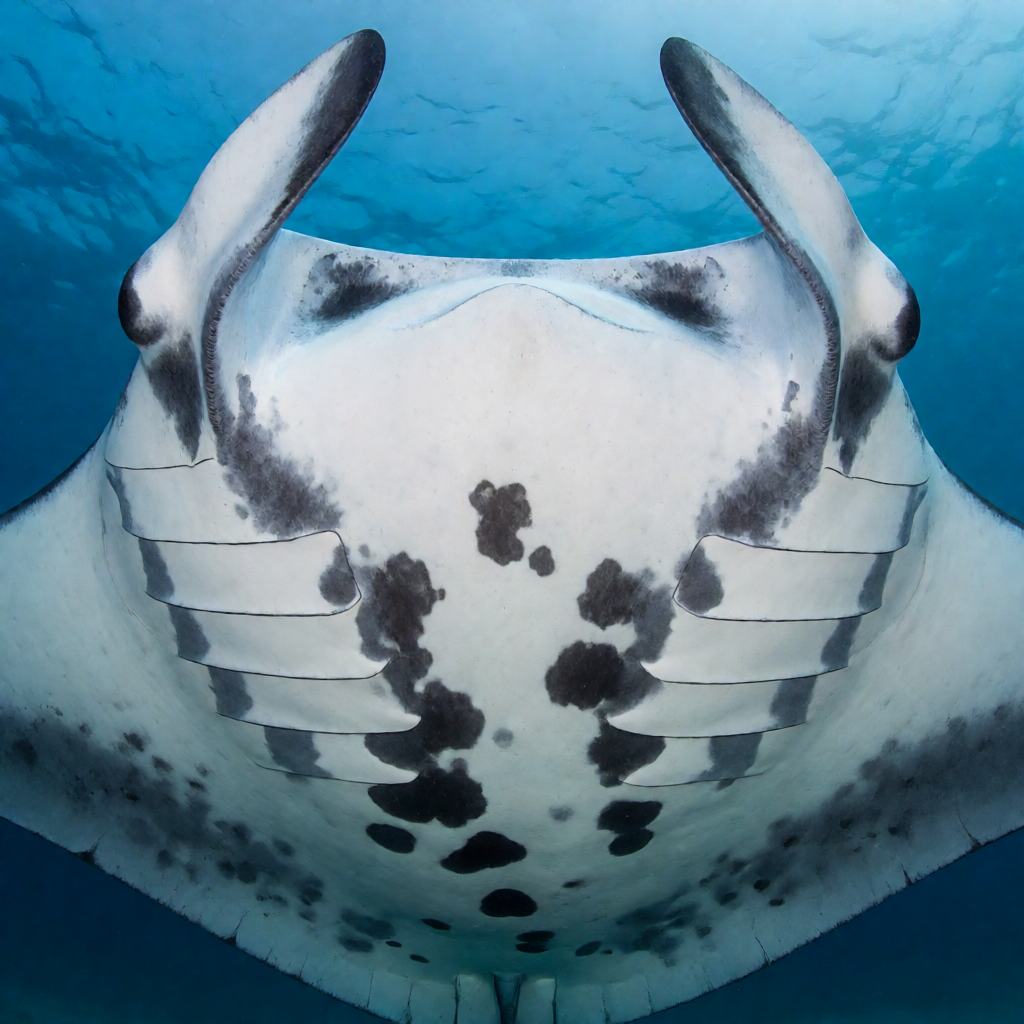
They are unrolled and spread into a funnel when the animal feeds. The mouth sits at the front of the head between the lobes. It is a very wide opening that can close completely. It is used only for the gathering of the food. The 5 pairs of the gill slits sit on the underside of the body. The gills are protected by the gill plates. Those are the special structures that the family evolved for the filtering of the water. The plates are dark and spongy and finely divided. They strain the very small animals from the water. They are also the reason for the very heavy fishing pressure on the whole group. The tail is slender and whiplike. It is about the length of the body. The giant manta ray has no spine and no sting on the tail. That missing spine separates the mantas from the stingrays of the same family.
So the animal carries no weapon of defence at all. The colour of the upper surface is a dark brown or a dark grey or a black. It carries a pair of white patches on the shoulders. Those patches form the shape of the letter T. They are the most useful of the marks of the species. The underside is a white. Dark blotches mark it around the mouth. More appear along the edges of the gill slits and on the front of the disc. The pattern of the underside is partly unique to each animal. Researchers use it to tell animals apart. A small share of the animals is all black on both surfaces. That black form is one of the puzzles of the species.
1
2
3
Open ocean, reef and lagoon
Where it lives
The giant manta ray is a species of the open ocean and of the coast. It lives in the tropical and the warm temperate water of the whole of the world. It ranges over the open sea and the shelf and the reef and the lagoon. It is most often seen at the surface and in the upper part of the water column. Yet tagged animals have dived to the depth of more than a kilometre. They go that deep in the search for food. They also dive that deep in the crossing of the open water. The species is a great traveller. Tagged animals have been recorded moving more than 1,000 kilometres along the coast. They also cross the open ocean. The movement of the animals of the Atlantic follows a seasonal pattern. That pattern is tied to the warmth of the water and to the amount of plankton.
The animals gather in very large numbers at the rich places of the coast. They also gather at the rich places of the island and of the seamount. They do that at the times of the year when the food is richest. The species uses the cleaning stations of the reef. Those are the places where the small fish of the group of the wrasses work. They remove the pests and the dead tissue from the skin of larger animals. The manta ray visits the stations in a regular way. It holds its position above the coral. The small fish then work on the body and on the gills and on the mouth. Those cleaning stations are one of the most important of the places of the life of the species. The animals will travel a long way to reach one that they know. The animal is a social species.
The animals gather in groups. Schools of the several tens of the animals are seen in the productive water. The social life of the species includes the behaviour of the group of the feeding animals. People call it the cyclone feeding. The animals form a spiral and drive the plankton towards the middle of the group. That behaviour of the whole group is a very striking sight. It is one of the most studied of the social behaviours of the fishes. The species has few predators. Most of the deaths of the adults come from human activity. Young animals are taken by the larger sharks and by the killer whale. The size of the adult is the main defence of the species.
A strainer of the surface
What it eats
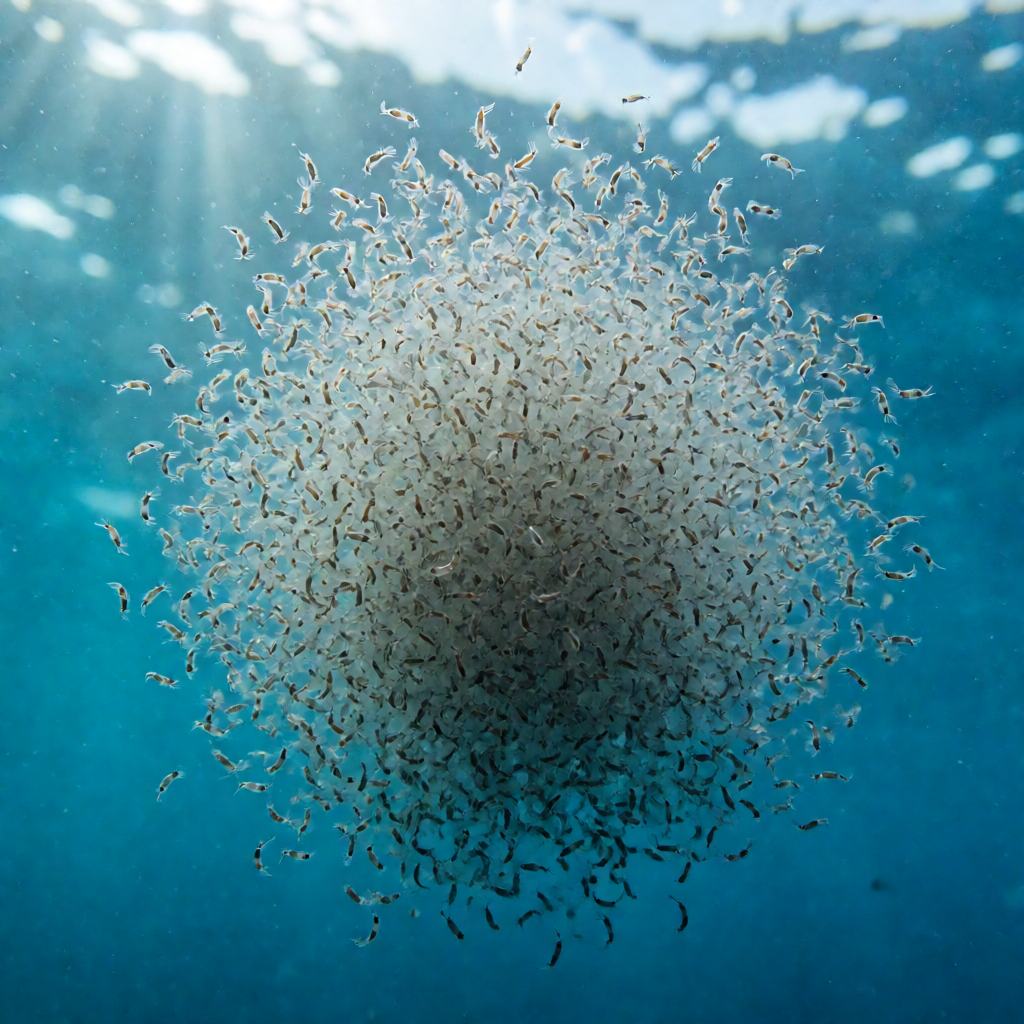
The species feeds by filtering the water. The whole of its diet is the very small animals of the surface layer of the sea. The food includes copepods and krill and mysid shrimps. It also includes the other small crustaceans. It takes the larvae of the crabs and of the other groups. Very small fish and fish eggs are eaten too. The species is one of the very few large fishes of the world that gave up the chase. It no longer hunts large prey. It filters very small prey instead. The whole of the build of the animal has been reshaped by that change. The feeding method is ram filtration. The animal swims forward with the mouth open. The cephalic lobes unroll to form a funnel. The water is driven through the mouth and out through the gill slits.
The gill plates strain the food from the water as it passes. The animal can close the gill plates and hold the food in the mouth. Then it swallows. That trick lets the species separate the food from the water very well. The animal feeds in groups at the times when the plankton comes together. The cyclone feeding is the most remarkable of the feeding behaviours of the species. The animals arrange themselves in a tight spiral and swim in a circle. The water that the movement of the whole group drives carries the plankton towards the centre. The animals at the centre take the richest of the food. Then they move out and the others take their place. Study of the behaviour has shown something useful. It is a shared effort. It lets the whole group feed on a patch of food. No one animal could gather that much alone.
The species needs a very large quantity of food. Study of the energy needs of the species has shown something striking. An adult animal of 5 metres must take the several per cent of its body mass in plankton. It does that in the day. That need explains why the species depends on rich water. It needs the water of the coast and of the upwelling and of the fronts. The animal feeds at the surface in the shallow water. It also dives to a great depth. It hunts the deep layers of the plankton there. Tagged animals have made repeated dives of the several hundred of the metres. They do that in the day and in the night. The pattern of the diving is one of the most interesting of the results of the modern study of the group.
One pup every three years
The breeding cycle
The giant manta ray is an ovoviviparous fish. The young develop inside the body of the female. They are fed by the yolk of the egg. The wall of the uterus produces a fluid as well. The species does not have the placenta that the hammerheads and the other large sharks use. So its arrangement is the less advanced of the 2 methods of internal development. Very little is known of the mating of the species. The act has been seen only a small number of times. The records show the male grasping the pectoral fin of the female. The 2 animals then swim together for several hours. The mating takes place in the warm water at the surface.
It is often accompanied by several of the other animals. The gestation is long and lasts for between 12 and 13 months. The female gives birth to a single young animal in the usual case. Twins are rare. The young measure between 1.2 and 1.5 metres of disc width at the birth. The birth takes place in the shallow and sheltered water of the lagoon and of the bay. The young animal stays in the shallows for the first period of the life. Those nursery grounds are very important parts of the range. The loss of the inshore water is one of the serious threats to the species. The species is one of the very slowest of the fishes of the world in the breeding. The female does not reach adult size until a disc width of between 4 and 5 metres.
That means an age of between 8 and 10 years. The single young is produced at the interval of the 2 or the 3 years. Sometimes the interval is much longer. The whole of the life of the animal may run to 40 years. The female may produce a very small number of young in that whole period. So the group of the species grows more slowly than any other large fish. The species cannot replace the losses. The fishery takes the animals far faster. That mix of very slow breeding and very heavy fishing pressure explains the very serious condition of the species.
Gill plates and a crash
Conservation
The giant manta ray is assessed as Endangered on the global Red List. The assessment of the year 2020 replaced the earlier assessment of the vulnerable. It reflects the very heavy decline of the species over the last 3 generations. The species is now in the front rank of the threatened large fishes of the world. The greatest cause of the decline is the fishery for the gill plates. Those plates are the organs the animal uses to filter the food. They are dried and sold in the markets of the east of Asia. Buyers use them in the old medicine. The trade in the plates has grown very greatly over the last 2 decades. It is the reason for the very heavy pressure on the whole of the family. Study of the trade has shown something striking. The species is one of the most valuable of the animals of the fishery. The income to the fisher is very great.
Bycatch is the second great cause of death. The longline and the gill net and the purse seine fisheries all take the species. The giant manta ray is taken in very large numbers in the fisheries of the tropics. That happens across the whole of the world. A great part of the catch is not recorded. So the number of deaths is unknown to those who watch the species. The loss of the habitat is a further pressure. So is the disturbance of the animals by tourism. The species is one of the greatest of the attractions of the diving of the tropics. A very large number of divers and boats gather around the animals. That has changed the behaviour of the animals at the busiest of the sites. So managing the tourism is now one of the most important practical tasks. The work to save the species depends on it.
The giant manta ray is listed on the appendix II of the convention on the international trade in the endangered species. The listing came into effect in the year 2014. The trade in the gill plates and in the other products is now regulated. The rule covers the whole of the world. The species is also protected by the law of a growing number of the countries of the range. Large marine protected areas of the Pacific and of the Atlantic protect it as well. The recovery of the species will be very slow. It will depend on 3 things. The bycatch must fall. The trade rule must be applied strictly. The nursery grounds and the cleaning stations of the small and well known parts of the range must be protected.
Quick hits
Five things to remember
- The giant manta ray is the largest of all the rays and one of the largest of all the fishes. A full-grown animal can carry a wing span of 7 metres across and weigh about 2,000 kilograms.
- The animal has the largest brain of any of the fishes. Studies of its behaviour have shown that it can recognise itself in a mirror. That is a skill of very few animals.
- The animal has no spine and no sting on the tail. The great and feared animal is entirely harmless and it feeds only on the small animals of the plankton.
- The species gathers in groups and performs the cyclone feeding. The animals form a spiral and push the plankton towards the middle of the group. The whole group then shares food that no single animal could gather alone.
- The female gives birth to a single young at the interval of the 2 or the 3 years. The pregnancy lasts 12 to 13 months. That very slow breeding is the reason that the numbers cannot recover quickly from the heavy losses of the fishery.