 By st20113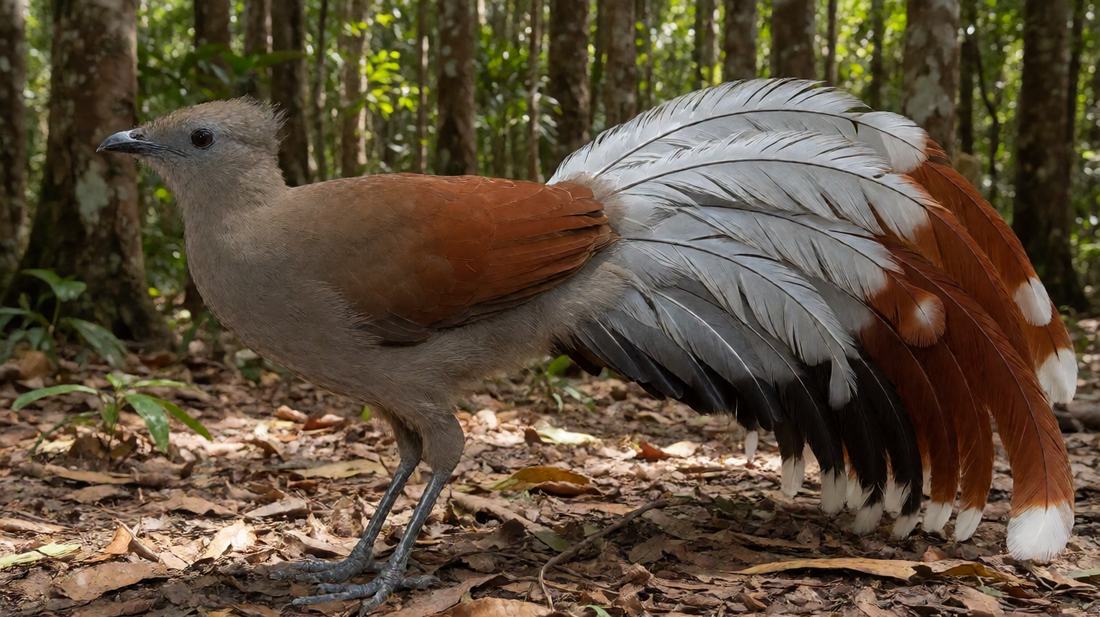
Menura alberti | Albert’s Lyrebird
Species Profile · Menuridae
Albert’s Lyrebird
A shy ground bird of Australian rainforest whose male copies the songs of many other birds from a cleared mound of earth.
A shy rainforest bird whose male carries a tail of silver and red plumes
Male
Female
Tail plumes
Incubation
Pairs left
Family
Albert’s Lyrebird
A shy mimic of the rainforest floor
Albert’s Lyrebird is a shy ground bird of Australian rainforest. It is 1 of the finest mimics in the bird world. The male carries a tail of silver and reddish plumes. He sings and dances on a cleared mound of earth.
The species lives in a very small area of forest. It is much rarer than its famous cousin. Few people ever see it in the wild.
Family tree
Passeriformes, Menuridae
Albert’s Lyrebird belongs to the phylum Chordata. Its class is the Aves, the birds. Its order is the Passeriformes, the perching birds.
Its family is the Menuridae, the lyrebirds. Our bird shares the family with the Superb Lyrebird. That bird is larger and far more widespread.
It carries a tail shaped like a lyre. Our bird has a simpler tail with no outer lyre. The family holds only 2 species.
90 cm and a silver tail
How to tell one
The male measures about 90 cm from bill to tail tip. The female is smaller at about 75 cm. The back and wings are rich reddish brown. The underparts are grey brown with fine barring.
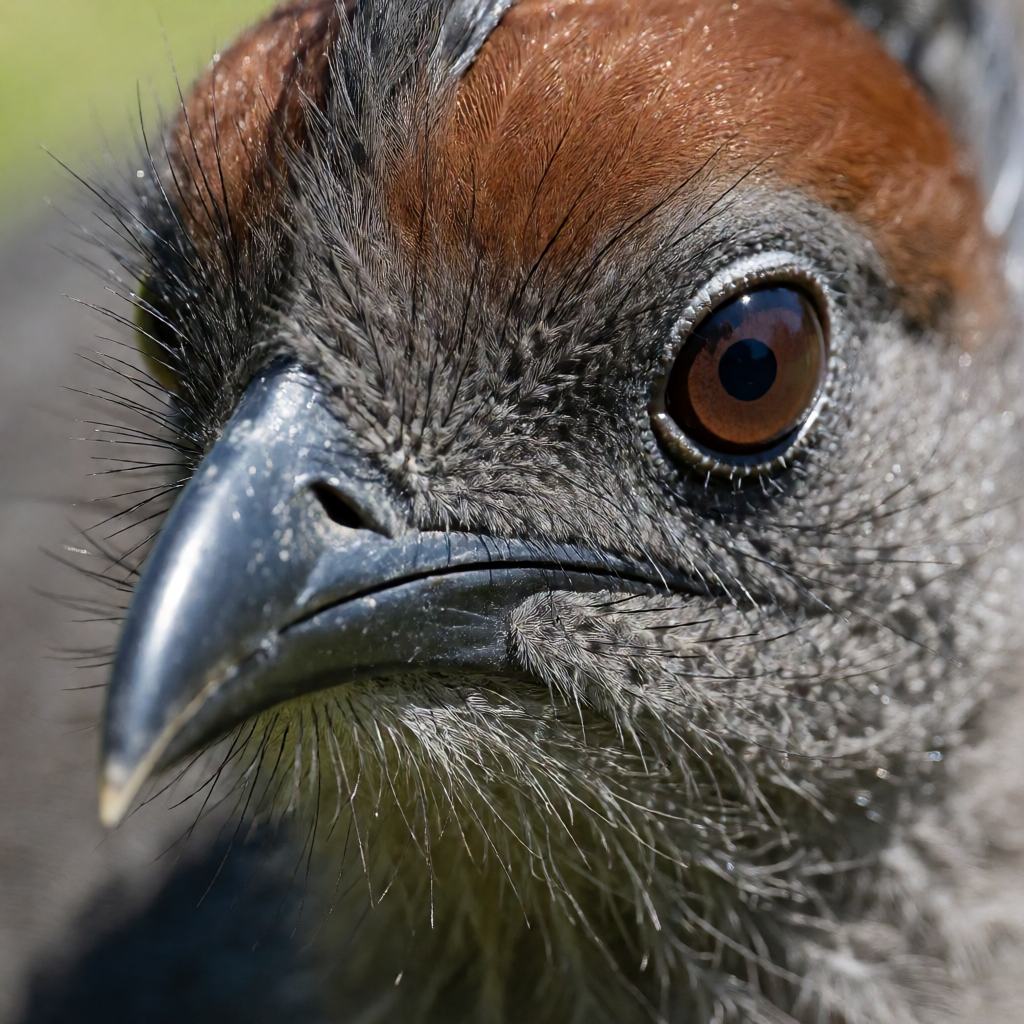
The legs are long and very strong. The bill is short, stout and dark. The male tail carries 16 plumes in all. Two of them are broad and silver white.
The rest are thin and reddish. The female tail is shorter and plainer.
1
2
3
A small belt of coastal rainforest
Where it lives
The species needs thick rainforest with deep leaf litter. It lives in a small belt of forest on the east coast. That forest sits near the border of 2 Australian states. The bird keeps to damp gullies and shaded slopes.
It needs soft ground for its feeding scratches. It also needs dense cover for its display mounds. It rarely crosses open ground. Logging and clearing break its range into small pieces.
Fires damage the leaf litter it depends on. Old wet forest suits it best.
Insects, spiders and worms in the litter
What it eats
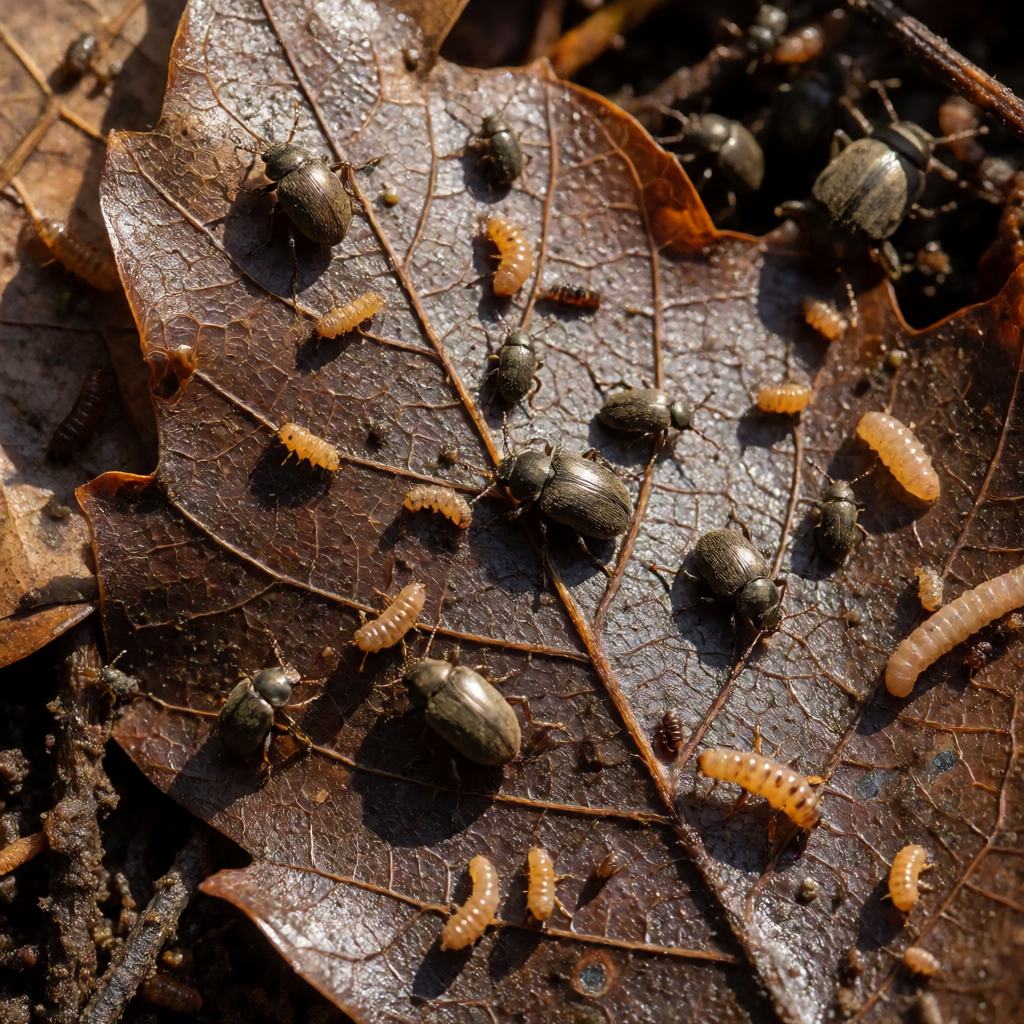
Albert’s Lyrebird feeds on the forest floor. It scratches through leaf litter with its strong feet. It turns over leaves and small stones. It takes insects, spiders and worms.
It also takes small land crustaceans. It moves a good deal of soil as it searches. That habit helps the forest floor to break down. It feeds alone or in small groups.
It stays under cover while it feeds. It drinks from small pools and wet leaves.
A mound, a song and one egg
The breeding cycle
The male clears a small mound of bare earth. He sings from that mound through the winter. His song copies many other birds. He also copies other sounds from the forest.
The female builds a dome shaped nest alone. She places it on a rock ledge or a bank. She lays 1 egg inside the nest. She sits on it for about 50 days.
The chick stays in the nest for several weeks. The male takes no part in the care of the young.
Fewer than 3,500 pairs
Conservation
Albert’s Lyrebird is listed as Near Threatened by the IUCN. Fewer than 3,500 pairs are thought to remain. Its forest home has been cleared for farming and timber.
That clearing split the population into small groups. Feral pigs dig up the leaf litter it needs. Cats and foxes hunt the young birds.
Severe fires destroy both cover and food. Protected forest now covers much of its range. The bird still depends on careful fire control.
Quick hits
Five things to remember
- It can copy the calls of many other birds in one song.
- The male builds a small stage of cleared earth to dance on.
- Only 2 species of lyrebird exist in the world.
- The female raises the chick without any help.
- It turns over a large amount of leaf litter while feeding.