 By st20113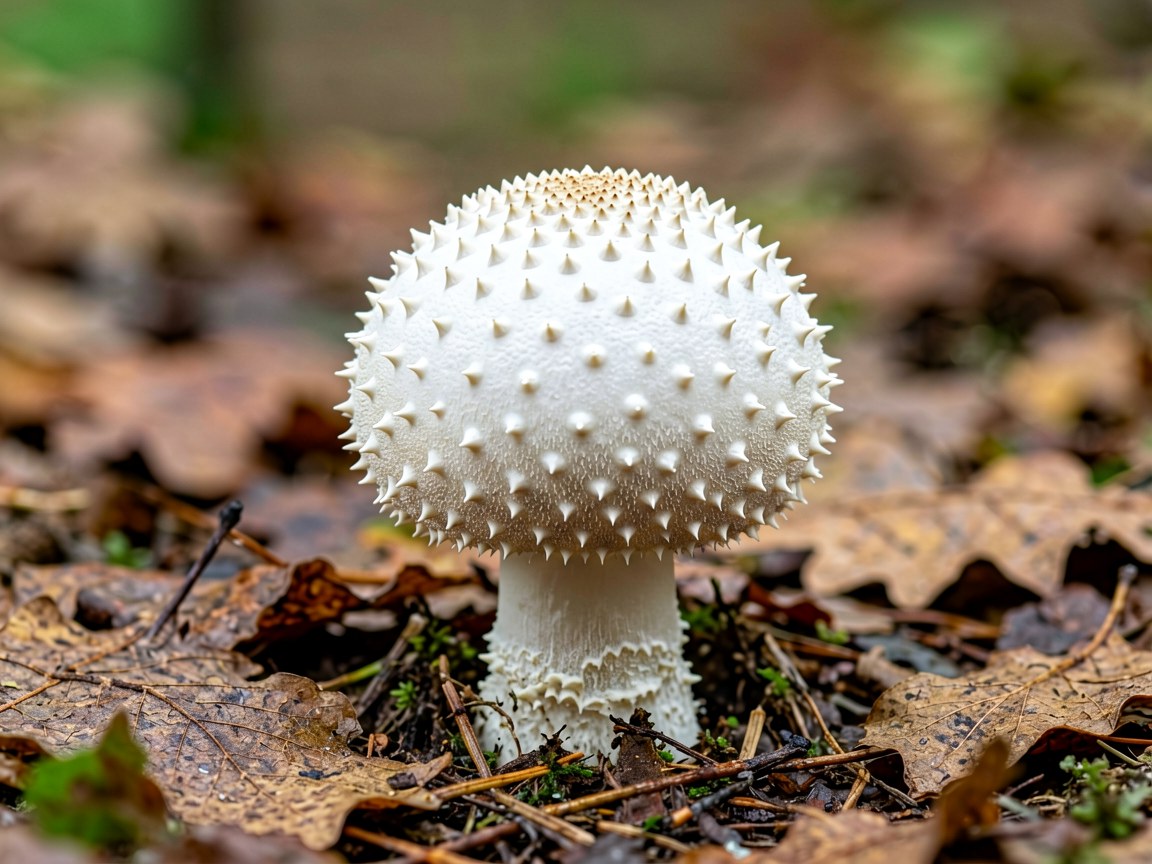
Lycoperdon perlatum | Common Puffball
Introduction
The common puffball (Lycoperdon perlatum) is a neat, roundish fungus covered in small conical warts, found on the floor of woods, heaths, and grassy places in late summer and autumn. When young it is solid and edible; as it ages it turns into a dry ball of brown dust that puffs out in a cloud when struck. Puffballs are among the most recognisable of all fungi and a favourite of foragers who know how to tell them from their dangerous look-alikes.
Taxonomy
Lycoperdon perlatum is a fungus in the family Agaricaceae, within the order Agaricales—the gilled-mushroom order. It belongs to the puffballs and earthballs, a group that releases spores from an opening rather than from gills. Although it is unrelated to capped mushrooms, it shares the fungal way of life with Amanita muscaria: both are fungi that feed by absorption instead of by photosynthesis.
Physical Characteristics
The fruiting body is a ball or upside-down pear, 3–6 cm across, sitting on a short, stem-like base. The surface is whitish at first, covered with small raised spikes and a fine netting, becoming brown and bald with age. Inside, the young flesh is white and firm; later it turns yellow, then olive-brown and powdery as the spores mature. The whole body is hollow and light.
Habitat
Common puffballs favour well-drained soil in deciduous and mixed woodland, on heathland, in churchyards, and along grassy tracks. They appear from late summer into autumn, often in small troops. They are fond of slightly disturbed ground and the edges of paths, and they fruit reliably in the same spots year after year when the mycelium is established.
Diet
Like all fungi, the puffball is heterotrophic. It cannot photosynthesise; instead its hidden mycelium spreads through the soil and leaf litter, releasing enzymes that break down dead plant material and absorbing the nutrients released. The visible ball is only the brief, spore-producing stage of a much larger, long-lived feeding network below ground.
Reproduction
Puffballs reproduce by spores formed inside the ball. As the interior turns to powder, a small pore or tear opens at the top. A drop of rain, a footfall, or a gust of wind knocks the ball and sends a puff of spores into the air—hence the name. A single puffball can release billions of spores, a few of which may land in suitable ground and grow new mycelium.
Conservation
The common puffball is widespread and not threatened, though it should be left alone where it grows in protected sites. Because it depends on healthy, undisturbed soil and leaf litter, its presence is a small sign of a functioning woodland floor. Careful, limited foraging—taking only what is needed and leaving the rest to spore—helps keep populations steady.
Fun Facts
- A mature puffball can hold billions of spores in its dusty interior.
- The “smoke” you see when a puffball is kicked is actually a cloud of tiny spores.
- Young, all-white puffballs are edible, but only before the flesh yellows—and only if correctly identified.
- Its small spikes and netting give it a beaded, almost stitched appearance.
- It is one of the few fungi whose English name describes exactly what it does when disturbed.