 By st20113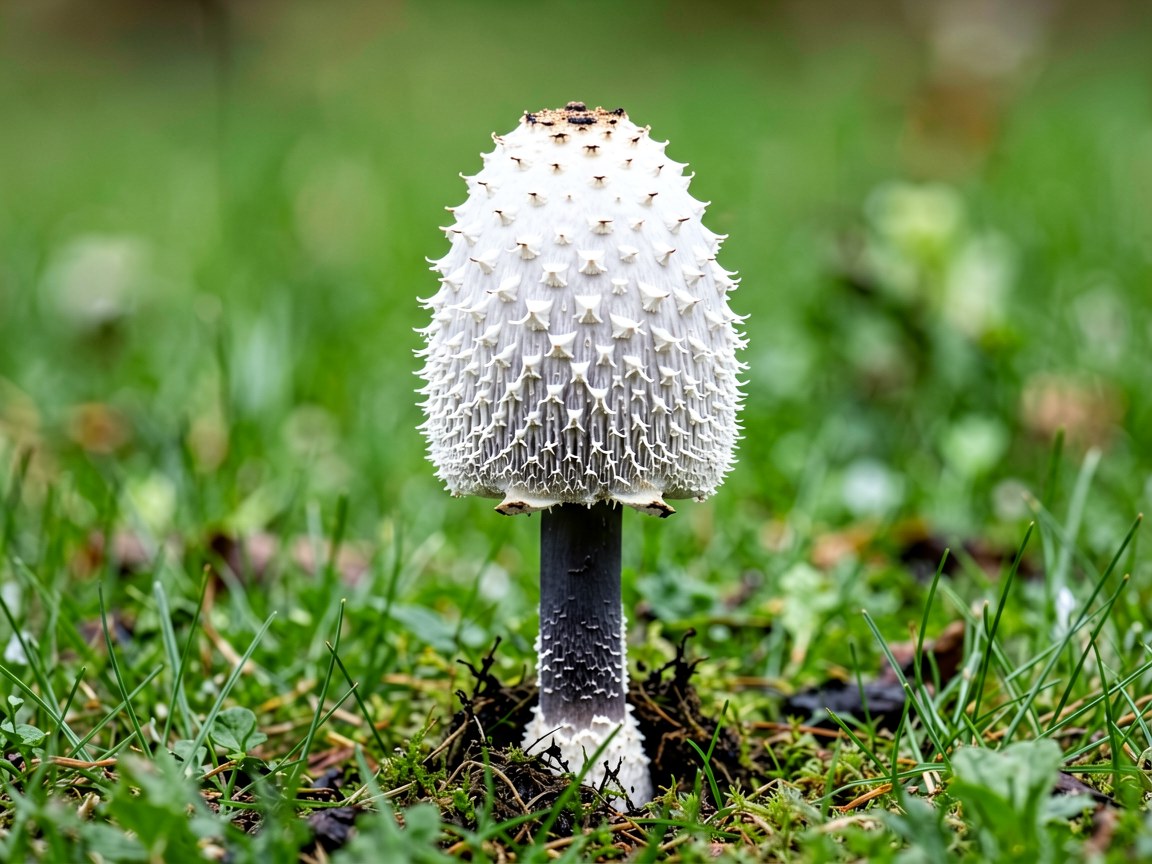
Coprinus comatus | Shaggy Inkcap
Introduction
The shaggy inkcap (Coprinus comatus) is one of the most distinctive of all mushrooms: a tall, oval cap covered in shaggy white scales, rising from grassy roadsides and lawns like a white egg on a stalk. It is famous for a remarkable trick—within hours of opening, the cap begins to dissolve into a black, inky liquid. Edible when young and button-sized, it is a striking sight of the autumn grass.
Taxonomy
Coprinus comatus is a fungus in the family Agaricaceae, within the order Agaricales—the gilled mushrooms. It is the type species of the inkcaps, a group known for caps that self-digest. Although it looks like a typical capped mushroom, it shares the fungal lifestyle with Amanita muscaria: both are fungi that absorb their food rather than make it by photosynthesis.
Physical Characteristics
The young fungus is a cylinder or egg 4–8 cm tall, with a pure white cap wrapped in shaggy, fleshy scales and a floppy margin. The stem is slender, hollow, and ringed by a movable skirt. As it matures the cap broadens, then the gills and cap edge begin to liquefy from the bottom up, turning pink, then black and inky. A full-grown shaggy inkcap can be 10–15 cm tall before it melts away.
Habitat
Shaggy inkcaps favour short, enriched grassland: roadside verges, lawns, parks, playing fields, and the edges of cultivated land. They also appear on disturbed ground and bonfire sites where the soil is rich. They fruit from spring to late autumn, often in rings or troops, and are common in towns as well as the countryside.
Diet
Like all fungi, the inkcap is heterotrophic. Its thread-like mycelium lives in the soil and dead plant matter, secreting enzymes that digest cellulose and other organic compounds and absorbing the products. It does not photosynthesise; the white cap is simply the short-lived structure that produces and releases spores before self-destructing.
Reproduction
Inkcaps reproduce by spores formed on the gills. The blackening is the plant’s own mechanism: as the cap dissolves, it releases a dark fluid packed with mature spores that drip and smear onto the ground, aiding dispersal. A single cap produces millions of spores. The whole cycle—from egg to ink—can take less than a day in warm, damp weather.
Conservation
The shaggy inkcap is common and widespread and is not considered threatened. It benefits from the mown, fertile grasslands of human landscapes, so it is one of the fungi most likely to turn up in a garden or roadside. Because it is short-lived and self-dissolving, it is best enjoyed where it stands rather than collected in quantity.
Fun Facts
- Its cap literally turns to black ink a few hours after opening—a built-in spore-delivery system.
- Young buttons are edible and were once used as a mushroom “bacon” when fried.
- The inky liquid was historically used as a makeshift pen ink.
- It often fruits in fairy rings on lawns and verges.
- Despite the dramatic melt, the process is orderly: it always blackens from the bottom of the gills upward.