 By st20113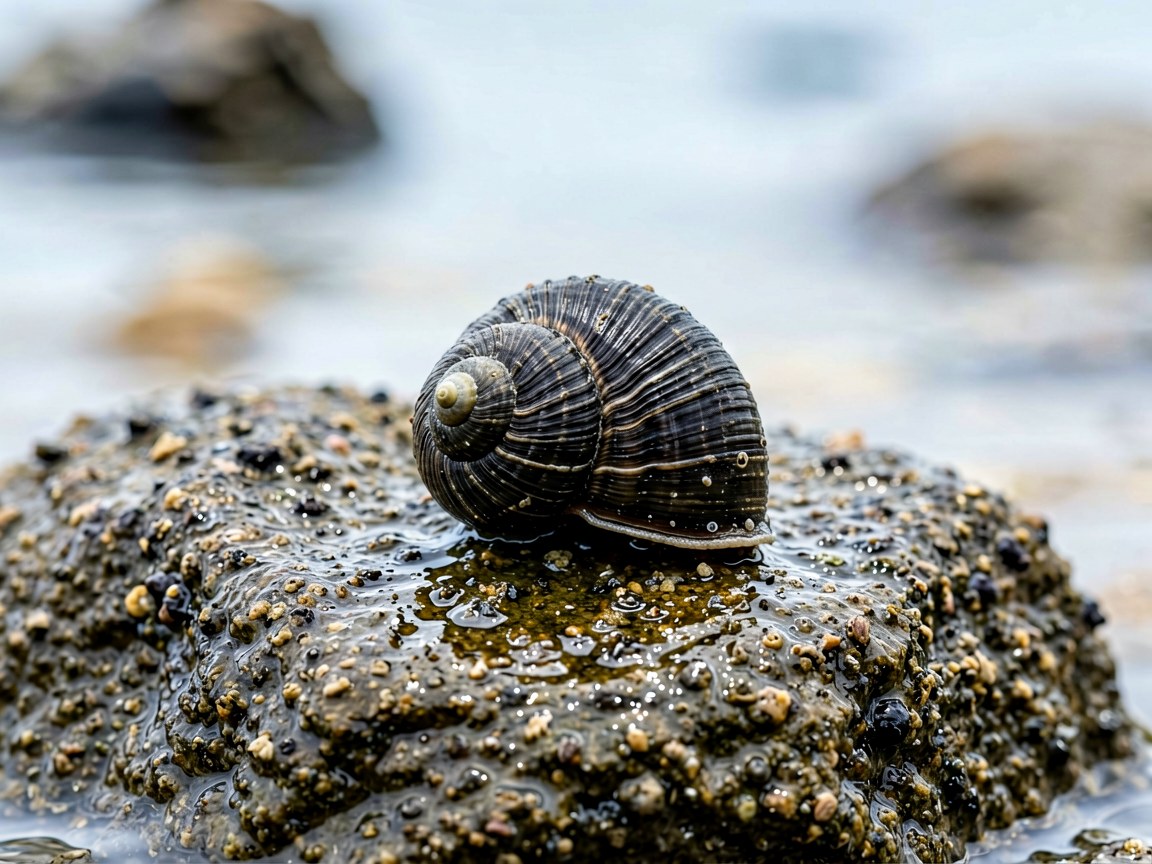
Littorina saxatilis | Rough Periwinkle
Introduction
The rough periwinkle (Littorina saxatilis) is a small, dark sea snail of the upper shore, so common on rocky coasts that it is easy to overlook. Unlike its relatives that roam at low tide, it spends its life in the splash zone, rarely fully submerged, and is superbly adapted to drying out. Tough, variable in colour, and abundant, it is one of the most numerous animals on many a rocky beach.
Taxonomy
Littorina saxatilis is a mollusc in the class Gastropoda—the snails and slugs—within the family Littorinidae, the periwinkles. It is a relative of the garden snail and of more famous molluscs such as Octopus vulgaris, the common octopus, sharing the molluscan body plan of a broad foot, a head with tentacles, and a rasping tongue.
Physical Characteristics
The rough periwinkle has a solid, globular shell 8–18 mm across, with a low spire and strong ridges, coloured anything from grey and black to reddish or banded. The animal has a dark foot and a pair of short tentacles with eyes at their tips, and an operculum—a horny “door”—that seals the shell when it retracts. Its thick shell and door are its defence against both drying and predators.
Habitat
This snail lives high on rocky shores, in the spray zone above the normal tide line, where it clings to stones, boulders, and rock pools that are only splashed by the highest seas. It tolerates long periods out of water and is a master of the harsh upper shore, where few other grazers can survive. It is found on both exposed and sheltered coasts across the north Atlantic.
Diet
Rough periwinkles are herbivores that scrape microscopic algae and diatoms from rock surfaces with their radula. They graze the thin film of life on stones, often while the rock is merely damp rather than submerged. By keeping the rock surface cropped they help shape the tiny community of the splash zone, and they are themselves food for birds and crabs when dislodged.
Reproduction
Unlike many shore snails, the rough periwinkle does not broadcast eggs and sperm into the sea. Instead the female broods her eggs internally and releases tiny, fully formed young that crawl away at once—there is no drifting larval stage. This direct development suits a life spent above the waterline, where free-floating larvae would be swept away. Young grow slowly and may live several years.
Conservation
The rough periwinkle is extremely abundant and not threatened. Its numbers track the health of rocky shores and clean water, and it forms a large part of the diet of oystercatchers and other shorebirds. Because it lives so high and needs little, it is resilient, but heavily polluted or concreted shores can reduce the crevices it needs.
Fun Facts
- It can survive for days out of water by sealing its shell with a horny door.
- Unlike many sea snails, it gives birth to tiny crawling young rather than drifting larvae.
- Its colour varies so much that the same beach can hold grey, black, and red forms.
- It lives higher on the shore than almost any other British sea snail.
- A single boulder in the splash zone can shelter dozens of them.