 By st20113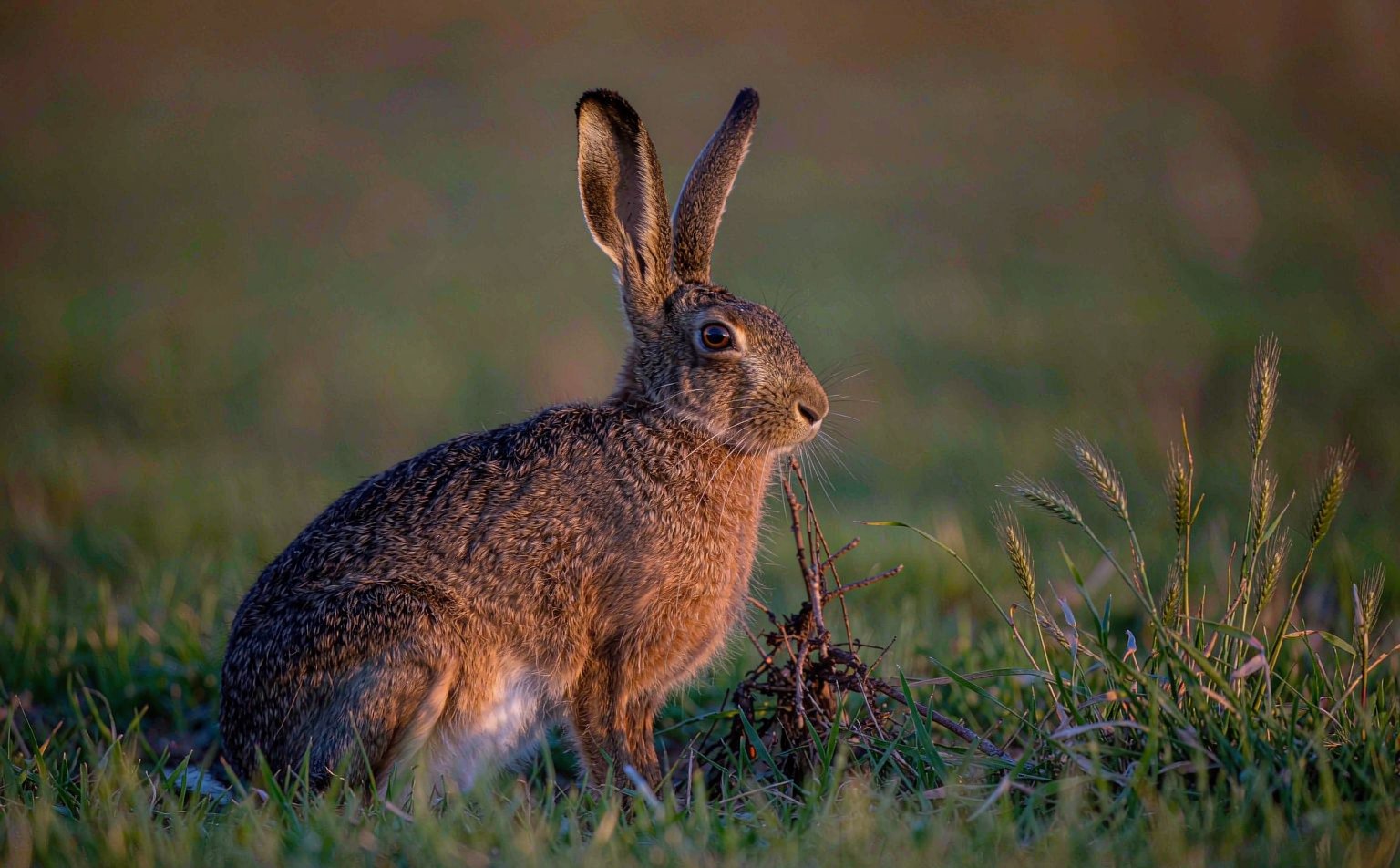
Lepus europaeus | Brown Hare
Introduction
The Brown Hare (Lepus europaeus) is a large, long-limbed hare of open farmland, grassland and arable edges across Europe and central Asia. Famous for its speed and for the springtime “boxing” of courting animals, it is a creature of the ground rather than the burrow, relying on acute senses and explosive sprinting to escape predators. Its presence on quiet countryside dawn watches is a hallmark of healthy lowland farmland.
Unlike rabbits, Brown Hares do not dig warrens but rest in shallow depressions called forms, sitting motionless among crops and grass. They are most active at dusk and through the night, and their elusive nature means they are more often glimpsed as a bounding shape crossing a field than studied at leisure.
Taxonomy
The Brown Hare was described by Peter Simon Pallas in 1778 and belongs to the genus Lepus, which includes the true hares and jackrabbits, within the family Leporidae. It is distinct from the smaller European Rabbit in both behaviour and biology, being born fully furred and mobile rather than blind and naked in a burrow.
In open country it shares the landscape with the Red Fox, its principal predator, and with the European Badger. It also uses the same grassy margins as the European Rabbit, though the two occupy different niches, the hare favouring larger, more open fields.
Physical Characteristics
The Brown Hare is a sizable lagomorph, measuring 50 to 70 centimetres in body length with a short tail of 7 to 10 centimetres, and weighing 2.5 to 5 kilograms. Its coat is sandy-brown to rufous, flecked with black, and its long, black-tipped ears are noticeably longer than its head, a key feature separating it from rabbits. The hind legs are long and powerful, built for high-speed running and leaping.
The eyes are large and set high on the head, giving wide all-round vision to detect approaching danger. The tail, or “scape,” is white beneath and shows as a pale flash when the animal runs. In winter the coat may pale slightly but does not turn fully white as in some northern hares. Its lithe build and elongated limbs make it one of the fastest land mammals of the European countryside.
Habitat
Brown Hares favour open country: arable farmland, pasture, meadows, field margins and light scrub, avoiding dense woodland and built-up areas. They need a mosaic of cropped and taller vegetation, using short grass for feeding and longer cover for resting and breeding. Traditionally managed farmland with hedgerows and fallow corners suits them best.
They are crepuscular and nocturnal, spending the day in forms hidden in crops or long grass and feeding at night. In recent decades agricultural intensification has reduced the mixed habitats they need, and hare numbers have declined across much of western Europe even as the species remains widespread.
Diet
The Brown Hare is a herbivore that grazes on grasses, herbs, clover and cereal shoots, switching in winter to bark, twigs, gorse and the leaves of hardy plants. It practices coprophagy, re-ingesting soft faecal pellets to extract maximum nutrition from its fibrous diet, a common adaptation among rabbits and hares.
Because it feeds in the open, the hare is vulnerable while grazing and tends to make short feeding forays from secure resting cover. Its diet shifts with the seasons and the farming calendar, and access to winter stubble and weedy margins is important for survival when snow or frost limits green growth.
Reproduction
Brown Hares can breed from February to September, with a peak in spring and early summer. The female, or doe, after a gestation of about 41 to 42 days, gives birth to usually two to four leverets in a form rather than a nest. The young are precocial, born furred and open-eyed, and they lie hidden separately, visited by the mother only briefly to suckle, which reduces the risk of attracting predators.
A doe may produce three or more litters in a season. The famous “boxing” seen in spring is usually a female fending off the advances of an overly eager male. Leverets grow quickly and are independent within a few weeks, though many fall to predation before reaching adulthood.
Conservation
The Brown Hare is classified as Least Concern globally, but it has undergone significant declines in parts of western Europe owing to agricultural change, including the loss of mixed cropping, the removal of hedgerows and the use of pesticides that reduce food plants. In some countries it is a managed game species, with populations supported by sympathetic habitat measures.
Conservation for hares centres on providing year-round cover and food: retained field margins, spring-sown crops, reduced autumn tillage and the reinstatement of hedgerows. Because hares range widely, landscape-scale approaches are more effective than small isolated plots, and reduced disturbance during the spring breeding season helps leveret survival.
Fun Facts
- The “mad March hare” boxing is usually a female rejecting a male’s mating attempt, not two males fighting.
- A Brown Hare can run at speeds over 70 kilometres per hour to escape predators.
- Leverets are born ready to run, hidden singly in grass rather than gathered in a nest.
- Its long black-tipped ears can be longer than its own head.
- Hares practise coprophagy, eating special soft droppings to digest their food twice.