 By st20113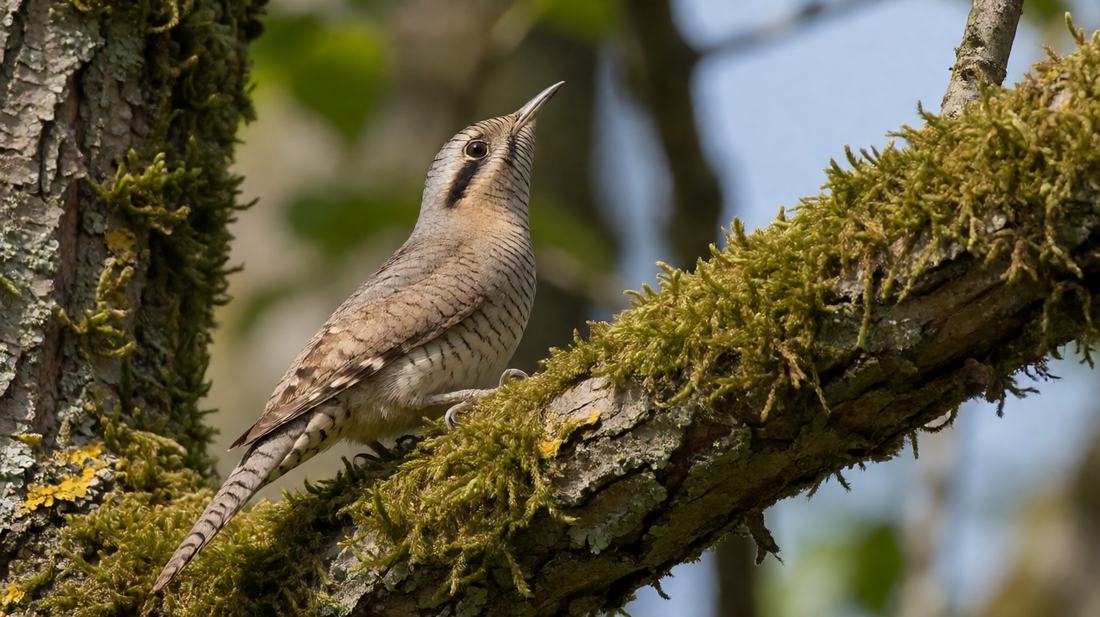
Jynx torquilla | Eurasian Wryneck
Species Profile · Picidae
Eurasian Wryneck
A woodpecker that cannot chisel wood, a bird that hisses like a snake when alarmed and lives almost entirely on ants — the strangest member of its family.
IUCN: Least Concern
Range
Length
Weight
Nest
Incubation
The woodpecker that cannot chisel
An anteater in woodpecker’s bones
The Eurasian wryneck is the strangest of the woodpeckers of Europe. It is one of the most surprising birds of the continent. It belongs to the family Picidae. Yet it has given up almost all the habits of that family. It does not climb the trunks of trees. It does not chisel the wood. It does not drum. It does not cut a nesting hole of its own. It is a small and a grey and a very finely mottled bird. It looks far more like a large warbler or a small shrike than like a woodpecker. Its plumage is grey and brown and buff.
It is barred and marked all over the upper surface. The pattern matches the bark of a tree so well that the bird is very hard to see. The species is a summer visitor to most of Europe and to the temperate parts of Asia. It winters in the savanna and the scrub of Africa south of the Sahara. It also winters in the south of Asia. It arrives in April and leaves in August and September. It is a bird of the open wood and the orchard and the park. It also uses the wooded garden. It keeps away from the dense forest. Most people know the bird by 2 strange habits. The first is the twisting of the head.
When the bird is alarmed it turns the head slowly through a very wide arc and hisses. The movement and the sound together copy a snake. The trick works so well that the bird is often taken for one. The second is the tongue. It can be pushed far out beyond the tip of the bill. It is used to pull the ants out of the tunnels of a nest. The wryneck is a bird of the ants in almost an exclusive sense. That dependence has shaped its whole way of life. The bird has no need of a strong bill if its prey are soft and are taken from the ground and the dead wood. So the family has produced in the wryneck a strange animal. It is a woodpecker in its bones and an anteater in its habits.
Family tree
Jynx, a genus of two
The Eurasian wryneck was described by Linnaeus in 1758. The modern treatment places it in the genus Jynx. That genus holds only 2 species. The second is the red-throated wryneck of the open country of Africa south of the Sahara. The 2 are the only members of the family that are true long-distance migrants. They are also the only ones that have lost the climbing foot and the stiff tail of the typical woodpecker. The family Picidae is a large group of about 240 species. The modern treatment splits it into 4 subfamilies. The wrynecks sit in the subfamily Jynginae. That split separates them sharply from the true woodpeckers and from the piculets.
The anatomy of the skull and of the tongue supports the split. So does the evidence from the genes. The wryneck is a close relative of the Great Spotted Woodpecker (Dendrocopos major). The 2 birds share the family and the same odd tongue. They share the same general plan of the head and the bill. They differ in almost everything else. The great spotted woodpecker is a resident climber of the trunk. It chisels the wood for the insect larvae. It drums on the dead branch to advertise its territory. The wryneck is a migrant of the open ground.
It walks on the lawn and takes the ants from the surface. It never drums at all. The modern treatment recognises 7 or 8 subspecies of the wryneck. The gaps between them are small. They rest on the depth of the ground colour and on the amount of the dark marking. The birds of the north and the east are paler and greyer on average. The birds of the south and the west are darker. The division between the forms is not a sharp one.
Striped back, weak bill
How to identify one
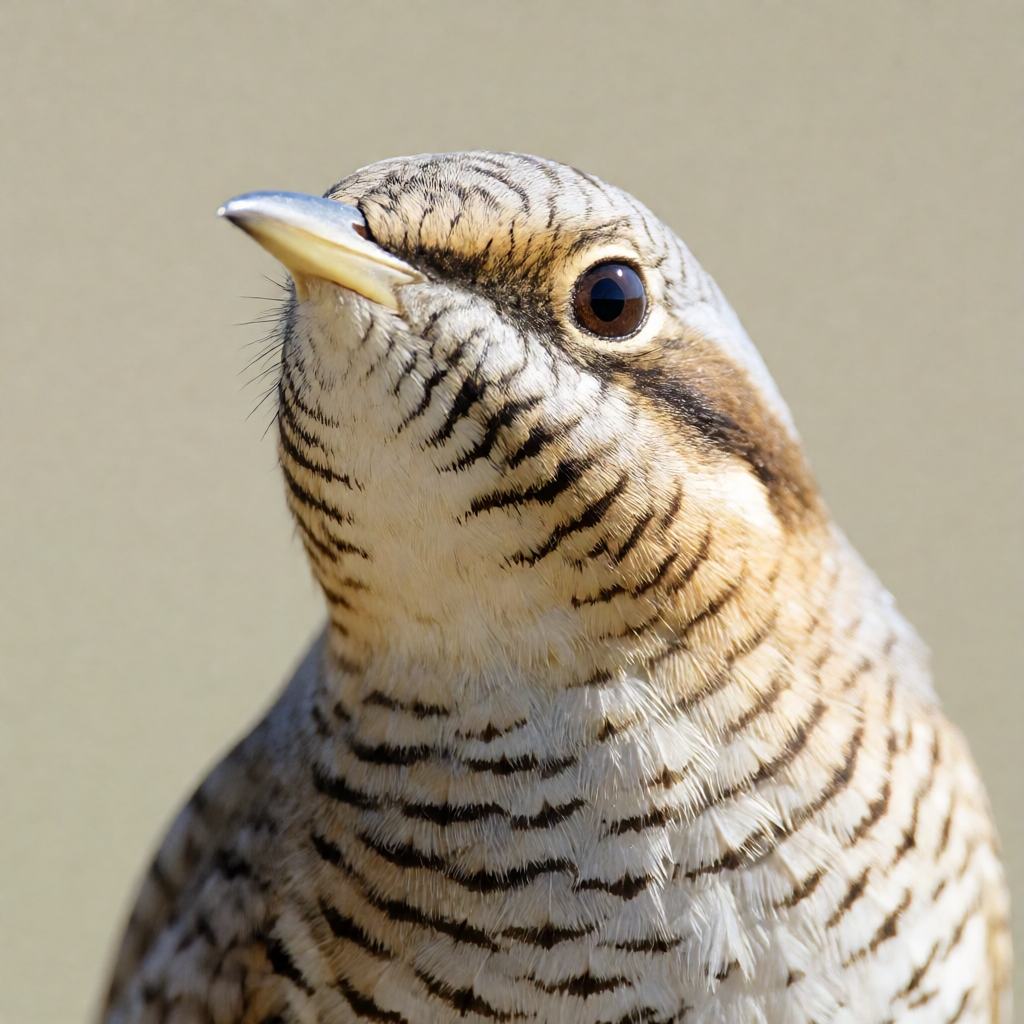
An adult Eurasian wryneck is between 16 and 18 centimetres long. Its wingspan is between 25 and 27 centimetres. Its mass is between about 30 and 45 grams. So the bird is about the size of a house sparrow. It is by a long way the smallest of the woodpeckers of Europe. The plumage is a soft and a very intricate mix of grey and brown and buff. The crown and the nape are barred with the dark and the pale in fine lines. The mantle and the back are marked with the brown and the buff. A broad and a dark stripe runs from the crown down the middle of the back of the neck.
That stripe is one of the best field characters of the species. The underparts are a pale greyish-buff. The fine dark marks on them grow into a barring on the flanks. The tail is long and is barred with grey and brown. The bird uses it as a support when it clings to a vertical surface. The bill is short and straight and pointed. It is much weaker than the bill of a true woodpecker. The bird uses it to probe soft and rotten wood and to pick ants off the ground. The tongue is the most remarkable part of the whole bird.
It is long and thin and it ends in a horny and a slightly hooked point. It is coated with a sticky fluid. A skeleton of thin bones holds the tongue. That skeleton passes around the skull and over the top of the head and is fixed near the eye. The same plan is found in the woodpeckers and in the hummingbirds. It is one of the classic cases of the same answer being reached twice. The neck is short and the head can turn through a very wide angle. The 2 sexes are alike. The young bird is a duller copy of the adult.
1
2
3
Orchard, park and woodland edge
Where it lives
The Eurasian wryneck wants open and broken country. It wants bare or thinly covered ground for the feeding. It wants old and decaying wood for the nesting. The bird is a species of the woodland edge and the heath. It also uses the orchard and the park and the large garden and the scrub. It avoids the dense and closed forest. It avoids the bare and treeless plain. The ideal landscape is a mix of short grass and bare soil. It also needs scattered old trees.
The bird is commonest where the ants are plentiful. The ant is the key to the whole distribution of the species. In the north of Europe the bird is a local and a falling breeder. It uses the light wood and the wooded pasture and the old orchard. In the south it is a more numerous bird of the maquis and the olive grove and the open pine wood. In the east it is a bird of the birch and the poplar scrub of the steppe zone. The species has been hit by the drive for more food from the same land. The other birds of the open ground that feed on insects have suffered in the same way. The loss of the old and the decayed trees has taken the nesting site away.
The loss runs over a very large part of the range. The clearing of the dead wood from the orchard and the park has been very damaging. The wryneck cannot cut a hole of its own. It must find a cavity that another bird has already made. It can also use one that the decay of the tree has opened. The bird is a summer visitor to the whole of the European part of the range. It is one of the very few woodpeckers of the world that leaves the temperate zone for the winter.
A specialist of the ants
What it eats
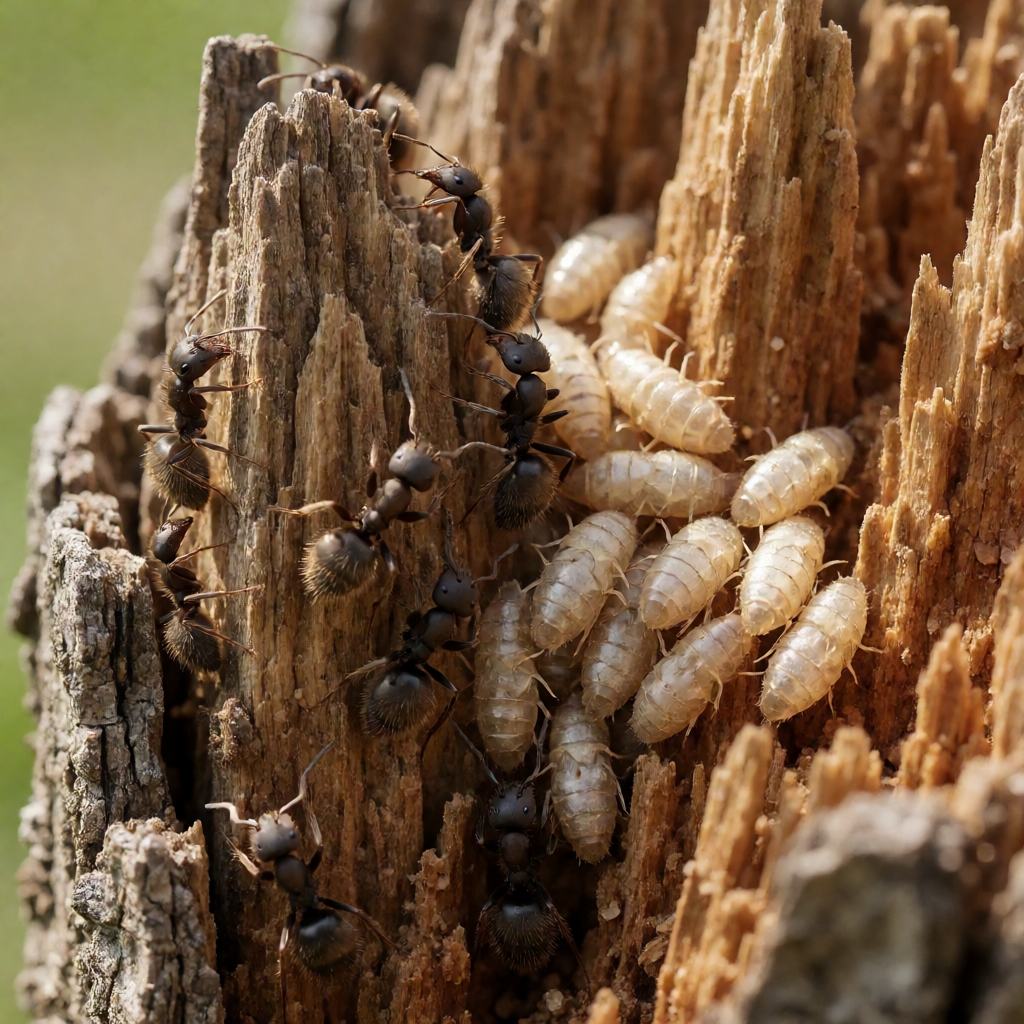
The Eurasian wryneck is a specialist of the ants. Most of the diet by number and by weight is made up of ants. The larvae and the pupae of the ant matter too. The bird takes the adults and the brood together. It takes them from the surface and from the upper layers of the soil. It takes them from the tunnels of the nest and from the dead and decayed wood. The ant is a prey rich in formic acid. The bird is one of the very few that can stand that acid. It can take a large amount of it in the diet.
The species also takes other small insects and spiders. It takes the small beetles that it meets on the ground. The way the bird feeds is unlike that of any other woodpecker. It does not climb the trunk and it does not chisel the wood. It walks and hops on the ground. It also works on the fallen trunk and on the low branch. It probes the soft wood and the soil. The bird often works at the base of a tree or at the edge of an ants’ nest. It licks up the ants with the long and sticky tongue.
It can take a very large number of the ants in a short time. The species is not a bird of the hunt in the air. It takes its prey from the surface and from shallow depths and never on the wing. The bird is a bird of the ants’ nest. The true woodpeckers are birds of the bark in the same sense. The whole anatomy of the species is a compromise. It sits between the machinery of the woodpecker and the habits of the anteater. The compromise shows in the weakness of the bill and the strength of the tongue.
A hole it cannot cut
The breeding cycle
The Eurasian wryneck returns to the breeding ground in April. The birds of the south arrive first. The birds of the north arrive in the first half of May. The bird is a hole nester that cannot cut its own hole. It relies on a cavity that a woodpecker or a starling or a tit has already made. It also uses a natural hollow in an old and decayed tree. The species uses holes in the trunk and the branch and the stump and the fence post and the wall of an old building. It takes very readily to the nest box.
The clutch is large for a woodpecker. It holds between 7 and 10 eggs. The eggs are white and glossy and nearly round. They are laid on the bare wood of the cavity without any lining. The incubation lasts between 12 and 14 days. It is carried out mainly by the female. The male brings the food to her through that period. The young are naked when they hatch.
They grow fast on a diet of ants and larvae. The chicks leave the nest at between 19 and 22 days of age. The whole family then moves to a new area. The young are fed by the parents for about 2 weeks after the young fledge. The wryneck is one of the very few woodpeckers whose young are led away from the nest site by the adults. The species raises a single brood in the year. A replacement clutch is laid if the first is lost early in the season. The bird breeds for the first time at 1 year of age.
Falling in the north
Conservation
The Eurasian wryneck is assessed as Least Concern on the global Red List. The world population is very large and is measured in the millions of birds. The range of the species runs over the whole of the temperate belt. It stretches from the Atlantic to the Pacific. The bird is not thought to be close to the levels of any threatened class. The trend in Europe is still a falling one. The species has dropped heavily in the north and the west of the continent. The fall has come over the last 50 years. The bird has been lost as a breeder from a number of the countries of the north.
It is now a scarce and a very local bird in Britain. It has suffered the same fall in the Netherlands and in Denmark. The fall is blamed on the loss of the ant-rich habitat. The loss of the dead and decaying wood has mattered too. The way the orchard and the park and the wood are managed has changed. That change has been the most important single cause. The old and hollow tree has been taken out as a matter of tidiness and of safety. The insecticide has taken the ants out of a great deal of the farmland. The 2 changes together have removed the food and the nest site.
They have gone from the same districts at the same time. The species is also killed on the migration route. The route crosses the Mediterranean and the Sahel. The birds are taken for food in some numbers. The killing for food goes on in the south of Europe and the north of Africa. The nest box has been shown to work well. It has helped in a number of the countries of the north of the range. The bird will take a box that is put up in the right place within a single season.
Quick hits
Five things to remember
- The wryneck is a woodpecker that cannot chisel wood. It cannot climb a trunk either. It is one of the very few members of the family that never drums.
- When it is alarmed the bird turns its head slowly through a very wide arc. It hisses at the same time. The display copies a snake so well that the bird is often taken for one.
- The tongue can be pushed far out beyond the tip of the bill. It is used to lick the ants out of their tunnels.
- The species is one of only 2 members of the family that are true long-distance migrants. It spends the winter in Africa south of the Sahara.
- The clutch of between 7 and 10 eggs is unusually large for a woodpecker. The eggs are laid on the bare wood of the cavity. They have no lining at all.