 By Iris
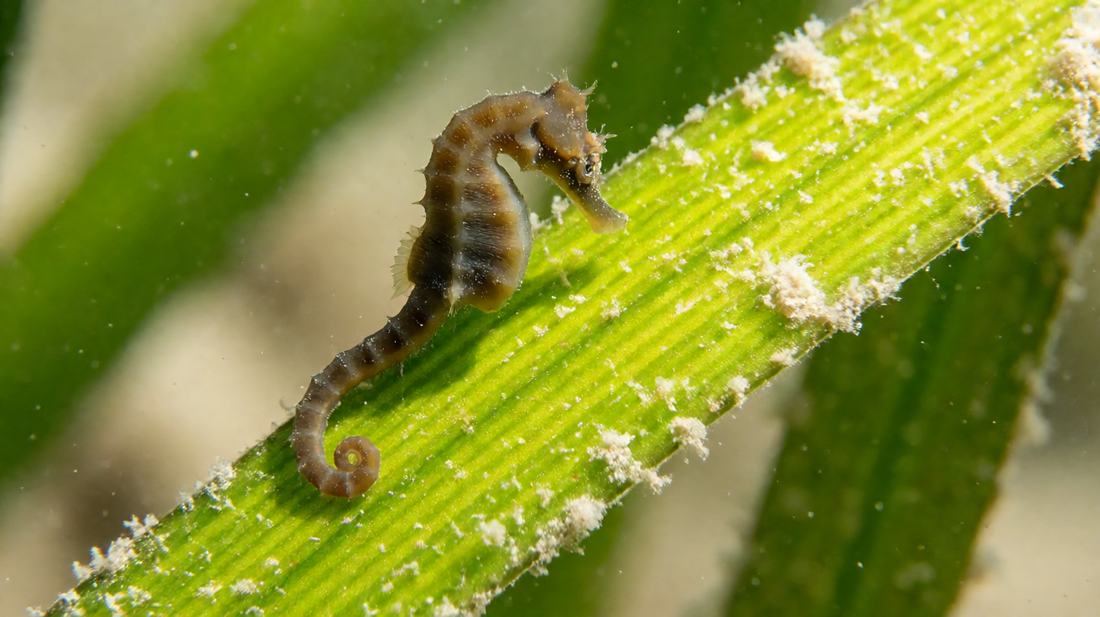
Hippocampus zosterae | Dwarf Seahorse
Species Profile · Syngnathidae
Dwarf Seahorse
One of the smallest seahorses alive, a thumb-sized fish that clings to seagrass blades while the male carries the eggs.
Least Concern (2016) 2016 assessment
Length
Colour
Brood
Pregnancy
Hold
Rating
The Dwarf Seahorse
A seahorse the size of a thumb
This is one of the smallest seahorses on Earth. Adults measure 2 cm to 4 cm. A curled tail grips a blade of grass.
Colour shifts with the surroundings. Green, brown, tan and white all appear. Because the fish barely moves, a still body is the whole defence.
It feeds on tiny shrimp all day long. Males carry the young, not females. Though the little fish looks fragile, its grip on a seagrass blade can hold it steady in a strong current, and it rarely lets go.
Family tree
Syngnathidae, seahorses and pipefish
This fish sits in the pipefish family, Syngnathidae. Two American workers, Jordan and Gilbert, named it in 1882. Its genus name comes from the Greek for sea horse. A second name honours Zostera, a seagrass.
That plant is where the fish lives. Pipefish and seadragons are close kin. All of them share a tube shaped snout, while the body shape differs. The Seahorse group holds about 45 species.
Some of those are still being sorted out. Because so many of the small ones look alike, divers often log a dwarf seahorse when a different, equally tiny species is the real match.
2 cm with a curled tail
How to tell one
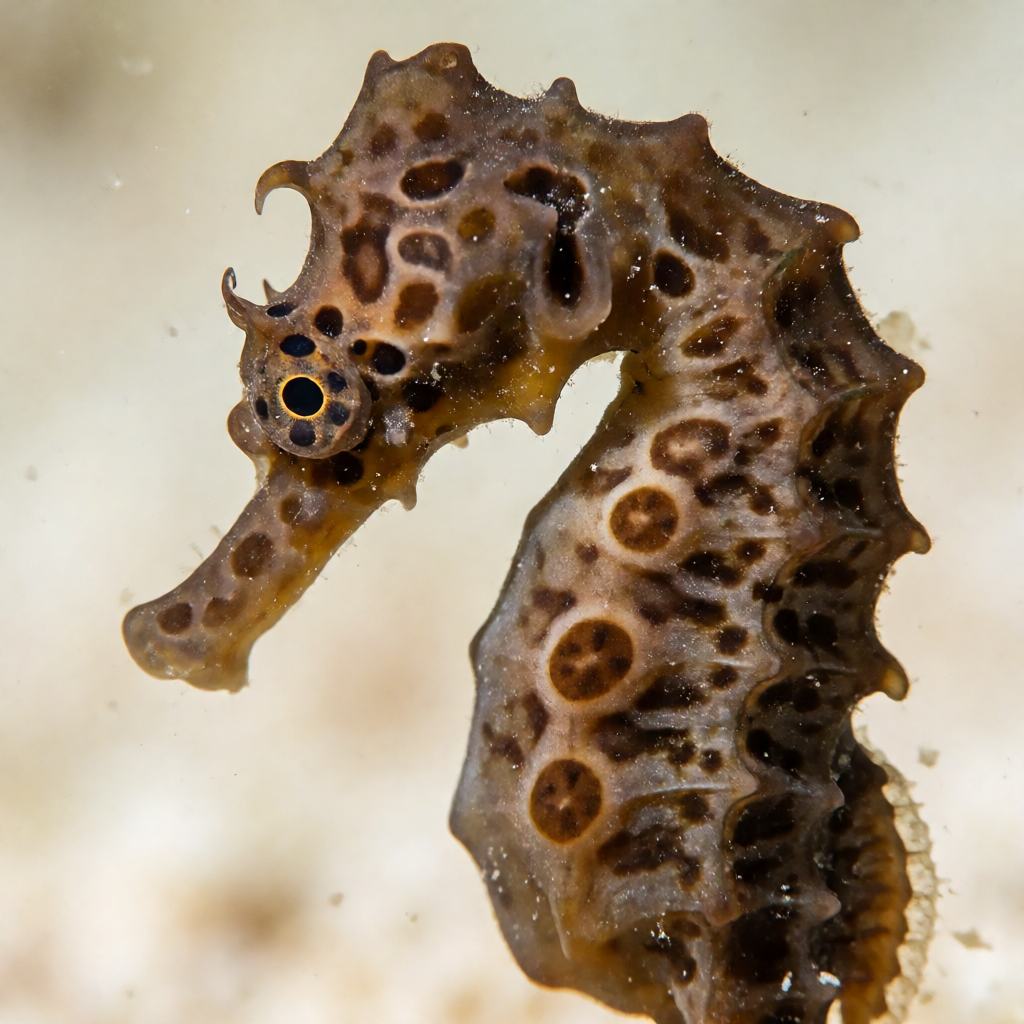
Adults reach 4 cm at most. The snout is short and tube shaped. Fins are tiny and sit behind the head. A dorsal fin beats about 30 times a second.
That is far too weak for fast swimming, so the fish drifts instead. Skin carries small bumps and rings of bone, yet it feels smooth. No scales cover the body. Colour cells shift within minutes.
The male grows a pouch below the belly. Because the spine is stiff and the fins are so small, the fish steers by changing the volume of gas inside it and drifts with the tide.
1
2
3
Seagrass beds and mangroves
Where it lives
Seagrass beds are the main home. Turtle grass and shoal grass suit them best. The Gulf of Mexico holds large numbers. Florida, Bermuda and the Bahamas also have them.
Mangrove roots offer a second refuge. Water must be shallow and calm. Silt and pollution smother the grass. Coastal building removes it outright.
Once the grass goes, the fish go too. Although a single blade can host one fish for weeks, the animal cannot travel far to find a new bed when its own patch dies.
Tiny shrimps and copepods
What it eats
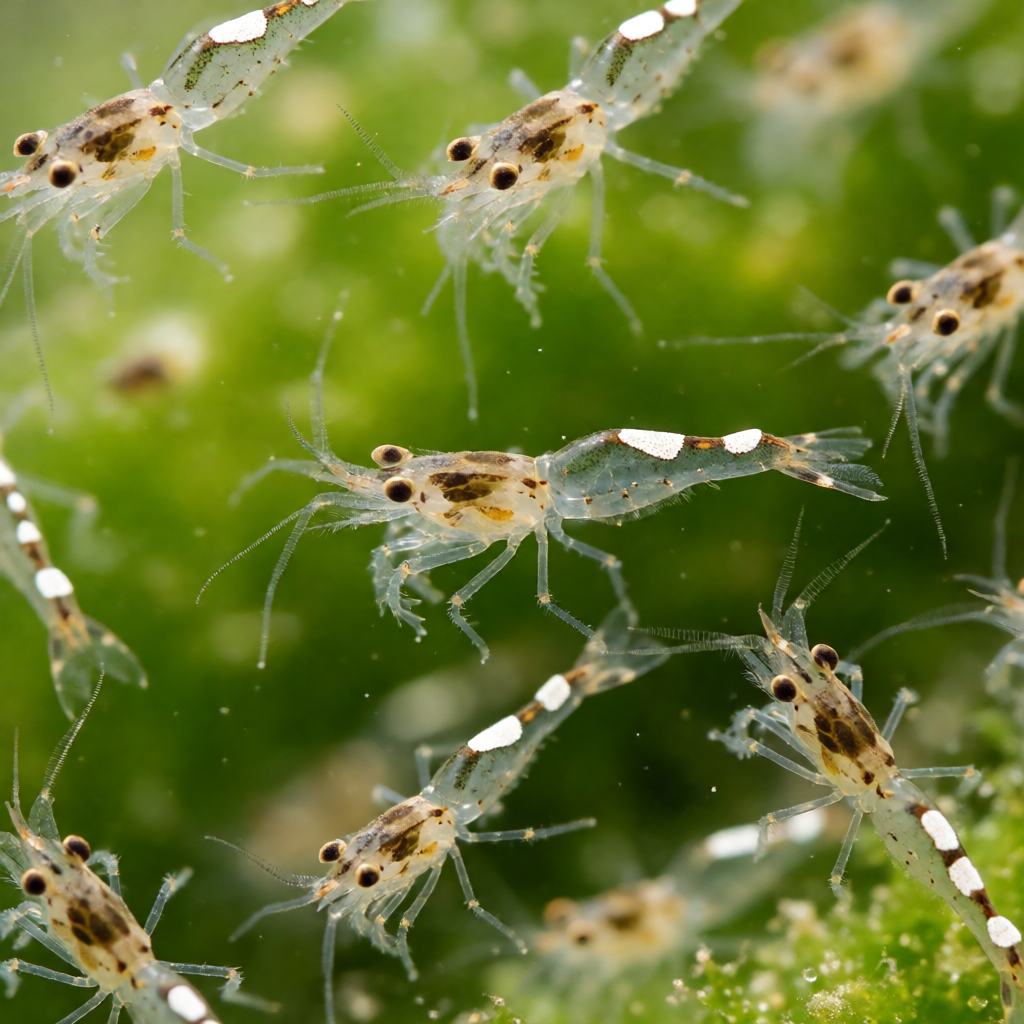
Tiny shrimp make up the whole diet. Copepods and baby shrimp come first. A snout like a straw sucks them in. There is no stomach at all.
Food passes through in minutes. Because of that, the fish must eat almost without pause. It hunts by sight, day and night. Each meal, though, may last only seconds.
Thousands of small prey are needed daily. Since a meal so small gives almost no energy, hunger drives this fish for every waking hour and shapes where it can live.
The male carries the eggs
The breeding cycle
A pair greets each other at dawn, while other fish sleep. That dance lasts a few minutes. Colour brightens during the greeting. The female makes the eggs.
She passes them to the male. He holds 5 to 50 eggs in his pouch. His pouch feeds them for 10 days. He then gives birth to live young.
Each baby is about 7 mm long. Young fish feed themselves at once.
Least Concern
Conservation
The IUCN calls this seahorse Least Concern. The assessment dates from 2016. Numbers, however, look steady. Seagrass loss is the main worry.
Dredging clouds the water. Runoff from farms feeds algae that shade the grass. Collectors also take fish for tanks. Most collected stock dies quickly.
A few marine parks protect beds. Because the fish breeds fast and dies young, a healthy bed can rebound in one season, yet a lost bed may never return.
Side by side
How It Compares
| Trait | Dwarf Seahorse | Lined Seahorse |
|---|---|---|
| Length | 2 cm to 4 cm | 12 cm to 17 cm |
| Brood size | 5 to 50 young | 100 to 300 young |
| Habitat | seagrass in shallow bays | seagrass, mangroves and open coast |
| Range | Gulf of Mexico and the Bahamas | Nova Scotia to Panama |
| Lifespan | about 1 year | 1 to 4 years |
| IUCN status | Least Concern | Vulnerable |
Common misreadings
What People Get Wrong
- A female seahorse carries the eggs. Males carry them instead.
- Seahorses are strong swimmers. This one drifts and grips instead.
- Its curled tail is a weapon. That tail is a grip for grass.
Going further
Sources and Further Reading
- IUCN Red List entry for Hippocampus zosterae
- Wikipedia, Dwarf seahorse
- Lourie, S. A., Foster, S. J., Cooper, E. W. T. and Vincent, A. C. J. Seahorses: An Identification Guide to the World’s Species and their Conservation. Project Seahorse.
- Froese, R. and Pauly, D. (eds). SeaLifeBase species account for Hippocampus zosterae.
Quick hits
Five things to remember
- Its name comes from a seagrass.
- Males give birth, not females.
- It has no stomach at all.
- A brood may hold 5 to 50 young.
- It grips grass with a curled tail.