 By st20113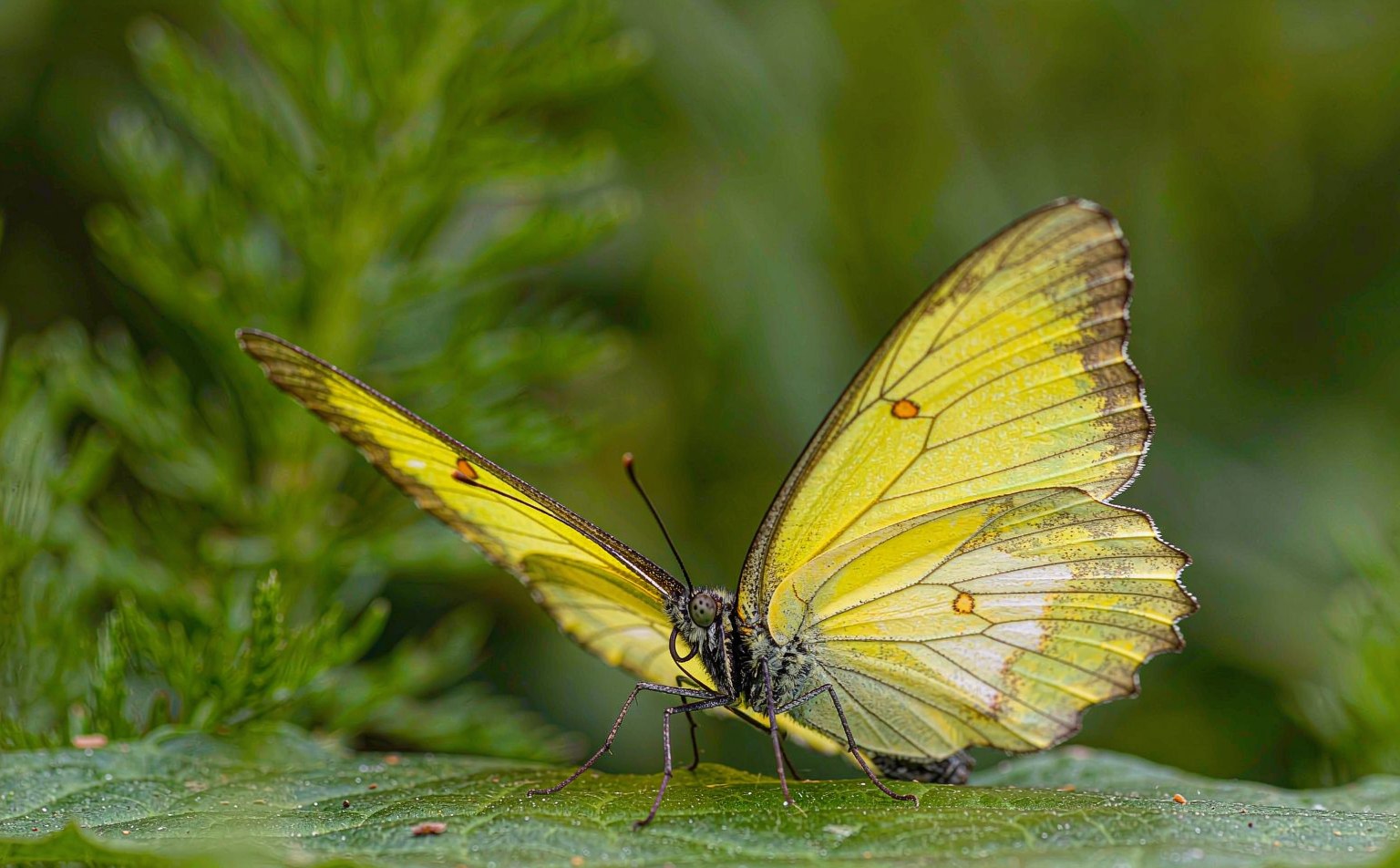
Gonepteryx rhamni | Brimstone
Introduction
The Brimstone (Gonepteryx rhamni) is often credited as the inspiration for the very word “butterfly” in English, thanks to its sulphury wings and fluttering flight. The male is a luminous yellow, the female a paler greenish-white, and both have abnormally elongated forewings with a single orange spot that give them the look of a leaf when at rest. One of the longest-lived European butterflies, it is among the first to appear in spring and the last to disappear in late autumn.
Taxonomy
The Brimstone belongs to the family Pieridae, distinct from the whites in the subfamily Coliadinae, the sulphurs and yellows. It is the only European member of its genus and is closely tied to buckthorn shrubs, the sole food plants of its caterpillars. Related New World sulphurs show the same leaf-like resting posture, a shared solution to avoiding predation among pale, long-lived butterflies.
Physical Characteristics
Adults have a wingspan of 54 to 62 millimetres and uniquely pointed forewings, each tipped with a small orange disc. Males are bright sulphur yellow, females whitish-yellow with greener tones; both sexes show the orange spot on each wing and a delicate vein pattern. The underside is a uniform pale green or cream that matches the colour of leaves, so a resting Brimstone on ivy or hawthorn is almost invisible.
The body is slender and pale, the antennae short and clubbed. The wings are thin-scaled and slightly translucent, contributing to the glowing quality of the male in flight. Newly emerged adults are more intensely coloured than those that have weathered a long hibernation.
Habitat
The Brimstone is a butterfly of woodland edges, coppices, hedgerows, parks, orchards and scrub, wherever its larval food plants grow. The caterpillars depend on alder buckthorn (Frangula alnus) and purging buckthorn (Rhamnus catharticus), so the butterfly is absent from areas lacking these shrubs. Adults range widely for nectar, especially along sunny rides and through gardens, and the species tolerates cool upland woods.
Diet
Adults take nectar from a wide variety of flowers, showing a liking for blue and purple blooms such as bluebell, knapweed, thistle, lavender and buddleia, as well as bramble and ivy late in the season. They also visit damp ground for minerals. The caterpillars feed only on buckthorn leaves, resting by day along the midrib and eating at night to avoid birds.
Reproduction
Females lay single pale green eggs on the flower buds or young leaves of buckthorn, one per shoot to reduce competition. The caterpillar is a leaf-green larva with a faint yellow line and a forked tail, well camouflaged against its food plant. It pupates in a pointed, greenish chrysalis suspended from a twig. There is a single generation each year: adults emerging in summer mate and the females lay in late summer, but the resulting caterpillars or chrysalises carry the brood through to the next year, while mating adults themselves hibernate.
Conservation
The Brimstone remains widespread and secure across its range, though locally dependent on the survival of buckthorn scrub, which is easily lost to agricultural improvement and over-tidy woodland management. It benefits from leaving hedgerow and coppice buckthorn intact and from planting nectar sources for the long-lived adults. Because it hibernates as an adult, mild but variable winters can affect survival, making it a useful signal of seasonal change.
Fun Facts
- The male’s yellow colour is so characteristic that it may have given English the word “butterfly”.
- Adults can survive for ten months or more, most of it in hibernation.
- The pointed wingtips act as a disguise, making the resting butterfly resemble a curled leaf.
- Brimstones awake on the first warm days of February and may be seen basking in snow patches.
- The caterpillars’ exclusive diet of buckthorn makes the presence of the shrub a reliable predictor of the butterfly.