 By st20113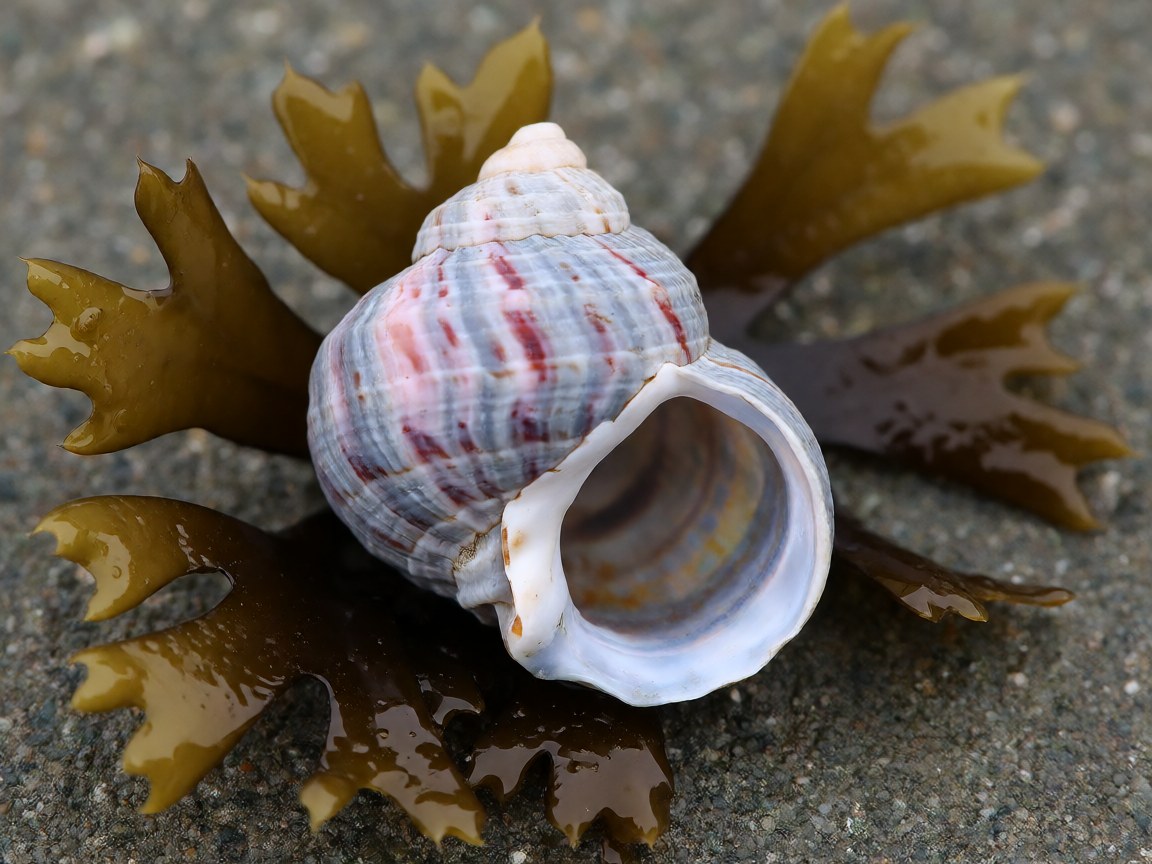
Gibbula cineraria | Grey Top Shell
Introduction
The grey top shell (Gibbula cineraria) is a small, neat, conical sea snail common on seaweed-covered rocks around the coasts of Britain and Ireland. Barely two centimetres high, its shell is a tidy little spire of greys and purples streaked with red, with a pearly aperture and a horny operculum. It is one of the most abundant small grazers of the lower shore, and a reliable find wherever there is weed to shelter in.
Taxonomy
Gibbula cineraria is a gastropod mollusc in the family Trochidae, the top shells. It shares the fundamental molluscan body plan—muscular foot, mantle, and a rasping radula—with far larger and more mobile relatives such as Octopus vulgaris, the common octopus, but where the octopus is an active hunter of open ground, the grey top shell is a slow, sheltered grazer that spends its life in among the seaweed, protected by its small, thick shell.
Physical Characteristics
The shell is a neat, sharply conical spire up to about two centimetres high and slightly wider than tall, with five or six rounded whorls and a fine pointed tip. The surface is smooth and glossy, greyish, olive, or pinkish-grey, marked with purplish-grey or red streaks and blotches that run along the whorls. The aperture is rounded with a pearly, iridescent lining, and there is a small umbilicus at the base. The operculum is a thin, circular, horny plate that seals the opening when the animal withdraws.
Habitat
It lives on the lower shore and in shallow subtidal water, on rocky coasts, among seaweed, in rock pools, and on kelp stipes and holdfasts, favouring sheltered to moderately exposed shores with plenty of weed. It is found around Britain, Ireland, and north-west Europe, from the Mediterranean north to Norway. It is one of the commonest small snails of weedy rocky shores and is often abundant in a single handful of seaweed.
Diet
It is a grazer. Using its radula, it scrapes the film of algae, diatoms, and microscopic life that coats rock and seaweed, and it also feeds on young, soft seaweed growth and on the tiny animals that live among the weed. It does not hunt: it simply travels slowly across a surface, rasping it clean, which is the standard top-shell way of life and one of the reasons these snails are so numerous.
Reproduction
The sexes are separate. Spawning takes place mainly in spring and summer, and fertilisation is external: eggs and sperm are released into the water, and fertilised eggs develop into short-lived swimming larvae. The larvae settle after only a brief period in the plankton, metamorphosing into tiny snails on the same weedy ground. This short larval phase keeps populations local and closely tied to their particular stretch of shore.
Conservation
The species is abundant and not threatened. It depends on seaweed-covered rocky habitat and therefore suffers where shores are polluted, heavily silted, or stripped of weed, and where boulders are turned over and not replaced. Otherwise it is a stable and numerous part of the community, and one of the easiest small molluscs to find on a low tide.
Fun Facts
- The inside of its shell is lined with iridescent, pearly nacre.
- It seals the shell opening with a thin horny plate called an operculum when disturbed.
- The red or purple streaks on the shell follow the spiral of the whorls.
- Its larvae spend only a very short time in the plankton, so populations are strongly local.
- It is often found by the dozen in a single handful of washed seaweed.