 By st20113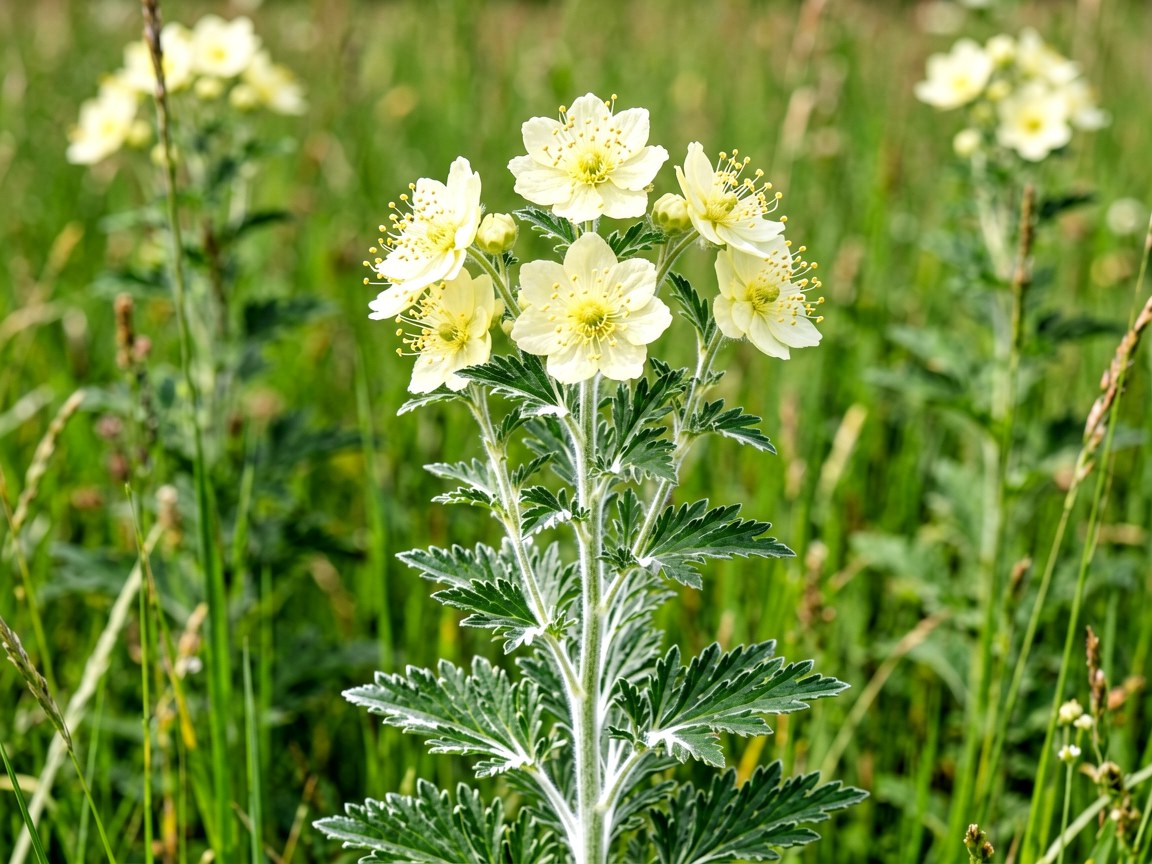
Filipendula ulmaria | Meadowsweet
Introduction
Meadowsweet (Filipendula ulmaria) is the tall, frothy, cream-white plant that fills damp meadows and riverbanks in high summer and fills the air with a heavy, sweet, almond-scented smell that carries metres downwind. It is one of the characteristic plants of unimproved wet grassland, growing in dense stands a metre or more tall with deeply divided leaves and broad, irregular heads of tiny creamy flowers held above them. It is also a plant with a claim to fame in the history of medicine: the salicylate compounds first isolated from meadowsweet and from willow bark were the basis of the drug that became aspirin, and the very name of that drug is derived from an old botanical name for this plant. Crushed, bruised, or dried, it smells unmistakably of hay, honey, and almonds all at once.
Taxonomy
Filipendula ulmaria belongs to the family Rosaceae, the rose family, though it looks nothing like a rose; its relatives include the brambles, the avens, and the lady’s mantle, along with all the fruit trees. The genus Filipendula contains a dozen or so species of tall, rhizomatous, damp-ground perennials found across the northern hemisphere, and the name refers to the tuberous swellings that hang from the roots of some species on thread-like stalks — filum meaning a thread and pendulus meaning hanging. The specific epithet ulmaria means “elm-like”, a reference to the shape of the leaflets, which were thought to resemble elm leaves. The old generic name Spiraea, under which meadowsweet was long placed, survives in the word aspirin: the acetylsalicylic acid first synthesised from the plant’s compounds was named from Spiraea. As a green plant it depends on Photosynthesis, and the tall leafy stems that make it so conspicuous are built to carry the flower heads up above the surrounding vegetation, where both pollinators and the wind can find them.
Physical Characteristics
The plant is a robust, upright perennial, usually sixty centimetres to two metres tall, arising from a creeping, branched rhizome and sometimes forming extensive stands. The stems are stiff, erect, reddish-tinged, and often unbranched until the top, where they carry the flower head. The leaves are the most useful vegetative character: they are pinnate, with two to five pairs of large, ovate, sharply and irregularly toothed leaflets, each terminated by a much larger, three- to five-lobed terminal leaflet, dark green above and conspicuously white and felted beneath. These small leaves alternate along the stem between the big ones. The flowers are small, only about five to eight millimetres across, with five rounded creamy-white petals and a dense brush of stamens that are noticeably longer than the petals, and they are crowded into broad, irregular, slightly domed, many-branched heads. The scent is strong and sweet. The fruit is a group of small, one-seeded, twisted, spirally coiled carpels that do not open. Flowers appear from June to September.
Habitat
It is a plant of damp, base-rich or neutral ground: wet meadows, marshes, fens, riverbanks, ditch sides, lake margins, damp woodland rides and clearings, wet hedgerows, and roadside verges where water stands in winter. It dislikes strongly acidic soils and very dry ground, and it does best where the water table is high but the surface is not permanently flooded. It is a classic species of traditionally managed, unimproved, low-input grassland, and its presence usually indicates ground that has not been drained, ploughed, or heavily fertilised. The species is distributed across most of Europe and into parts of western and northern Asia, and it has been introduced to North America, where it has naturalised in places. It is common and widespread throughout Britain and Ireland, becoming scarcer in the drier east and in intensively farmed lowland.
Diet
Meadowsweet is autotrophic, photosynthesising in its broad leaves through the long growing season and storing reserves in the creeping rhizome that carries it through the winter and allows it to spread. It is a moderately demanding feeder, and it responds strongly to nutrients: heavy nitrogen application encourages tall, lush, leafy growth at the expense of flowering, which is one reason it disappears from improved pasture even where the ground remains damp. It forms associations with arbuscular mycorrhizal fungi in the soil, which help it take up phosphorus. A significant part of its chemistry goes into the secondary compounds that give it its scent and its medicinal properties: salicylates and related phenolics that deter grazing and inhibit the growth of competing plants and of bacteria and fungi. The concentration of these compounds is highest in the flower heads, which is why it is the flowers rather than the leaves that were traditionally gathered and dried for use. Because the plant takes up what it needs from a fairly deep and well-established root system, it competes well against other tall herbs of wet ground and can hold its place in a dense sward once it is established, particularly where grazing or cutting is light enough to let it flower.
Reproduction
The flowers open from June onwards and are visited very heavily by insects, particularly hoverflies, soldier beetles, longhorn beetles, and various flies and small bees, which come for nectar and for the abundant pollen. The plant is self-incompatible, so a seed crop depends on pollen arriving from a different individual, and this makes the dense stands that the rhizome produces less of an advantage than they might seem — genetically, a large patch may be a single plant, and seed set can be poor unless another clone is nearby. Once fertilised, the carpels develop into the curious spirally twisted fruits, which are small and light and are dispersed mainly by wind and by water, floating readily and being carried along ditches and streams. Vegetative spread by the branching rhizome is far more important than seed for local increase, and a single plant can come to occupy several square metres.
Conservation
The species is common, widespread, and not threatened at a global or national level, but it has declined in lowland Britain along with the wet, unimproved grassland it depends on. drainage, reseeding, the application of fertiliser and herbicide, and the conversion of hay meadows to silage have all removed large areas of habitat, and where it survives it is often only in ditches, on road verges, and in the wet corners of fields. It remains abundant in the wetter north and west and in upland districts where traditional management persists. Its conservation value is as an indicator species: a sward with meadowsweet in it is generally a sward that has escaped agricultural improvement, and it is used in the assessment and classification of wet grassland.
Fun Facts
- The word aspirin comes from Spiraea, an old botanical name for this very plant.
- The flowers smell strongly of sweet almonds because of the salicylate compounds they contain.
- The crushed leaves were once strewn on floors to scent a room, which is one origin of the name meadowsweet.
- The fruits are tightly coiled into little spirals and float, which is how they spread along ditches.
- A large flowering patch may be a single plant, spread by creeping underground stems.