 By st20113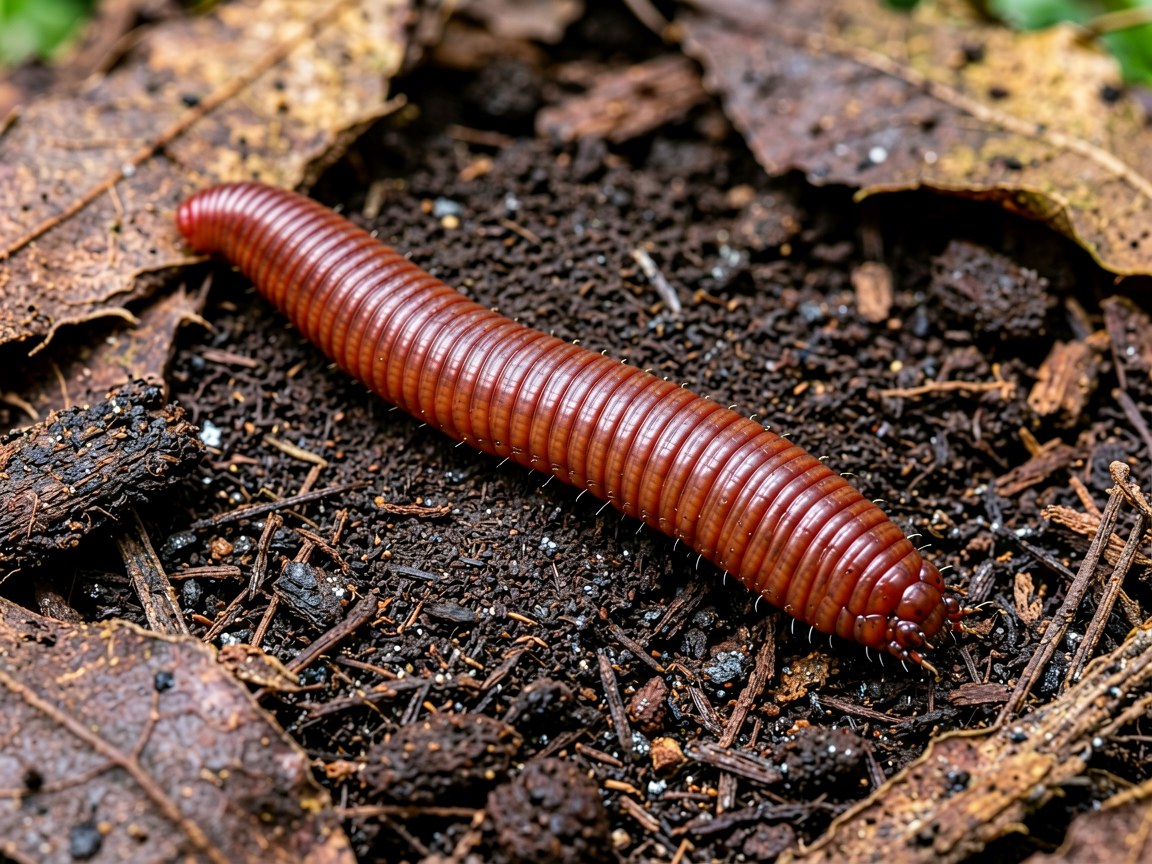
Eisenia fetida | Compost Worm
Introduction
The Compost Worm (Eisenia fetida), often called the redworm or brandling worm, is the striped, reddish worm of the compost heap—the species that turns kitchen scraps and garden waste into dark, crumbly vermicompost. Usually 6–10 cm long with alternating red and pale bands, it thrives where other earthworms will not: in hot, rotting, microbe-rich organic matter.
Though seldom seen outside the heap, it is one of the most useful animals to share our homes, quietly recycling tonnes of waste and rebuilding soil. It is also a close, specialist cousin of the earthworm of the garden, and a perfect illustration of how the same basic body plan can be tuned to very different lives.
Taxonomy
Eisenia fetida was named by Marie Jules César Savigny in 1826; the genus name Eisenia honours the German zoologist Gustav Eisen, and fetida refers to the faint, foetid secretion the worm releases when handled. It belongs to the family Lumbricidae, within the phylum Annelida—the segmented worms.
Like its larger relative the common earthworm (Lumbricus terrestris), described in our article on Lumbricus terrestris (Common Earthworm), the compost worm is a segmented annelid, but one specialised for rich, rotting organic matter rather than for burrowing deep, mineral soil. The two are cousins that divide the underground world between them.
Physical Characteristics
The compost worm is 6–10 cm long, with a cylindrical, banded body of red-brown above and paler yellow below, the bands giving it the “brandling” name. Like other earthworms it is divided into many similar segments, bears a swollen clitellum (the reproductive girdle) partway along the body, and has no lungs—it breathes through moist skin.
It is built for life at the surface of decomposing material: a tough, extensible body lets it writhe through dense waste, and a simple gut processes huge amounts of decaying matter relative to its size. When disturbed it may release a yellowish coelomic fluid with a mild smell, its only defence, and it is far more tolerant of heat and crowding than deep-soil earthworms.
Habitat
The compost worm is a creature of the surface layer of rotting organic matter: compost heaps, manure piles, leaf litter, and the damp, warm debris of farms and gardens. Unlike the common earthworm it rarely burrows into mineral soil and dislikes cold, dry, or acidic conditions, preferring the stable warmth and moisture of a well-made heap.
It is found worldwide because humans have spread it with mulch, manure, and vermicomposting, and it is the species of choice in worm bins. Given ample food, moisture, and shelter from light, a population can multiply rapidly and process a remarkable volume of waste, making it a partner in recycling rather than a wild animal of fields.
Diet
The compost worm is a detritivore, eating the microbes that bloom on decomposing plant and food waste rather than the raw material directly; it swallows rotting matter and the bacteria and fungi coating it, and excretes nutrient-rich casts that are among the best soil conditioners known. This makes it the engine of vermicomposting.
Its diet links it to the cycle of waste: by consuming decaying matter it locks carbon and nutrients into stable casts and stimulates further breakdown, turning refuse into a resource. A worm bin can convert kitchen scraps that would otherwise be landfill into vermicompost and a liquid “worm tea” used as a fertiliser, closing a loop that began with the plant’s own photosynthesis.
Reproduction
The compost worm is a hermaphrodite, with both sexes in each individual, and two worms mate by lining up and exchanging sperm, after which each forms a cocoon at its clitellum. The lemon-shaped cocoon is deposited in the bedding and holds several young worms that hatch and grow quickly in warm conditions.
Because it breeds so readily in good conditions, a small starter population can expand to process a household’s waste within months. The worms live only a few years and are sensitive to extremes of temperature, acidity, and salt, so a stable, moist, vegetal diet keeps the colony healthy and productive.
Conservation
The compost worm is not a wild-conservation species—it is effectively cultivated, traded, and kept in bins around the world, and is of least concern. Its importance is practical rather than ecological: it is a front-line tool for reducing organic waste and rebuilding soil fertility.
Its welfare depends on the conditions people provide: too much citrus, salt, or meat, or let the bin dry out or overheat, and the colony fails. The wider lesson is that healthy soil and reduced landfill both benefit from this small annelid, and from the human habit of turning waste back into earth rather than burying it.
Fun Facts
- It is the standard worm of vermicomposting, capable of eating roughly its own body weight in waste every day.
- Its castings (droppings) are a near-ideal slow-release fertiliser, rich in microbes and nutrients.
- The red and pale banding gives it the old name “brandling,” from a word for a marked or branded appearance.
- It breathes through its skin, so it must stay moist—dry skin means it suffocates.
- Unlike deep-soil earthworms, it prefers the hot, crowded top of a compost heap to burrowing in cold mineral earth.