 By st20113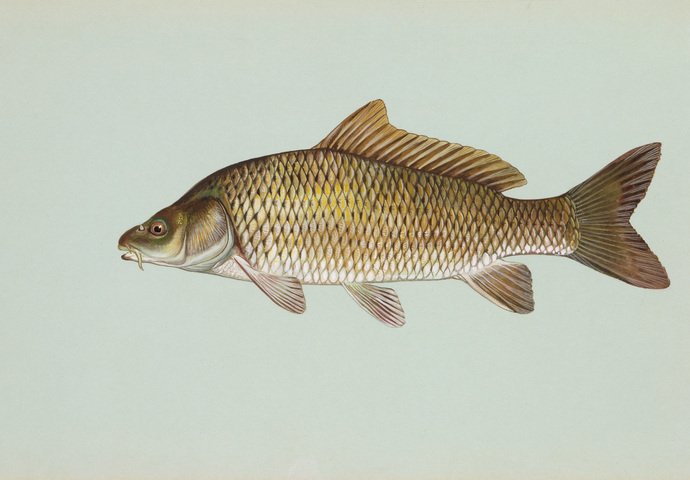
Introduction
The Common Carp (Cyprinus carpio) is one of the world’s most widespread and influential freshwater fish, native to Asia and Europe but now established on every continent except Antarctica. In its wild form it is a prized sporting fish; through millennia of domestication it has given rise to numerous ornamental varieties including the beloved Koi. This large, robust fish is known for its adaptability, hardiness, and extraordinary capacity to thrive in diverse aquatic environments. However, its introduction to many non-native regions has caused significant ecological disruption, making it one of the world’s most impactful invasive species. Its cultural significance runs deep in East Asia and Central Europe, where it symbolises perseverance and strength.
Taxonomy
The Common Carp belongs to the family Cyprinidae, the largest family of freshwater fish globally. Its scientific classification is: kingdom Animalia, phylum Chordata, class Actinopterygii, order Cypriniformes, family Cyprinidae, genus Cyprinus, and species C. carpio. Carl Linnaeus described the species in 1758. Several distinct wild subspecies and geographical varieties are recognised. Through thousands of years of selective breeding, humans have produced scaled, mirror, leather, and Koi varieties. The genus Cyprinus is a relatively small group of fewer than 20 species, all sharing a similar deep-bodied morphology.
Physical Characteristics
The Common Carp is a heavy-bodied fish capable of exceeding one metre in length and 20 kilograms in weight. Its body is covered in large, thick scales that vary from fully scaled to partially scaled or absent depending on the variety. Wild-type specimens display an olive-golden to bronze back fading to a lighter yellow underside. One of its most distinctive features is two pairs of sensitive barbels hanging from the upper jaw, used to detect food in murky substrates. The sub-terminal mouth is adapted for bottom feeding, and its pharyngeal teeth feature a distinctive three-row crushing apparatus for processing hard-shelled prey.
Habitat
In its native range across Asia and Europe, the Common Carp inhabits slow-flowing rivers, lakes, ponds, and floodplain wetlands with abundant aquatic vegetation and soft substrates. Remarkably tolerant of low oxygen levels, it can extract atmospheric air via a modified intestinal section, allowing survival in waters where most other fish cannot persist. The species favours warm, nutrient-rich waters and is typically found in depths of one to five metres near submerged structure. During winter it enters reduced metabolic activity in the deepest parts of a water body. This environmental flexibility has enabled global colonisation of an extraordinary range of aquatic habitats.
Diet
Common Carp are omnivorous bottom feeders whose diet shifts seasonally based on availability. Primary foods include aquatic insect larvae, crustaceans, mollusks, worms, and detritus—the decomposed organic matter abundant on lake and river bottoms. Plant material including algae and seeds also contributes, particularly when animal prey is scarce. The carp uses its sensitive barbels and pharyngeal teeth to locate and process food from substrates, often stirring up large quantities of sediment. This rooting behaviour significantly affects ecosystems by increasing turbidity and disrupting submerged plant communities. Like related goldfish species, carp are opportunistic feeders that will consume almost any organic matter they encounter.
Reproduction
Common Carp are highly prolific spawners, with a single large female capable of producing hundreds of thousands to over a million eggs per season. Spawning occurs in spring and early summer when water temperatures reach approximately 17 to 22 degrees Celsius. The female releases eggs over submerged vegetation or flooded terrestrial plants, with multiple males simultaneously releasing sperm. Adhesive eggs hatch within two to eight days, and larvae remain attached to vegetation until their yolk sacs are absorbed. Juvenile carp feed on zooplankton and small benthic invertebrates before transitioning to a varied adult diet at three to five years of age.
Conservation
While the Common Carp remains abundant globally, native European populations face threats from habitat loss, pollution, and genetic dilution through extensive stocking of domesticated strains. The wild Common Carp is protected in several European countries as a species of conservation interest. Conversely, it is listed among the world’s 100 worst invasive species by the IUCN, particularly in Australia, North America, and New Zealand, where it has severely degraded freshwater ecosystems. Management strategies include physical removal, barriers, biological control, and targeted fishing to reduce reproductive success.
Fun Facts
The Common Carp is considered one of the most intelligent and cautious fish, with documented learning, memory retention, and individual personality among large specimens. The Koi carp descended from Common Carp over more than a thousand years of selective breeding can command prices in the hundreds of thousands of dollars, with exceptional specimens selling for over one million dollars. Common Carp can live for more than 40 years, with verified records exceeding 50 years. In Chinese tradition, the carp that swims upstream to become a dragon represents the pinnacle of perseverance rewarded—a metaphor so enduring it has shaped cultural attitudes toward ambition and resilience for millennia.
[…] Goldfish is a small, hardy freshwater fish originally domesticated in China from a wild carp-like ancestor […]