 By st20113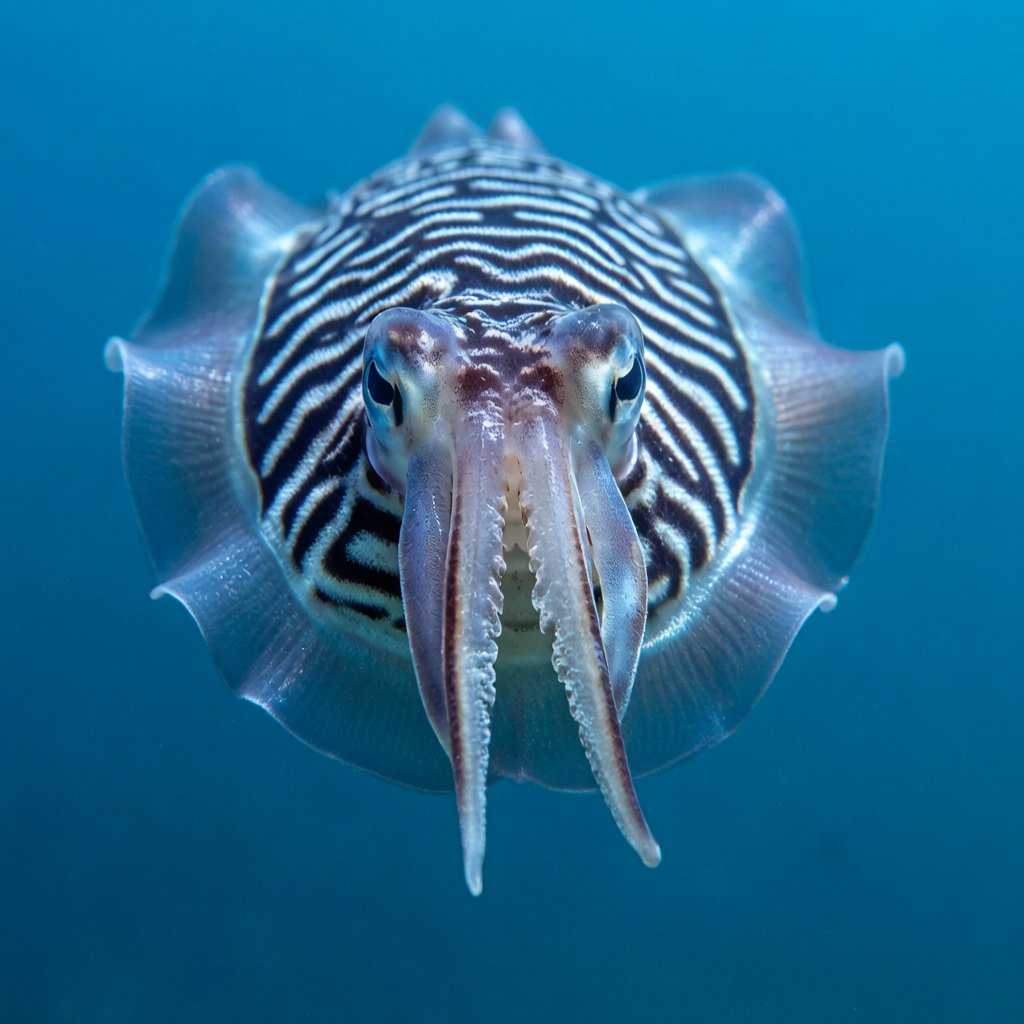
Introduction
The common cuttlefish (Sepia officinalis) is a cephalopod found throughout the shallow coastal waters of the Mediterranean Sea, the North Sea, and the eastern Atlantic Ocean. Often called the “chameleon of the sea,” it is renowned for its ability to change color and pattern in an instant, and it produces the familiar cuttlebone sold to pet birds for dietary calcium. Intelligent and visually acute, it is a favorite subject of marine biology because of its complex behavior.
Taxonomy
The common cuttlefish belongs to the class Cephalopoda, order Sepiida, and family Sepiidae. Its genus, Sepia, is the source of the deep brown pigment once used as writing ink. It is a close cousin of the giant Pacific octopus and the giant squid, all masters of soft-bodied marine predation with highly developed nervous systems. Cutlefish sit between octopus and squid in form, with an internal shell and a finned mantle suited to a life hovering just above the seabed rather than open-ocean pursuit.
Physical Characteristics
Adults usually measure 15 to 25 centimeters, though some reach 45 centimeters. The body is a flattened mantle bounded by a fin along its sides. An internal cuttlebone provides buoyancy control, letting the animal hover without sinking. The head bears ten arms: eight short ones and two long retractable tentacles used to seize prey. Remarkable eyes resemble those of vertebrates in complexity, with pupils shaped like a horizontal “W” that may reduce glare from the surface.
Habitat
Common cuttlefish inhabit sandy and muddy seabeds, estuaries, and rocky reefs from the intertidal zone down to about 200 meters. They prefer shallow water where light allows their color changes to function for communication and concealment. They can bury themselves quickly in sediment to ambush prey or hide from predators, leaving only the eyes exposed. Seasonal migrations move them into warmer inshore waters to breed, then back to deeper areas as temperatures fall. They tolerate a wide range of salinity, which lets them enter estuaries where few other cephalopods can follow their prey.
Diet
They are active predators of crabs, shrimp, fish, and mollusks. They stalk prey using camouflage, then strike with their tentacles and subdue it with a parrot-like beak. Their vision and nervous system allow split-second decisions about when to reveal or conceal themselves, a skill shared in spirit with the drifting moon jellyfish only in that both rely on the water column, though the cuttlefish is a deliberate hunter rather than a passive drifter. A hunting cuttlefish often freezes its pattern to match the seabed, then erupts forward the instant its target drops its guard.
Reproduction
Males display vivid courtship patterns to females, sometimes competing aggressively with rival males for the chance to mate. After mating, females lay clusters of eggs, often called “sea grapes,” attached to sheltered surfaces such as seaweed or rock crevices. The adults typically die after a single breeding season, a life history shared with many short-lived cephalopods, channeling all energy into a single reproductive event before senescence.
Conservation
The species is not currently endangered and is fished commercially for food and for cuttlebone. However, trawl fishing and habitat disturbance affect local populations, and bycatch remains a concern. Because cuttlefish are short-lived and highly productive, they can recover quickly if managed well, unlike slower marine mammals, though climate-driven warming of nursery grounds may shift their distribution northward over coming decades.
Fun Facts
Cuttlefish have three hearts and blue, copper-based blood. They can produce ink as a smoke-screen escape, ejecting a dark cloud that masks their retreat. Their skin contains millions of color cells called chromatophores, letting them paint themselves in shifting patterns faster than almost any other animal, and they can even produce moving bands of color to hypnotize confused prey. Laboratory studies show cuttlefish can learn simple tasks and remember them for days, a sign of intelligence unusual among invertebrates. They can also squirt a jet of water to uncover buried prey hiding beneath the sand.
[…] animal shares the family with the Common Cuttlefish. That animal lives in the Atlantic and the Mediterranean. It is smaller and it lives at greater […]