 By st20113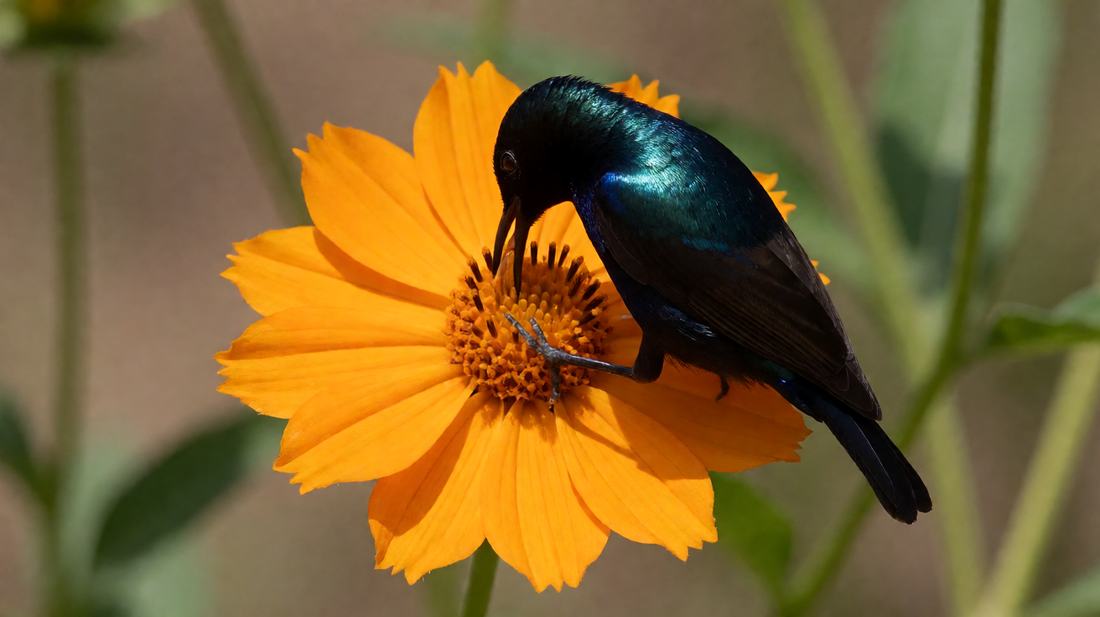
Cinnyris osea | Palestine Sunbird
Species Profile · Nectariniidae
Palestine Sunbird
A tiny Middle Eastern songbird whose dark plumage flashes blue and green, with a brush-tipped tongue built for deep flowers.
Least Concern (2024) 2024 assessment
Length
Wingspan
Male weight
Eggs
Hatch
Altitude
The Palestine Sunbird
Small bird, long bill
This tiny bird lives in the dry lands of the Middle East. It feeds on nectar taken from tube-shaped flowers. Its long bill curves gently down.
A breeding male looks almost black. In good light his plumage shines blue and green. The female is plain grey-brown above.
Both sexes carry orange tufts on the breast. Those tufts are hard to see from far away.
Family tree
Nectariniidae, the sunbirds
Cinnyris osea is its Latin name. The bird sits in the family Nectariniidae. That group holds the sunbirds of the Old World. It was once placed in the genus Nectarinia.
Modern work moved it into a smaller group. The name osea comes from a Greek word for holy. Two forms are recognised today. One lives in the Middle East and one in Africa.
A Song Thrush is another small songbird of the same broad group. Both birds hold small territories and sing from a perch.
8 cm of shining plumage
How to tell one
An adult is only 8 to 12 cm long. The wings span 14 to 16 cm. Males weigh about 7.6 g on average. Females are lighter at around 6.8 g.
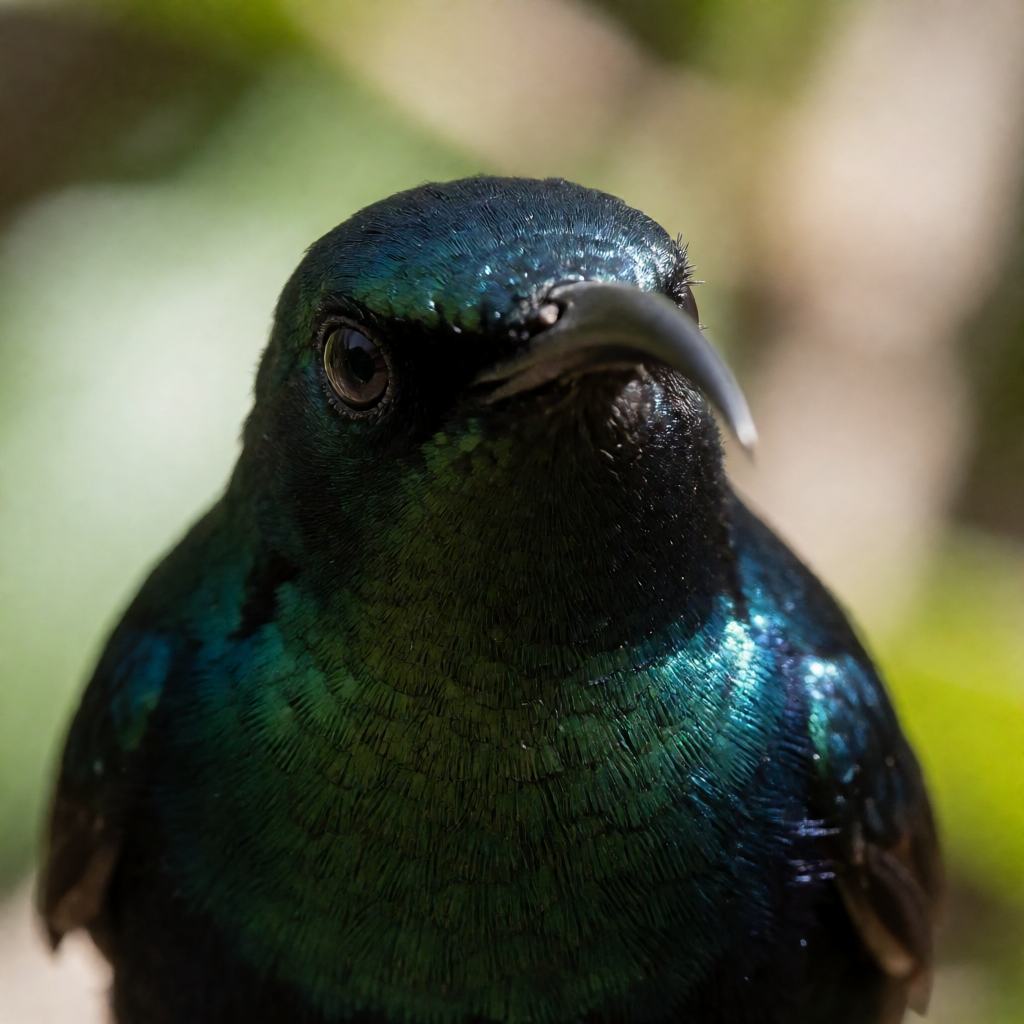
The bill is fairly long, black and curved. The tongue is long with a brush-like tip. That tongue draws nectar out of deep flowers. The male shines glossy blue or green in sun.
Orange tufts sit at the sides of the breast. Young birds look much like the female. A high, fast, jingling song marks the male.
1
2
3
Dry woodland and wadis
Where it lives
This bird likes hot, dry country. It lives from sea level up to 3,200 m. Dry woodland and scrub are its main home.
It also uses wadis, savannas and orchards. Gardens and parks in towns suit it well. The Middle Eastern form breeds from Jordan south to Oman.
It has spread into the Sinai Peninsula in recent years. Planting in cities helped it move. It has nested in Lebanon and winters in Syria.
Nectar and insects
What it eats
Nectar forms the base of the diet. Insects make up the rest. Small spiders are taken as well.
The bird hovers at a flower to feed. It can also perch on the stem instead. Both methods reach the nectar inside.
Insects are caught on the wing or picked off leaves. Young birds are fed mostly on insects.
A hanging purse-shaped nest
The breeding cycle
The nest is a purse of plant material. Leaves, grass and bark are bound with hair and spider silk. It is lined with wool and soft feathers.
The nest hangs from a branch and is 18 cm long. It is about 8 cm wide at the base. The female lays 1 to 3 smooth glossy eggs.
They are white or grey with faint marks. She keeps them warm for 13 to 14 days. The young leave the nest after 14 to 21 days.
Least Concern, stable
Conservation
The IUCN lists this bird as Least Concern. The last check was made in 2024. Its numbers appear to be stable.
No count of mature birds has been published. The bird has a very large range. Dry-land planting by people has helped it spread.
A few birds are caught for the pet trade. No special rescue plan is in place.
Quick hits
Five things to remember
- The Palestinian Authority chose it as a national bird in 2015.
- Its name comes from an ancient Greek word for holy.
- A male can look black or shining green in the same hour.
- The brush-tipped tongue works like a tiny mop.
- It once lost a public vote to become a national bird.