 By st20113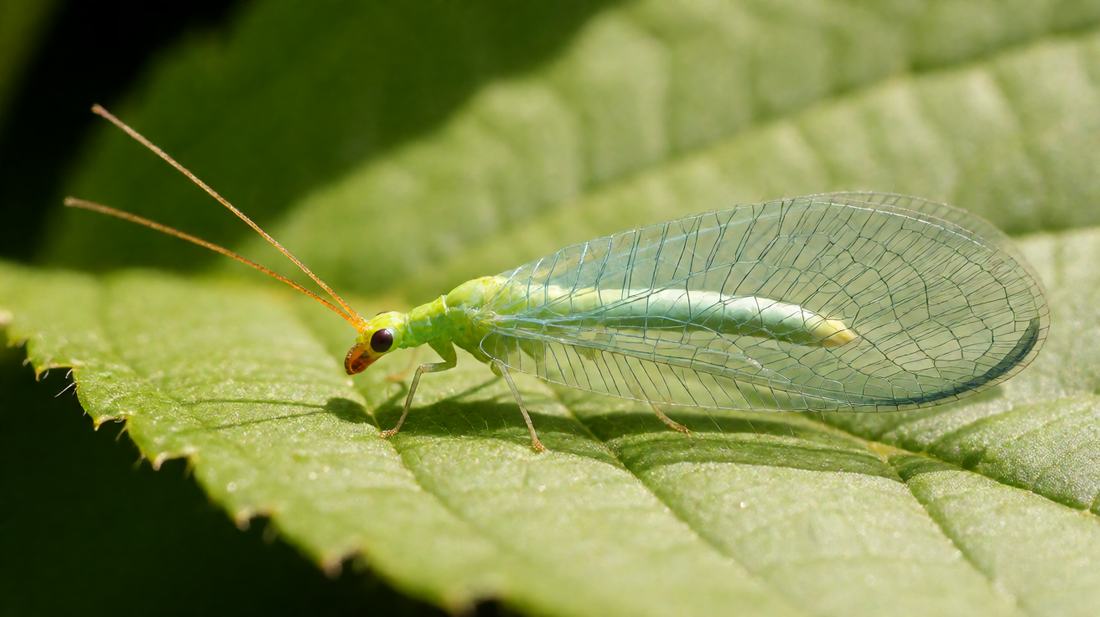
Chrysoperla carnea | Common Green Lacewing
Species Profile · Chrysopidae
Common Green Lacewing
A delicate insect of gardens and hedges whose larvae are called aphid lions and hunt the small pests that damage crops.
A pale green insect with lace like wings whose young hunt aphids
Body
Wings
Aphids eaten
Eggs
Young stages
Family
The Common Green Lacewing
A delicate hunter of garden pests
The Common Green Lacewing is a delicate insect of gardens and hedges. It is 1 of the most useful insects to farmers. Its young hunt the small pests that damage crops. The adult is pale green with huge clear wings.
Those wings are packed with a fine net of veins. The insect flies at dusk and often comes to lights. It is found across most of Europe and Asia.
Family tree
Neuroptera, Chrysopidae
The Common Green Lacewing belongs to the phylum Arthropoda. Its class is the Insecta. Its order is the Neuroptera, the net winged insects. Its family is the Chrysopidae, the green lacewings.
Our insect shares the family with the Green Lacewing. That insect lays its eggs in small groups. It has a slightly stouter body. Our insect lays its eggs on tall stalks.
Both belong to the same family of useful hunters. The family holds about 1,200 species.
10 mm and lace like wings
How to tell one
The adult measures about 10 mm in body length. The wings reach far beyond the body. They are almost completely transparent. A dense net of fine veins covers each wing.
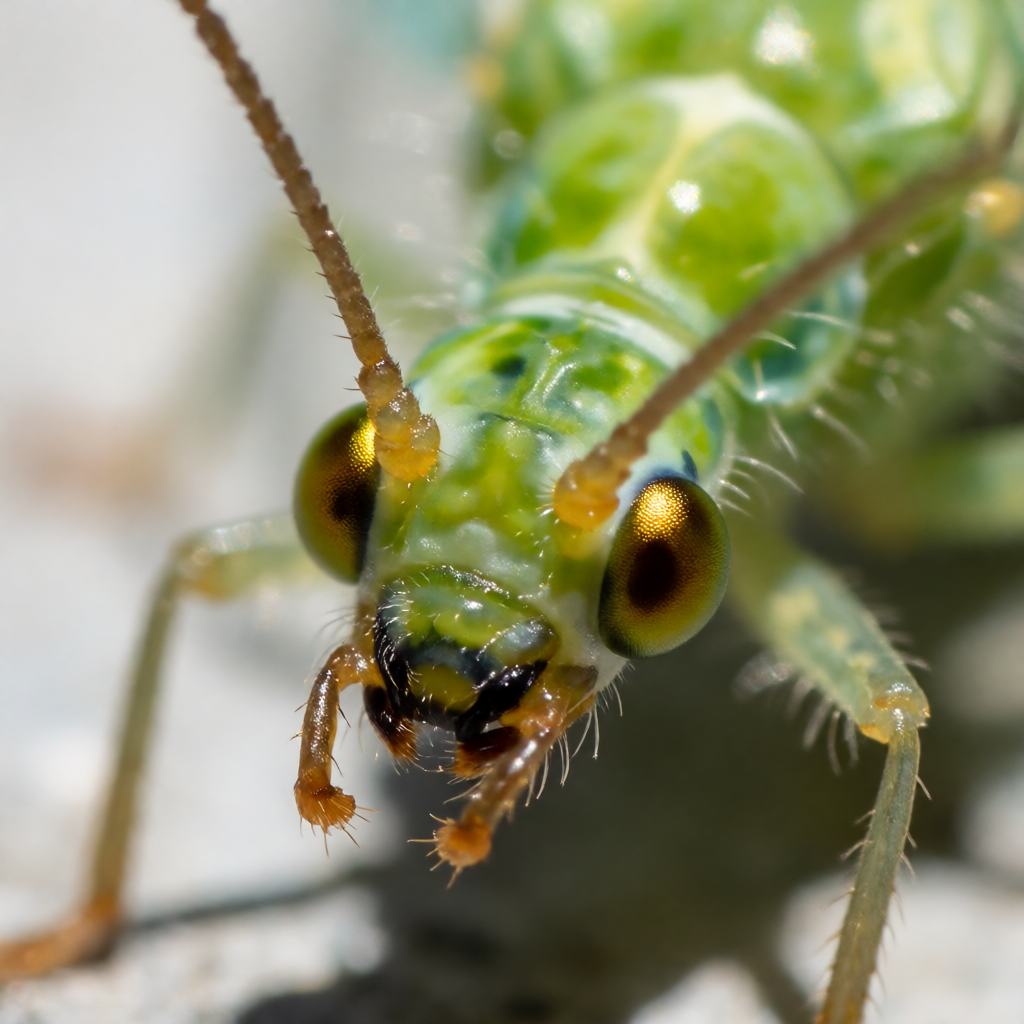
At rest the wings fold over the back like a roof. The body is a soft pale green. The eyes shine golden bronze in the light. This colour helps to tell the insect from similar kinds.
The antennae are long and thin. The legs are pale and slender.
1
2
3
Gardens, hedges and crop fields
Where it lives
The species lives wherever its prey is common. It is found in gardens, orchards and hedgerows. It also lives in fields of cereal and vegetables. It needs tall plants for shelter and for laying.
Wild flowers give the adults food and cover. It often shelters in dry leaves over the winter. It dislikes bare ground with no cover. It does well in towns with plenty of greenery.
Warm sheltered places suit it best. It can be found from lowland up to low hills.
Aphids, thrips and small caterpillars
What it eats
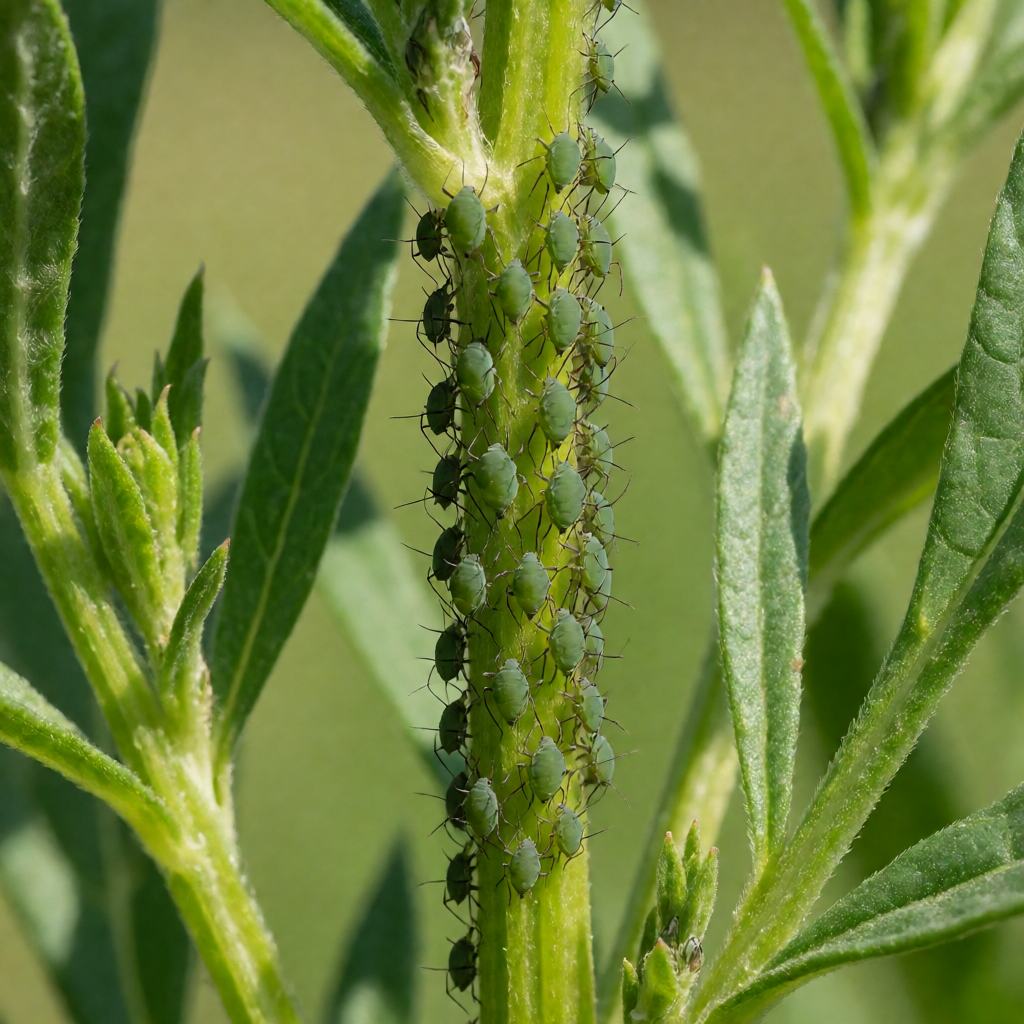
The young lacewing is a fierce hunter. It is often called an aphid lion. It walks over leaves in search of prey. It takes aphids, thrips, mites and small caterpillars.
It grabs the prey with curved jaws. Then it sucks out the body juices. A single young insect may eat more than 100 aphids. Some kinds cover themselves with the empty skins of their prey.
The adult feeds on nectar, pollen and honeydew. It does not hunt other insects at all.
Eggs raised on fine stalks
The breeding cycle
The female lays her eggs on the tips of fine stalks. She places each stalk on a leaf or a stem. The stalk keeps the egg away from hungry mouths. She may lay about 200 eggs in her life.
The eggs hatch into small hunting young. Those young grow through 3 stages. Each stage lasts a few days in warm weather. The last stage spins a round silk case.
The adult comes out of that case some days later. There may be several generations in a warm year.
Garden sprays and cut hedges
Conservation
The Common Green Lacewing is not assessed by the IUCN. It is common across a very wide range. It has no legal protection.
Garden sprays kill it along with the pests. Cutting hedges and weeds removes its shelter. Farmland with no wild borders holds fewer of them.
The insect is now bred in large numbers for farms. Growers release the young onto crops. That trade has made the species more common than ever.
Quick hits
Five things to remember
- Its young are known as aphid lions.
- It hangs each egg on a fine stalk to keep it safe.
- The eyes turn golden in the light, then green in the dark.
- Some kinds carry the empty skins of their prey on their backs.
- Farmers buy the young and release them onto crops.
[…] nearest relatives include the Common Green Lacewing. Both groups carry four large see-through wings. Antlions form a family of their […]