 By st20113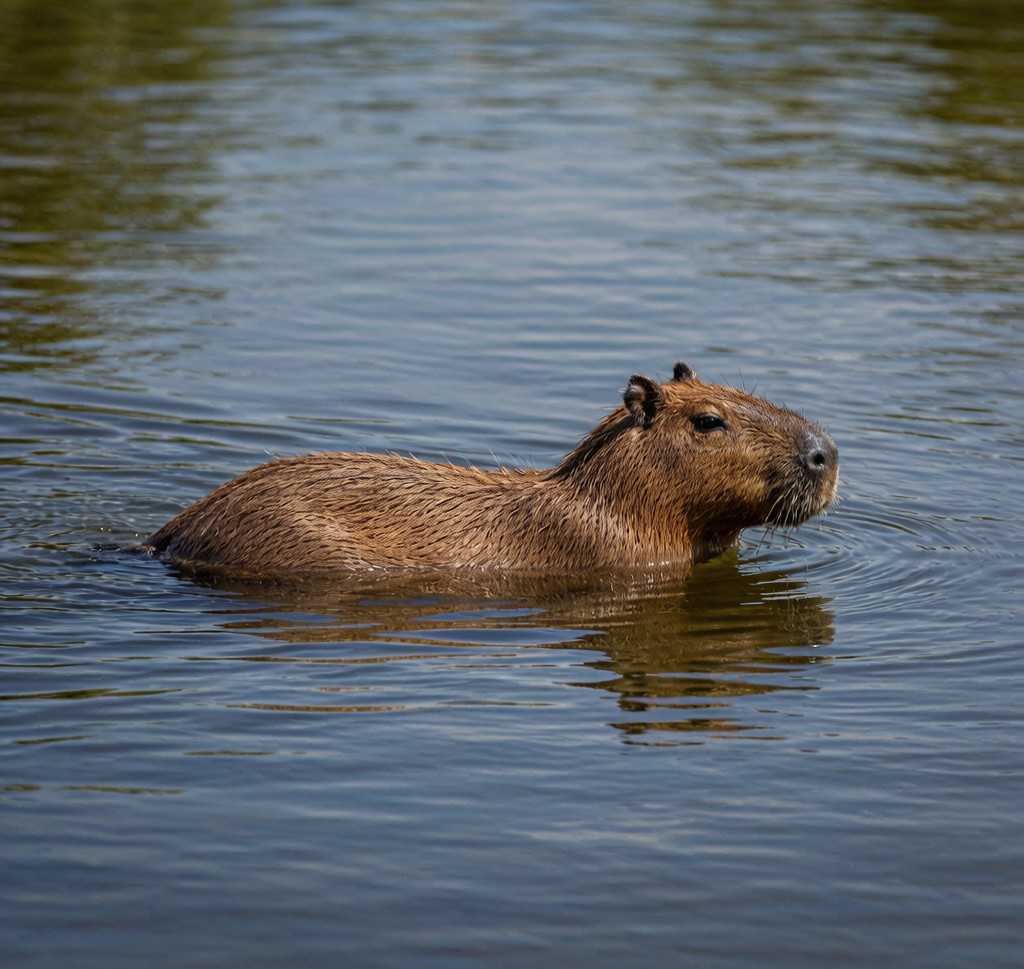
The Capybara (Hydrochoerus hydrochaeris) is the largest living rodent in the world – a stout, pig-sized animal of the South American wetlands and forests that has been described as looking like a giant, aquatic guinea pig with a blunt, barrel-shaped head and a virtually tailless body.
Overview
The Capybara (Hydrochoerus hydrochaeris) is the largest living rodent in the world – a stout, pig-sized animal of the South American wetlands and forests that has been described as looking like a giant, aquatic guinea pig with a blunt, barrel-shaped head and a virtually tailless body. Adults weigh 35 to 65 kilograms and stand approximately 50 to 60 centimeters at the shoulder, with a head-body length of 100 to 130 centimeters. Capybaras are found throughout most of the continent north of Argentina, with the highest densities in the vast wetlands of the Pantanal in Brazil and the llanos of Venezuela and Colombia, where they are among the most abundant and ecologically important large mammals in the landscape.
The capybara’s most distinctive features are its barrel-shaped body, blunt, almost triangular head, vestigial tail (a small stump of less than 5 centimeters), and the partially webbed feet of its broad, blunt-clawed feet – adaptations for a semi-aquatic lifestyle that allows it to swim efficiently and to forage on submerged vegetation. The capybara’s eyes, ears, and nostrils are set high on the head, allowing the animal to see, hear, and breathe while almost entirely submerged – a position of safety in an environment shared with jaguars, caimans, and anacondas. The species’ coat is coarse and sparse, a grizzled brownish-grey that dries quickly after swimming.
Habitat and Social Behavior
The Capybara inhabits the forests, marshes, swamps, and river systems of tropical and subtropical South America, from Venezuela and Colombia south to Uruguay and northern Argentina. The species is strongly associated with water: it requires permanent bodies of water – rivers, lakes, ponds, or marshes – both for thermoregulation (capybaras do not sweat and cool themselves by wallowing in water) and as an escape route from predators. Capybaras are excellent swimmers that can stay submerged for up to 5 minutes and can even sleep in water with only the tips of the nose and ears above the surface.
Capybaras are highly social animals that live in groups of 10 to 30 individuals – typically a dominant male, several females and their young, and subordinate males. Group size varies seasonally and by habitat: larger groups form in the dry season when individuals congregate around remaining water sources, while smaller groups may split during the wet season when water is more widely available. Within the group, capybaras communicate using a wide range of vocalizations – including whistles, barks, grunts, and a distinctive clicking sound – as well as through scent marking using a specialized gland on the upper lip (the Morris gland) that is used to mark vegetation and group members.
Diet and Ecological Role
The Capybara is a strict herbivore with a diet dominated by grasses and aquatic vegetation – the species spends up to 6 hours per day grazing on terrestrial grasses and another 3 hours feeding on submerged and emergent aquatic plants. Capybaras are coprophagous – they practice cecotrophy, the consumption of specialized nutrient-rich fecal pellets called cecotropes that are produced by fermentation of plant material in the cecum (a large pouch at the beginning of the large intestine). The cecotropes are rich in protein and beneficial gut bacteria, and by consuming them, capybaras are able to extract additional nutrition from their fibrous, low-quality plant diet.
The capybara plays an important ecological role in the South American wetlands as both a grazer that shapes vegetation structure and a prey species for large predators. In the Pantanal, capybara herds create and maintain the open grasslands that support dozens of other species, and the species is the primary prey for jaguars in many parts of its range. Capybaras also create and maintain the wallowing pools and tracks that they use for thermoregulation, which benefit other species including fish, caimans, and waterbirds. The species has also been introduced to several Caribbean islands and to Florida, where feral populations have established themselves.
Conservation and Human Relations
The Capybara is listed as Least Concern on the IUCN Red List, reflecting its large population (estimated at several million individuals), wide distribution, and adaptability to a range of habitats including human-modified landscapes. However, the species faces significant localized pressures in parts of its range, including habitat loss and degradation of wetlands, hunting (the capybara is hunted for its meat and leather in many parts of its range, and in Venezuela it is consumed as a religious ritual during Lent), and conflict with farmers who perceive the animal as a crop pest.
In Colombia, the capybara is a keystone species in the remarkable lsla de Jototá – a floating island of accumulated vegetation that supports an entire community of capybaras, birds, and other species. In urban areas of Brazil, capybaras have adapted remarkably well to city life, living in parks and golf courses and becoming objects of affection for city dwellers who feed them vegetables. This urban adaptation has created its own set of challenges: urban capybara populations can grow rapidly without natural predation, leading to conflicts with human infrastructure and landowners. Several Brazilian cities have implemented capybara management programs that include contraception and relocation.