 By st20113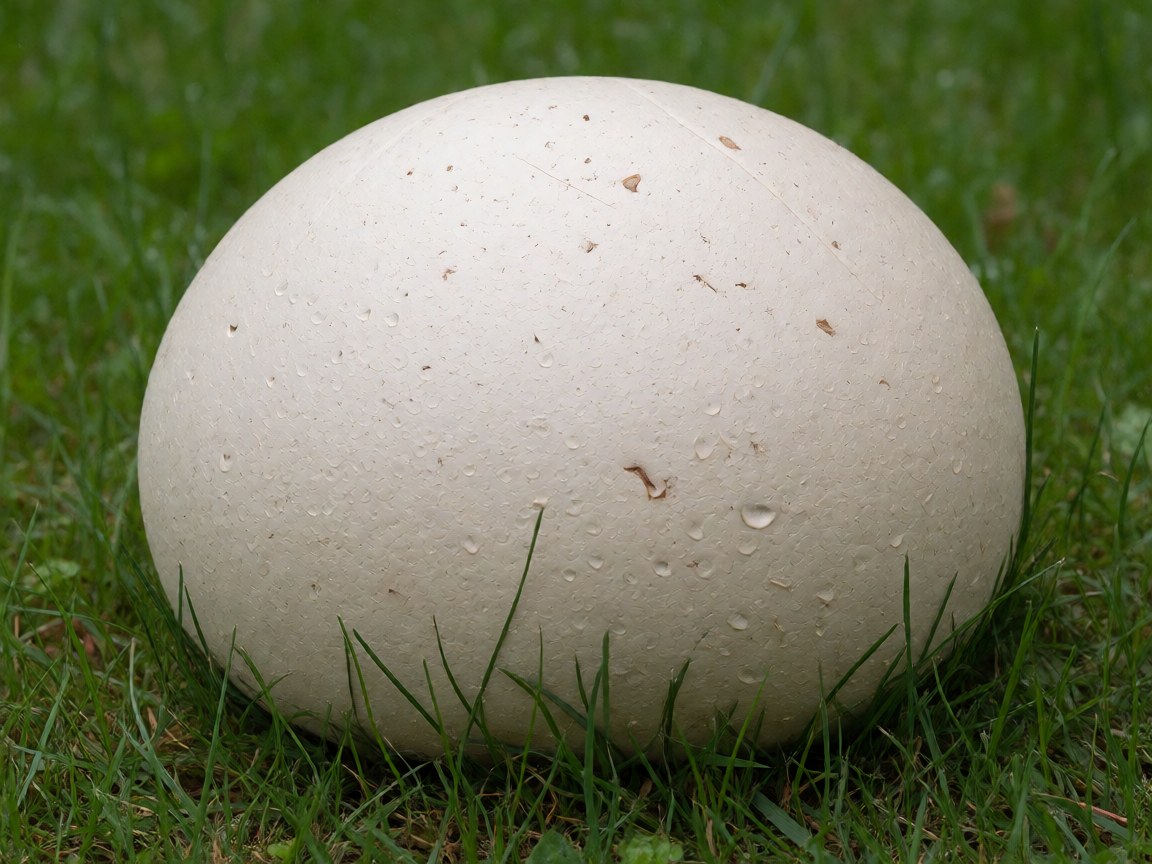
Calvatia gigantea | Giant Puffball
Introduction
The giant puffball (Calvatia gigantea) is the most startling size a fungus can reach in a single lump: a smooth, white, spherical fruit body that can grow to the size of a football and weigh many kilograms. Found on grassland, pasture, and woodland edges in late summer and autumn, it is unmistakable—provided you cut it open. While the flesh inside is pure white and firm it is a good edible species; once it turns yellow or brown it is a bag of dust.
Taxonomy
Calvatia gigantea is a basidiomycete in the family Agaricaceae, the family that also includes the field mushrooms and the smaller puffballs. Its spores mature inside the closed ball rather than on exposed gills, which sets it apart from the typical capped mushrooms such as Amanita muscaria, the fly agaric, even though the two are fairly close relatives within the gilled fungi.
Physical Characteristics
The fruit body is a rounded, slightly flattened ball, usually ten to fifty centimetres across but occasionally much larger, with no stem or cap. The outer skin is smooth and whitish, becoming creamy and then yellowish-brown with age, and it eventually splits and flakes away to release the spores. There is a small cord-like attachment to the ground. The crucial feature is inside: young specimens are filled with firm, pure white, cheesy flesh, which yellows, then turns olive and finally becomes a mass of brown spore dust.
Habitat
Giant puffballs grow on the ground in grassland, pasture, meadows, parkland, road verges, and woodland clearings and edges, often in the same place year after year, sometimes in rings. They appear in late summer and autumn. The species is found across Europe and North America and other temperate regions. Rich, undisturbed grassland and lightly grazed pasture are the most reliable places to find them.
Diet
The fungus is a saprotroph. Its network of threads spreads through the soil, breaking down dead roots, grass litter, and other organic matter and absorbing the nutrients released. It does not form mycorrhizal partnerships with trees and does not parasitize plants; it simply recycles material in the soil. The enormous ball is built quickly from the reserves gathered by that hidden network, which is why a fruit body can seem to appear overnight.
Reproduction
The whole fruit body is a spore container. While the flesh is white, millions of spores are developing inside; when they mature, the outer skin dries and splits, exposing the brown spore mass. Every drop of rain, gust of wind, or passing animal then puffs out clouds of spores—hence the name. A single large specimen can produce trillions of spores, an almost unimaginable number carried away on the wind.
Conservation
The species is widespread and not threatened, though like all grassland fungi it suffers from agricultural improvement: ploughing, reseeding, and heavy fertiliser use destroy the undisturbed soil network it depends on. Old, unimproved pasture and permanent meadows are its strongholds. Because it is so conspicuous it is well recorded, and it remains common wherever suitable grassland survives.
Fun Facts
- A single giant puffball can produce trillions of spores.
- It must be eaten only while the flesh inside is pure white and firm.
- Specimens have been recorded at over a metre across and weighing more than twenty kilograms.
- Ripe puffballs release visible clouds of brown dust when stepped on or hit by rain.
- It often appears in rings or in the same spot year after year.