 By st20113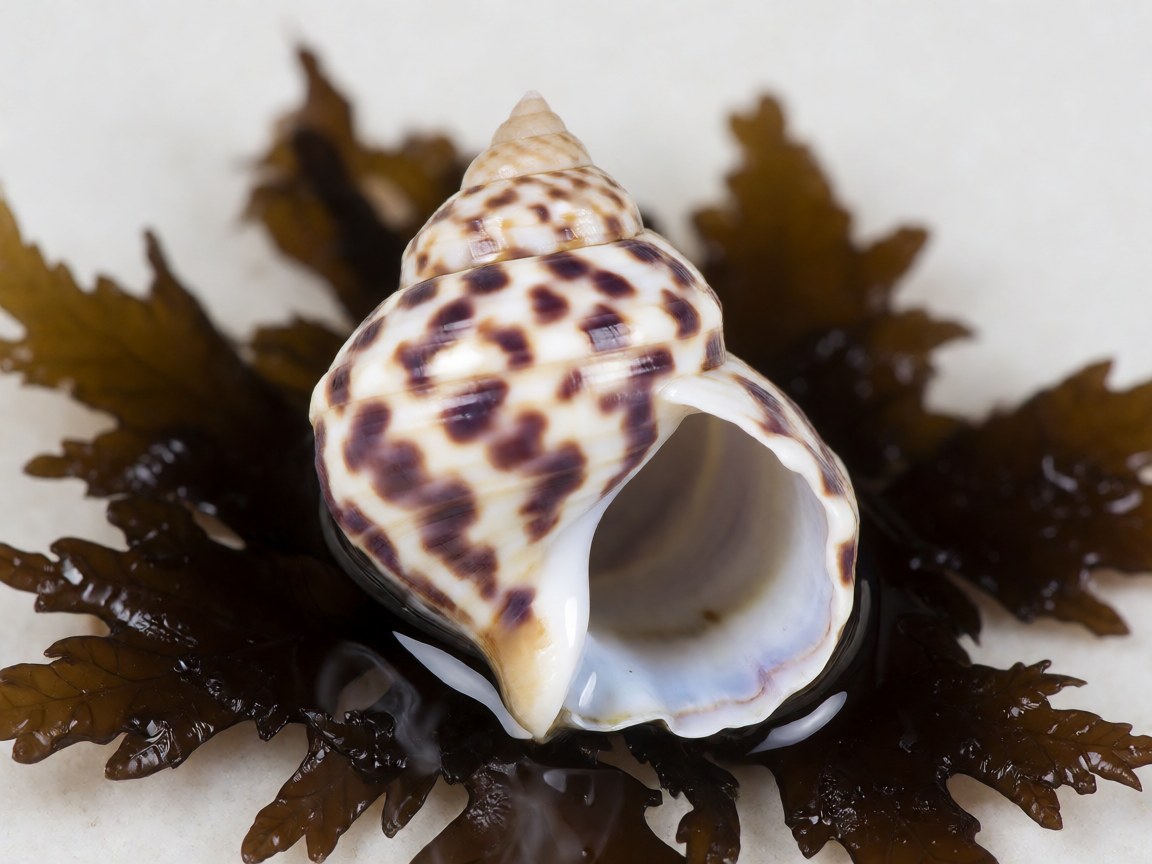
Calliostoma zizyphinum | Painted Top Shell
Introduction
The painted top shell (Calliostoma zizyphinum) is a small, elegantly conical sea snail whose shell looks carved rather than grown: a neat spire of flat-sided whorls in cream, buff, and purple-brown, often with a violet tinge. Found among seaweed and under stones on the lower shore and below, it is one of the most beautiful shells of northern European coasts and a favourite of anyone who picks through strandline drift.
Taxonomy
Calliostoma zizyphinum is a gastropod mollusc in the family Calliostomatidae, the calliostoma top shells, a large group found in seas worldwide. It shares the fundamental molluscan body plan—muscular foot, mantle, and a rasping radula—with far more mobile relatives such as Octopus vulgaris, the common octopus, but it has taken that plan in a quieter direction: a slow-moving grazer of the weed-covered shore, protected by a thick, pearly shell.
Physical Characteristics
The shell is a neat, sharply conical spire up to about two and a half centimetres high, with about eight slightly convex whorls and a fine, pointed tip. The surface is smooth and glossy, with fine spiral ridges, and the colour is variable: cream, yellowish, or pale brown, often blotched or streaked with purple, violet, or reddish-brown, and sometimes with a greenish tinge. The aperture is oval with a pearly iridescent lining, and the operculum is a thin, circular, horny plate. The animal itself is pale with long tentacles.
Habitat
It lives on the lower shore and in shallow to moderately deep water, on rocky coasts, in kelp holdfasts, among seaweed, under stones, and on gravel and shell ground. It is found from the Mediterranean north to Norway and around the British Isles. It prefers places with plenty of weed and cover, and it is often found clinging to the holdfasts and stipes of large seaweeds rather than to open rock.
Diet
It is a slow, methodical grazer. Using its radula, it scrapes algae, diatoms, and the film of microscopic life that coats weed and rock, and it also feeds on small colonial animals such as hydroids and bryozoans that grow on the seaweed. It does not hunt prey; the whole animal is built around travelling slowly over a surface and rasping it clean, which is exactly what the top-shell shape suits.
Reproduction
The sexes are separate. Spawning takes place in spring and summer, and fertilisation is external: eggs and sperm are released into the water, and the fertilised eggs drift or are laid in jelly-like masses among the weed. The larvae spend only a short time in the plankton before settling onto seaweed or rock and metamorphosing into small snails. Because the larval stage is brief, populations tend to be local and closely tied to suitable weed habitat.
Conservation
The species is widespread and not considered threatened. Its main vulnerability is the loss of the seaweed beds and kelp holdfasts it lives among, through pollution, sedimentation, dredging, and storm damage, together with the disturbance of boulders and stones on the lower shore. Where healthy, weedy, rocky habitat remains, painted top shells are a regular and often abundant part of the community.
Fun Facts
- The inside of the shell is lined with iridescent, pearly nacre.
- Its colour varies enormously, from pale cream to strongly purple-blotched.
- It is most often found clinging to the holdfasts and stems of large seaweeds.
- The larvae spend only a short time drifting before settling, so populations are strongly local.
- Top shells get their name from the neat, geometric cone, which resembles a toy spinning top.