 By Iris
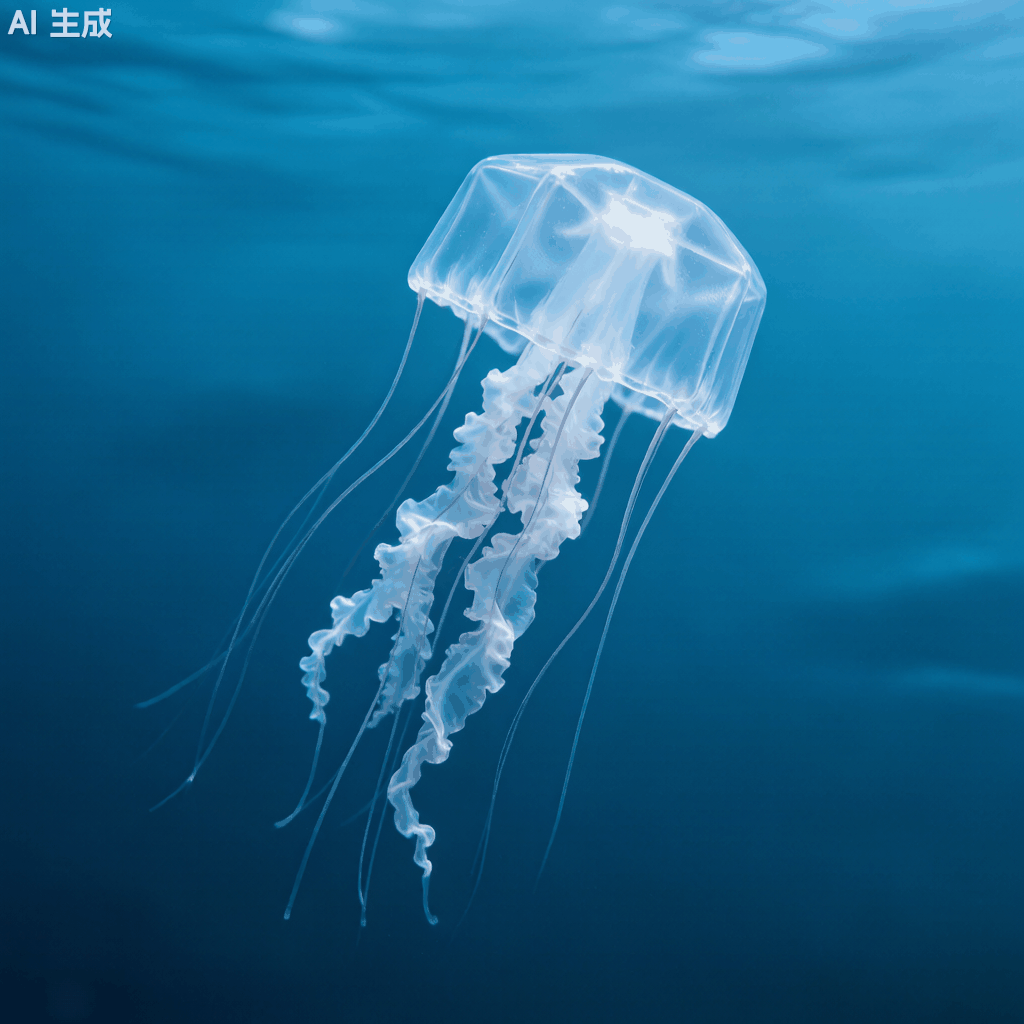
Chironex fleckeri | Box Jellyfish
Species Profile · Chirodropidae
Box Jellyfish
A clear cube no wider than a dinner plate, and enough venom to stop a human heart in minutes.
Not assessed
Bell
Tentacles
Eyes
Season
Swim
Rating
A clear cube in warm shallows
The animal behind the beach sign
A jellyfish that hunts by sight sounds like a story, yet this animal does exactly that in warm shallow water. Box jellyfish swim instead of drifting, and they steer toward the light. Four corners carry the tentacles, and a cube shaped bell pushes the animal along.
One adult holds enough venom to kill more than 60 people. That figure sounds like legend, but the animal is common in the shallows of northern Australia. Swimmers meet it in the warm months, from October to May.
Most never see it. Clear tissue vanishes against a bright surface, which is why swimmers miss it. Its body explains why these shallows are watched so closely, and it shows how much a simple animal can do.
Named for a doctor
Where it sits among the stingers
Its scientific name is Chironex fleckeri, and the animal belongs to the phylum Cnidaria. Corals, anemones and true jellyfish sit in that same phylum. Box jellyfish form a class of their own, the Cubozoa.
Its species name honours Hugo Flecker, an Australian doctor who studied the venom. His work led to the antivenom that hospitals still use today. Unlike the Atlantic Sea Nettle, which drifts with whatever current it meets, this animal swims where it likes.
Body shape matters too, because the cube carries a strong ring of muscle along each edge. Irukandji syndrome comes from a smaller relative, which is a separate species. Confusing the two is a common error in beach reports.
Bell, blocks and eyes
How the body is built
Its bell is a rounded cube. Adults reach 30 cm across, and the clear tissue shows a faint blue rim. Each of the four corners hangs a block of tentacles. A block holds up to 15 tentacles, and each of them can stretch 3 m or more when the animal hunts.
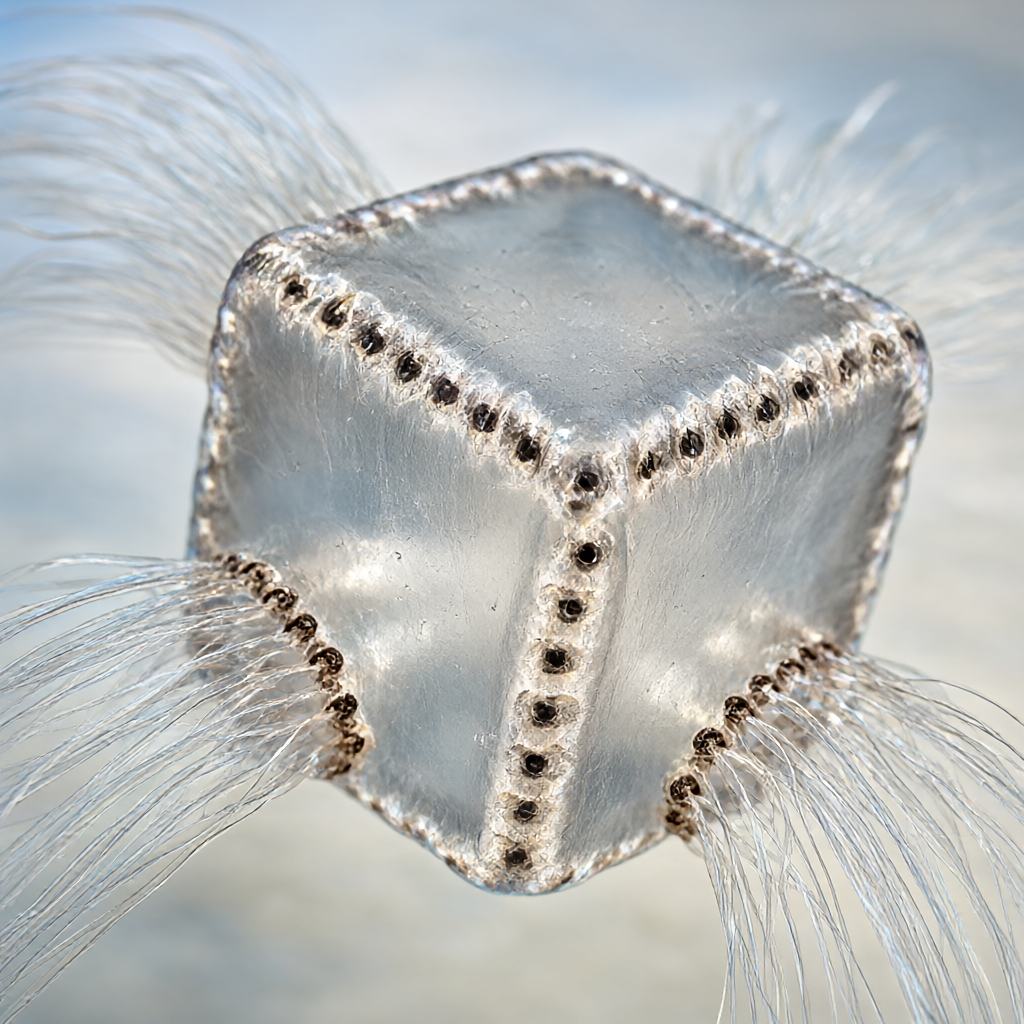
Millions of stinging cells sit along that length, and every one of them works as a tiny harpoon. Each cell fires a barbed thread in less than a blink. Contact with skin sets a cell off, because the trigger is chemical. Four sense organs sit on the bell, one at each corner.
Each organ holds six eyes, which makes 24 in total. Some of those eyes form an image, and that lets the animal aim its swim. No brain sits behind them, yet the animal still turns toward a shadow.
1
2
3
River mouths and bays
Where it lives, month by month
Shallow coastal water is the whole range. Its range runs from Exmouth across the north to Gladstone. Records also come from Papua New Guinea, the Philippines and Vietnam. River mouths and bays suit it best, because small fish gather there and the water stays calm all year.
Calm water near a sandy beach holds the young right through the wet season, when the pools stay warm. Adults move into deeper coastal water as the year warms. Sightings south of that range are rare, because cold water stops the spread. Because the species stays close to shore, people meet it where they swim.
Nets and signs mark the beaches where the risk is highest. Stinger suits cover the skin, and vinegar stations stand at the water line.
Fish, prawns and a chase
What it eats, and how it catches it
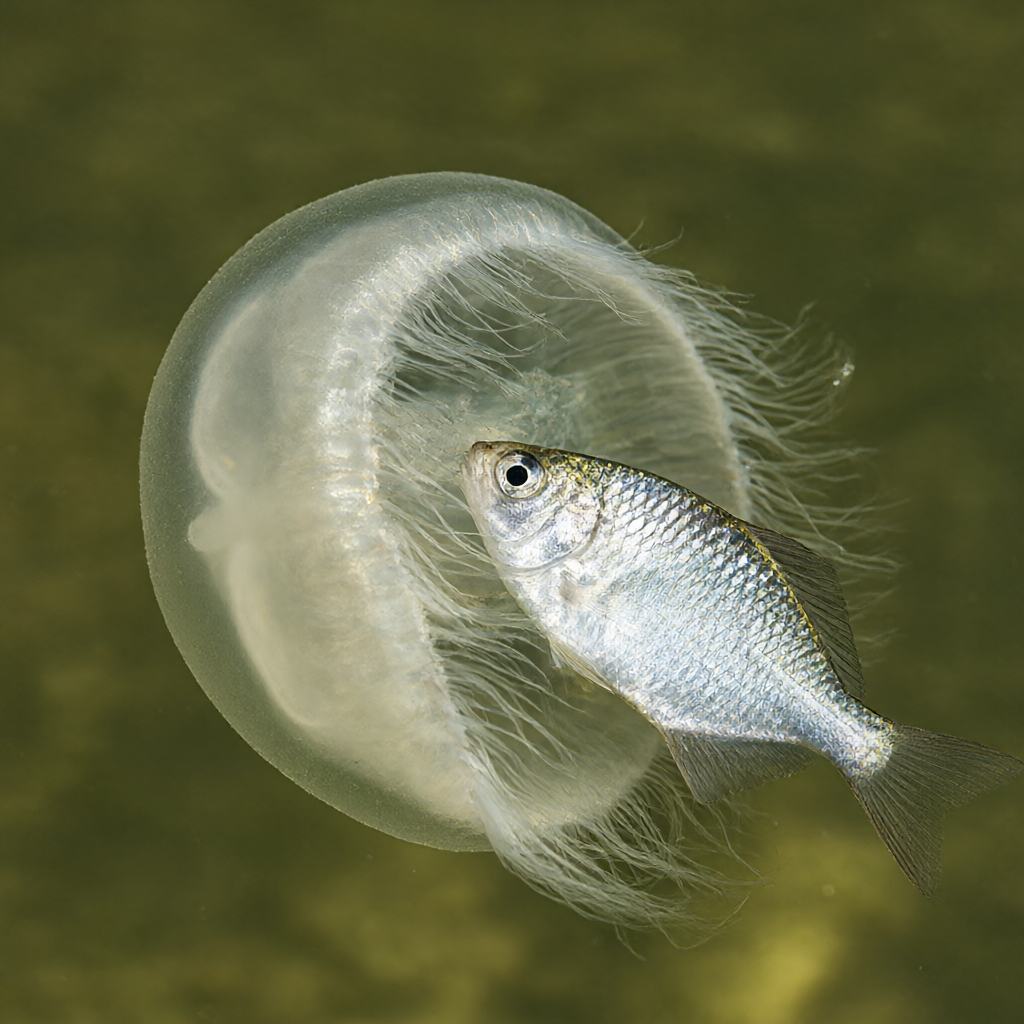
Small fish dominate the catch. Prawns and other swimming animals come next. Most jellyfish wait for food to bump into them. This one hunts.
It turns to follow a fish that darts away, and it does so without a brain to plan the move. One tentacle hooks the prey and coils back toward the bell. A mouth sits in the middle of the underside, and other tentacles push the stunned fish toward that gap. Venom works in seconds, so a struck fish stops moving at once.
Hunting costs energy, and that is why the animal swims rather than drifts. Common Hydra waits on a leaf and stings what brushes past, while this animal chases its food.
Polyp first, then medusa
The two halves of the life cycle
Adults spawn in open water, and eggs meet sperm there. A fertilised egg becomes a larva that swims for a short while. Each larva settles on shell, stone or mangrove root. There it becomes a polyp, which is a small attached animal that grows tentacles of its own.
A polyp is the durable stage. It can wait a long time, and it can bud copies of itself while it waits. When the water warms, a polyp splits into stacked discs. Each disc breaks free as a tiny jellyfish called an ephyra.
Several months pass before the ephyra reaches full size and full venom. One full cycle takes about a year in northern Australian water. Because the polyp can persist, the species survives a bad season.
No Red List entry
What is known, and what is not
No formal IUCN review covers this species. That silence is not a sign of danger, since the animal is common. No fishery targets the species, and no market pays for its body. Risks are indirect, and they come from the coast itself.
Runoff carries mud and nutrients into the bays where the young grow. Coastal building removes the mangrove roots that polyps need. Warmer water may shift the season, yet nobody knows which way. Deaths still happen, and most of them fall on visitors who do not know how these waters work.
An antivenom exists, although its value is still argued over by doctors. Beach nets and vinegar do work that no Red List entry could ever do.
Side by side
How It Compares
| Trait | Box Jellyfish | Atlantic Sea Nettle |
|---|---|---|
| Bell | cube shaped, 30 cm | dome shaped, 25 cm |
| Tentacles | 15 per corner, 3 m | 24, ribbon thin |
| Swim | steers, 4 knots | drifts, weak pulses |
| Eyes | 24, in four clusters | simple eyespots only |
| Sting | can kill a person | painful rash, rarely worse |
| Standing | Not assessed | Not assessed |
Common misreadings
What People Get Wrong
- Beach reports often blame this animal for Irukandji syndrome and its long delayed pain. That syndrome comes from a far smaller relative, yet both are called box jellyfish by swimmers.
- Many pictures show the animal as a helpless drifter that waits for the tide to bring food. This animal swims against the current, though, and it will chase a fish that bolts.
- Some guides treat the polyp as a brief stage that the animal leaves within days. Polyps can wait a long time, and a colony can bud new copies of itself.
Going further
Sources and Further Reading
Five things to remember
Quick hits
- Twenty four eyes sit in four clusters.
- Some of those eyes form a real image.
- A single tentacle can reach 3 m.
- Vinegar goes on a sting.
- One adult holds venom for 60 people.