 By st20113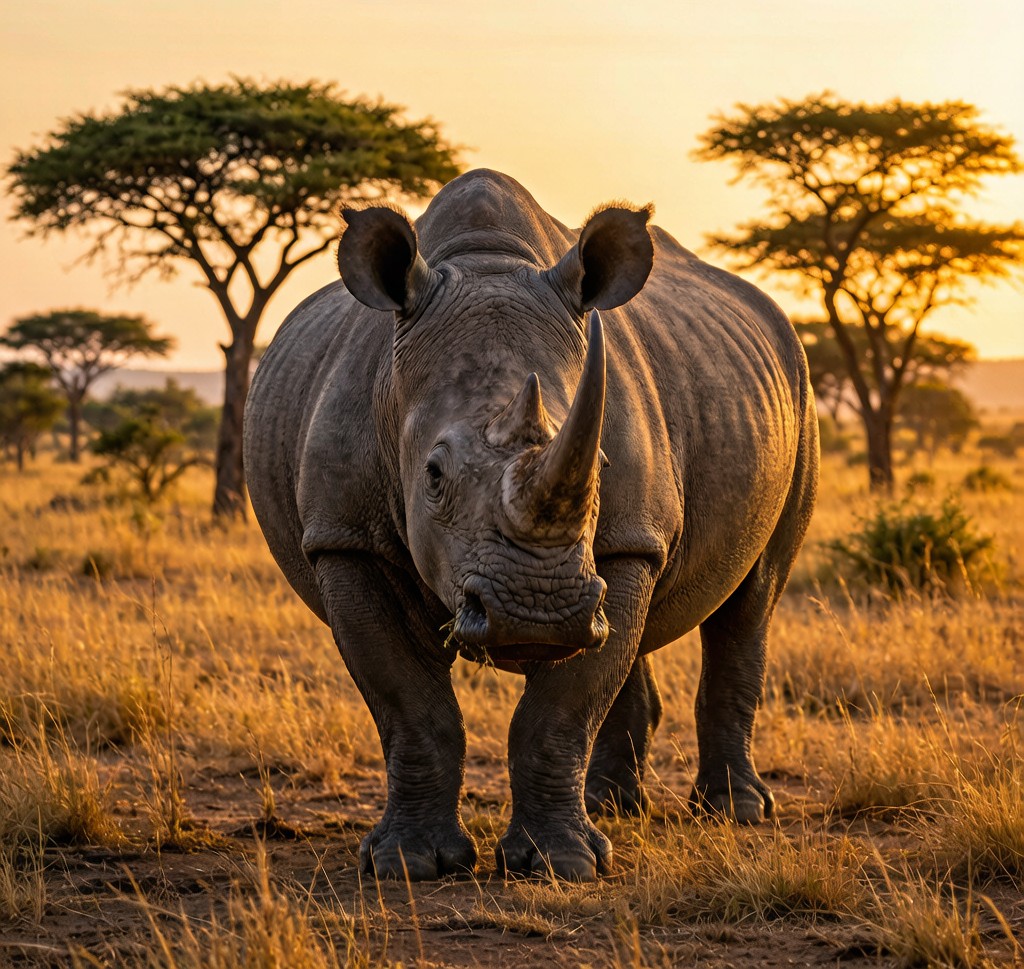
A Black Rhinoceros (Diceros bicornis) standing in the African savanna with its distinctive hooked prehensile upper lip
Overview
The Black Rhinoceros (Diceros bicornis) is one of the most iconic and most critically endangered large mammals in Africa. Characterized by its grey to brown prehensile upper lip – adapted for browsing on trees and shrubs rather than grazing on grass – the Black Rhinoceros is distinguishable from the larger White Rhinoceros primarily by its lip shape and its smaller, more hunched body profile. Black Rhinos stand approximately 140 to 180 centimeters at the shoulder and weigh 800 to 1,400 kilograms, with males being significantly larger than females. Their two keratin horns – the front horn growing up to 140 centimeters in length in exceptional males – are the target of the illegal wildlife trade that has pushed the species to the brink of extinction.
The Black Rhino’s population history is one of the most tragic in modern conservation. In the early 1900s, the Black Rhino was one of the most common large mammals in Africa, with populations estimated at several hundred thousand. By 1995, this had been reduced to just 2,300 individuals due to relentless poaching for rhino horn. Thanks to intense conservation efforts over the past three decades, Black Rhino numbers have recovered to approximately 5,600 – still less than 5 percent of historic levels, but a remarkable conservation success story that demonstrates the power of dedicated anti-poaching efforts and habitat protection.
Habitat and Distribution
Black Rhinos historically ranged across sub-Saharan Africa from Kenya and Tanzania in the east to Namibia and South Africa in the south, with several subspecies occupying different habitats from desert margins to montane forests. Today, the species survives in four countries: Kenya, Namibia, South Africa, and Tanzania, which together hold approximately 95 percent of the global population. Within these countries, Black Rhinos are found in a variety of habitats including arid and semi-arid savanna, thorn scrub, acacia bushland, and in Tanzania’s thicket habitats.
Black Rhinos are strongly associated with the presence of woody vegetation – the acacia and euphorbia thickets that provide their preferred browse. They are primarily browsers rather than grazers, using their distinctive hooked prehensile upper lip to strip leaves, shoots, and fruit from trees and shrubs. This dietary preference shapes their habitat use: they favor areas with dense woody cover for daytime shelter, and move into more open areas to browse at night. The species is highly territorial, with dominant adult males maintaining and scent-marking territories that females pass through during their search for mates.
Poaching Crisis
The Black Rhino is one of the most heavily poached animals on Earth, and understanding the poaching crisis is essential to understanding the species’ conservation. Rhino horn is composed primarily of keratin – the same protein that makes up human fingernails and hair – and has no proven medicinal value. Despite this, rhino horn is prized in Vietnam and China as a supposed cure for cancer, fever, and hangovers, a belief with no scientific basis. The market price for rhino horn now exceeds the price of gold on the black market, reaching up to $400,000 per kilogram in some markets.
The poaching methods used against Black Rhinos are brutal and efficient. Rhino poachers – often organized criminal networks with access to helicopters, veterinary drugs, and high-powered rifles – will locate rhinos by following spoor, using informers in conservation areas, or simply searching by air. Rhinos are typically shot, their horns hacked off with machetes while the animal is still alive – a slow, agonizing death that has led to proposals for legalizing rhino horn trade as a conservation funding mechanism, a controversial strategy that remains deeply debated among conservationists.
Conservation Success and Future
The Black Rhino’s recovery from near-extinction to approximately 5,600 individuals today represents one of the most significant conservation successes in recent history. This recovery has been achieved through a combination of intensive anti-poaching measures (including armed guards, rhinos GPS tracking, dehorning programs, and intelligence-led enforcement), translocation and reintroduction programs that have re-established Black Rhino populations in countries where they had been locally exterminated, and dedicated protection of key populations in large, well-managed conservancies.
The species is divided into three subspecies: the Eastern Black Rhino (D. b. michaeli) of Kenya and Tanzania, the Southern Central Black Rhino (D. b. minor) of South Africa and Namibia, and the Southwest Black Rhino (D. b. bicornis) of Namibia. Each subspecies requires genetically managed populations to maintain diversity. The Black Rhino is listed as Critically Endangered on the IUCN Red List, and while its population is slowly increasing, it remains highly vulnerable to poaching surges, political instability in range states, and habitat loss. Continued investment in anti-poaching, demand reduction campaigns in consumer countries, and community-based conservation incentives are essential for ensuring the Black Rhino’s long-term survival.