 By st20113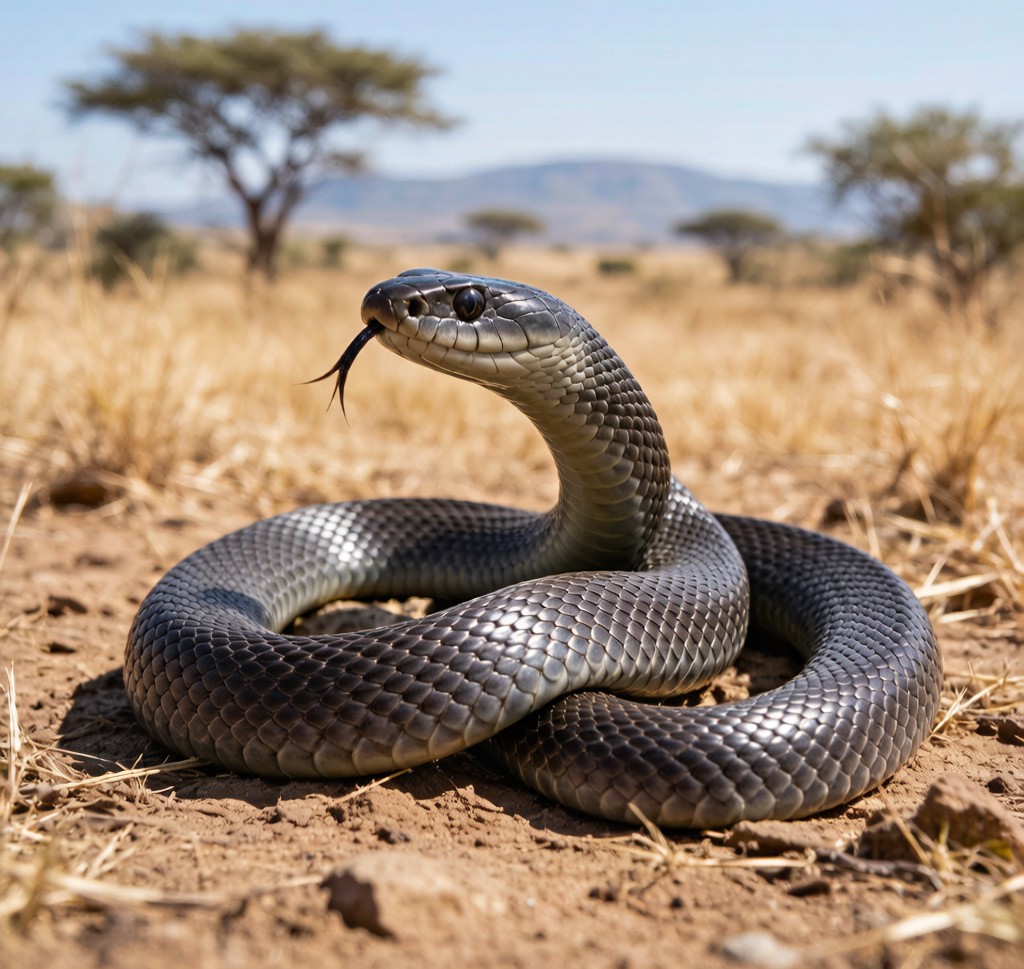
Overview
The Black Mamba (Dendroaspis polylepis) is Africa’s most feared snake – the continent’s longest venomous snake and one of the most dangerous animals on Earth. Despite its name, the black mamba is not black: its body is olive, grey-brown, or khaki, while the inside of its mouth – which it displays when threatened – is a distinctive dark purple-black that gives the species its common name. Found across much of sub-Saharan Africa, from Senegal in the west to Ethiopia and Somalia in the east, and south to Namibia and parts of South Africa, the black mamba inhabits savannas, rocky hills, and open woodlands, where it occupies a specialized niche as a diurnal, fast-moving predator of small mammals and other vertebrates.
The black mamba is an extraordinary animal by any measure: it is the world’s fastest snake, capable of moving at speeds of up to 20 kilometers per hour on the rare occasions when it chooses to run rather than hide; the world’s longest venomous snake, with adults reaching 2 to 3 meters in length and the record held by a specimen measuring 4.5 meters; and one of the world’s most venomous land snakes, with venom that is highly neurotoxic and cardiotoxic and capable of killing a human adult within hours if left untreated. A single bite from a black mamba can deliver enough venom to kill 10 to 25 adults, and the species’ reputation for aggression and unpredictability – combined with its speed and the lethality of its venom – has made it one of the most mythologized animals in Africa.
Behavior and Defense
The black mamba’s fearsome reputation is somewhat undeserved: like most snakes, the black mamba is shy and avoids human contact whenever possible, preferring to flee rather than fight when encountered. However, when cornered or surprised – and particularly when a female is protecting her eggs – the black mamba can be genuinely dangerous. When threatened, the species rises up to a third of its body length, spreads a narrow hood-like flap on its neck, and opens its mouth to display the characteristic black interior while hissing a warning. If the warning is ignored, the snake will launch a series of rapid, extremely accurate forward strikes – each delivering a significant dose of highly potent venom – before retreating to safety.
The black mamba’s speed and agility are legendary: it moves across the ground with remarkable fluidity, using a distinctive concertina movement – alternately pulling its body into tight folds and then extending forward – to navigate through grass, bushes, and rocky terrain. When fleeing from a threat, the black mamba can raise the front third of its body off the ground and move at remarkable speed with minimal contact with the ground, using the scaly underside of its tail to push off against the ground and achieve speeds that few other snakes can match. This speed – combined with the snake’s keen eyesight and alert, intelligent demeanor – makes it a formidable and effective predator that is capable of outrunning and outmaneuvering most prey.
Venom and Prey
The black mamba’s venom is one of the most potent of any land snake, consisting of a complex cocktail of neurotoxins, cardiotoxins, and dendrotoxins that attack the nervous system and the heart simultaneously. The venom works by blocking the transmission of signals between nerve cells and muscles – causing progressive paralysis that eventually affects the muscles of respiration, leading to respiratory failure and death if untreated. A black mamba bite delivers approximately 100 to 120 milligrams of venom in a single strike, and the lethal dose for a human is estimated at approximately 10 to 15 milligrams: even a partially successful bite can deliver a fatal dose. Without access to antivenom – which is essential for survival – the mortality rate for untreated black mamba bites approaches 100 percent.
The black mamba’s diet consists primarily of small mammals – particularly rodents, including rats, mice, and squirrels – which it hunts during the day using its keen eyesight and excellent sense of smell. The snake kills by striking rapidly and delivering a potent venom dose, then waiting for the prey to succumb before swallowing it whole – typically head-first. Black mambas are opportunistic predators and will also eat birds, lizards, and other snakes when the opportunity arises. After eating a large meal, a black mamba can go for several weeks without feeding again, spending much of its time resting in a sheltered spot – a burrow, a hollow tree, or a rocky crevice – while it digests.
Conservation
The Black Mamba is listed as Least Concern on the IUCN Red List, reflecting its large range and apparently stable population across sub-Saharan Africa. However, the species faces significant threats from humans – who kill black mambas on sight out of fear – and from habitat loss as agricultural expansion and urbanization reduce the availability of the rodent prey and sheltered habitats on which the species depends. In many parts of its range, the black mamba is killed by farmers, herders, and anyone else who encounters it, often before the snake has shown any aggression. This persecution has little effect on the black mamba’s population – the species is too fast, too secretive, and too prolific to be significantly impacted by targeted killing – but it contributes to a climate of fear and misunderstanding that impedes conservation efforts.
Conservation efforts for the black mamba focus primarily on education – teaching people in rural Africa to recognize the species, understand its behavior, and know how to respond safely when encountering one – and on improving access to antivenom in areas where black mamba bites are common. Several organizations are working to develop and distribute effective antivenom products specifically formulated for African mamba venom, building on research that has identified the key toxin components and their modes of action. As with most snakes, the greatest conservation challenge for the black mamba is changing human attitudes: in a world where snakes are universally feared, even one of the most fascinating and ecologically important predators of the African savanna can struggle to find advocates.