 By st20113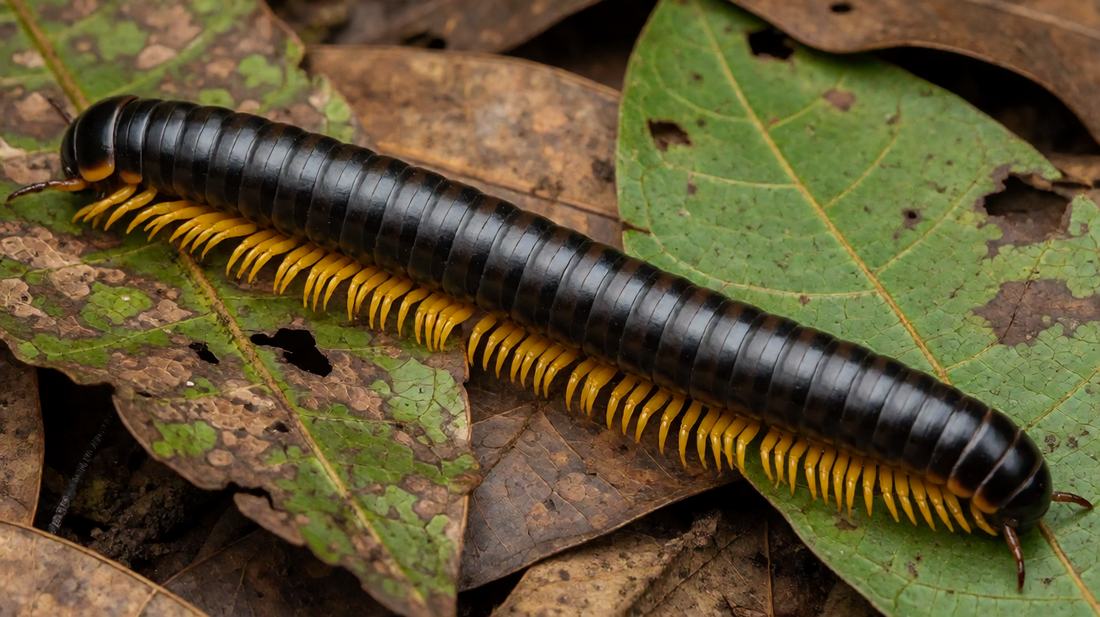
Archispirostreptus gigas | Giant African Millipede
Species Profile · Spirostreptidae
Giant African Millipede
The largest millipede on earth, a dark sausage of up to 33 centimetres walking on more than two hundred legs through the coastal forest of East Africa — and one of the most useful recyclers of the forest floor.
IUCN: Least Concern
Range
Length
Rings
Legs
Eggs
The largest millipede
A giant of the forest floor
The giant African millipede is the largest of the millipedes of the world. It is a native of the coastal forest of the east of Africa. The animal is known by its long and round body. That body is built of many rings. Each ring behind the first 4 carries the 2 pairs of the legs. So the adult animal walks on more than the 200 of the legs. The body may reach the 33 of the centimetres in length. So the species is the largest of the whole of the class. It is also one of the largest of the land invertebrates of the continent. The animal is a detritivore. It feeds on the decaying leaves and on the rotten wood and on the fallen fruit of the floor of the forest. It plays an important part in the cycle of the nutrients. It breaks the plant material into small pieces.
It returns the minerals to the soil. So the millipede is one of the most useful of the invertebrates of the tropical forest. The gardener of the region regards the animal as a friend of the garden. The species is harmless. It has no venom and no sting. It defends itself by coiling the body into a tight spiral. It also releases a liquid of a pungent and irritating smell. The glands that make that liquid open along the sides of the body. So most of the predators of the forest leave the animal alone. Sharp-eyed birds and small mammals do take the young. Ants and large spiders take them too. Yet the adult animal is a difficult prey. Its body is armoured and it carries a chemical defence.
The giant African millipede has been kept as a pet for many years. It is one of the most popular of the invertebrates of the trade of the world. It is also a species of education. It appears in displays in the zoos and in the museums. The animal is hardy and it lives long and it is easy to care for. Those are the reasons for that popularity. A beginner who keeps invertebrates very often starts with an animal of this kind. The species is assessed as Least Concern on the global Red List. The assessment reflects the very wide range of the animal in the east and the south-east of Africa. It also reflects the tolerance of the species of a wide range of habitats. Yet the loss of the forest and the heavy collection for the trade are real pressures. The state of the wild groups of the species is not known in full detail. The state of the better-studied invertebrates is known far better.
Family tree
Archispirostreptus, the giant millipedes
The giant African millipede was described in the year 1855. Modern work places it in the genus Archispirostreptus. That genus sits in the family Spirostreptidae. The family is the group of the large and round millipedes of the tropics. It holds the several of the hundred of the species of Africa and of Asia and of the Americas. The whole of the group sits in the order Spirostreptida and in the class Diplopoda. The class is the group of the millipedes. It is one of the 2 great lines of the myriapods. The other line is the centipedes of the class Chilopoda. The millipede and the centipede are the 2 groups that a student of animals must not confuse. The difference is one of the most useful of the facts of the natural history of the group. The millipede carries the 2 pairs of the legs on the greater part of the rings. It carries the 1 pair of short and stout antennae.
Its body is round in the section. The animal feeds on plant material and it is harmless. The centipede carries the 1 pair of the legs on each of the rings. Its body is flat in the section. The animal is a predator of other animals and it has venom and a bite. A keeper of pets must treat that bite with respect. The name Archispirostreptus is built from the Greek words for the chief and for the twisted coil. The name refers to the tight spiral into which the animal rolls when it is disturbed. The species of the genus are among the largest of the whole of the order. The giant African millipede is the largest of the genus. The animal is a close relative of the Millipede (Diplopoda) of the other families of the class. The relationship of the family Spirostreptidae to the other groups has been studied. Modern work of the molecular kind has done that work.
That work has shown something important. The family as it was understood in the past is not the natural group. The several of the genera must be moved to other families of the order. The species has also been confused in the trade with the other large millipedes of the east of Africa. The species of the genus Telodeinopus cause most of that confusion. So the animals of the trade have carried several of the names. That has happened through the history of the hobby. A keeper must treat the naming of an animal of the trade with care. A student who wishes to be sure of the name must examine the form of the gonopods of the male. The colour of the body is a poor guide. Colour is the character that varies the most between groups and the least between species.
Two pairs of legs a ring
How to identify one
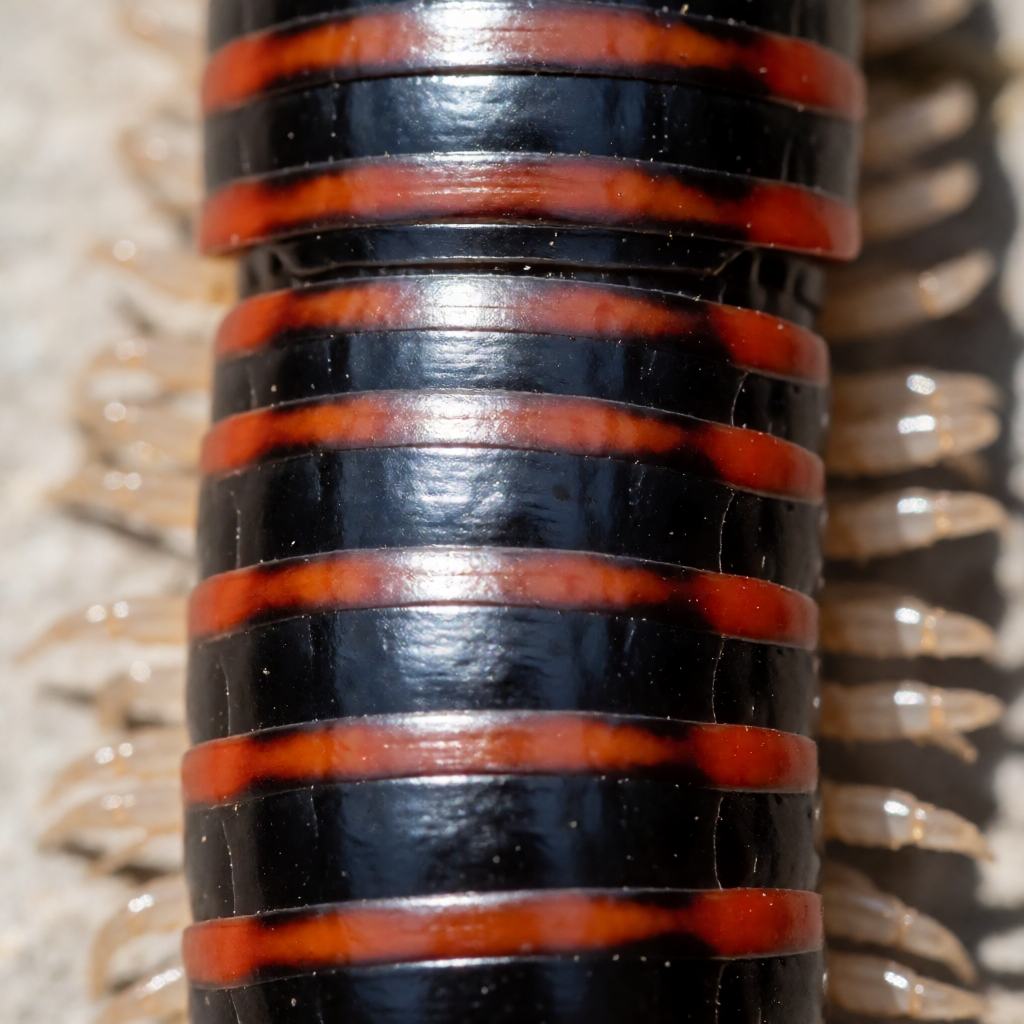
An adult giant African millipede has a body length of between the 25 and the 30 of the centimetres in the usual case. The record of the species is a length of about the 33 of the centimetres. The body of the animal is between the 3 and the 4 of the centimetres in the diameter. The female is thicker in the body than the male of the same age. So the animal is the largest of the millipedes. People often compare its bulk to a sausage of a dark colour. The body is divided into between the 30 and the 40 of the rings in the adult animal. The first of the rings behind the head carries no legs at all. The next 3 rings carry the 1 pair of the legs each. The whole of the rings behind those carry the 2 pairs of the legs each. That arrangement is the reason that the millipede can walk on more than the 200 of the legs. The legs are short and are set close to the ground. They move in a wave that travels from the front of the body to the rear. So the animal advances at a steady and unhurried pace. The observer of the species finds that pace very typical. The colour of the animal is a glossy black or a very dark brown. The rings of the back are hard and smooth and they shine in the light. The legs and the underside are lighter.
They are a dark reddish-brown. The head carries the 2 short and club-shaped antennae. It also carries the 2 clusters of the simple eyes on the sides of the head. Those eyes can do no more than tell the light from the dark. The outer skin is a hard armour of chitin. The chitin is strengthened with calcium carbonate. That armour is the heaviest of the whole of the class. It lets the animal push its way through the soil and the leaf litter. So the millipede must take a large quantity of the calcium in the food. The armour must be renewed at each of the moults. The defence of the species is chemical. The animal has glands. They open through small pores along the sides of the greater part of the rings. Those glands produce a fluid that contains quinones and iodine compounds. The fluid has a sharp and unpleasant smell. Keepers of the species describe it as the smell of iodine or of ink. The fluid stains the skin of the hand a yellow colour. It irritates the eyes and the mouth of an animal that takes the millipede.
So the chemical is a very effective defence. It works against the ants and the birds. It also works against the small mammals that would otherwise eat the animal. The giant African millipede has no venom. It cannot bite in the manner of the centipede. Its mouth parts are small and blunt. They are made for the scraping of soft and decaying plant material. So the animal is completely harmless to people. Yet the fluid of the defence must be washed from the hands. It must be kept well away from the eyes. The touch of the animal is pleasant and dry. That is one of the reasons that the species is handled so often. It appears in the displays of the schools and of the zoos. The sexes are separate. The male is known by the pair of short and changed legs on the 7th of the rings. Those gonopods carry the sperm. They are the structures that a taxonomist examines when a species must be named with certainty.
1
2
3
Coastal forest and plantation
Where it lives
The giant African millipede is a native of the coastal forest of the east of Africa. Its range runs from the south of Somalia and Kenya through Tanzania and Mozambique. It reaches Zimbabwe and Malawi and the north-east of South Africa. The animal also lives on the island of Zanzibar. It is found in the several of the coastal forests of the region. The species lives in the country of the low altitude. It is rare above the height of about the 100 metres. The animal lives on the floor of the forest. It likes the deep leaf litter. It lives in the coastal forest and in the dry forest. It also lives in the thicket and in the woodland. It is found in the gardens and in the plantations of the region. The animal shelters under the fallen log and under the stones.
It also shelters in the base of an old tree. It digs a burrow in the soil as well. So the millipede is an animal of the moist and sheltered and shaded place. It is very rarely seen in the open ground of the dry season. The species is most active at night and in the day that follows the rain. The animal then leaves the shelter of the day and wanders over the floor of the forest in the search of food. So the activity of the animal is greatest in the season of the rains. The millipede can survive the period of the dry. It retreats to a deep burrow and it reduces its activity. Yet the animal is very sensitive to the loss of the moisture. It will die in the few of the hours if the body is allowed to dry out. The species has been carried by the trade to the many of the countries of the world. The animal is found in the wild in several places outside its native range.
Those places have a climate that suits it. It is also found in the greenhouses and in the botanical gardens of the temperate countries. The animals have built groups there. The staff regard them with a mixture of interest and concern. An animal of this species needs the temperature of between the 22 and the 28 of the degrees. That applies in captivity. It needs the humidity of a high level. It needs the soil of between the 10 and the 15 of the centimetres in depth. It digs in that soil. So keepers in the temperate countries must provide a heated and moist enclosure. A failure to provide the moisture is the commonest reason. Captive animals of the species then fail to thrive.
A recycler of the leaf litter
What it eats
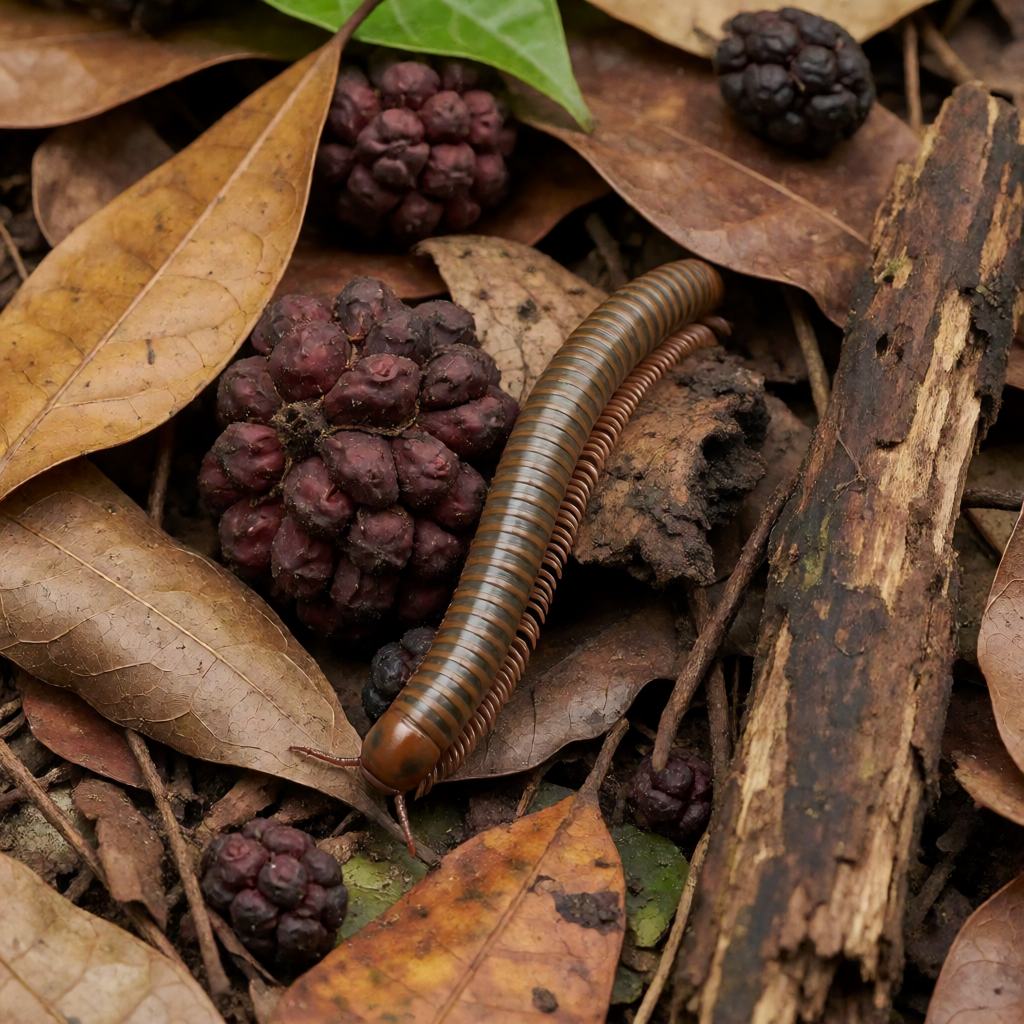
The giant African millipede is a detritivore. It feeds on the dead and decaying material of plants. The greater part of the diet is the fallen leaves and the rotten wood. Bark and fallen fruit are eaten too. So are the soft and decaying stems of the forest floor. The animal also takes the fungi and the algae. Those grow on the surface of the dead material. Its mouth parts are made for scraping and tearing the soft material. They are not made for biting the hard. So the millipede cannot take a living and healthy plant of the ordinary kind. The animal is one of the most important of the recyclers of the tropical forest. The soft parts of the dead material pass through the gut. They are broken into fine fragments. The movement of the animal through the litter mixes them with the soil. Study of the process has shown something striking. The millipede can take the several of the kilograms of the leaf litter in the course of the year.
The activity of the species and of the other large detritivores explains one thing. The floor of the tropical forest does not carry a deep layer of dead leaves. The floor of the temperate forest does. The millipede needs a large quantity of the calcium in the food. Its armour is built of calcium carbonate. The animal must replace the whole of the armour at each of the moults. So the species seeks out the sources of the calcium in the environment. The animal will gnaw at a dead bone and at the shell of a snail. It will gnaw at the cast skin of other invertebrates as well. So a millipede in captivity is given the cuttlebone of a squid. It is given the shell of a hen that has been ground to a powder. An animal that is denied the calcium produces a soft and pale and poorly formed armour. It usually dies in the course of the following moult. The animal takes water from the moist food and from the dew on the leaves. It also takes water from the wet soil. The millipede drinks the water of droplets.
Many of the small animals of the floor of the forest do the same. The species is very sensitive to the loss of water. It cannot survive in an enclosure that is allowed to dry out. The giant African millipede feeds at night. The greater part of the feeding is done in the dark. The animal passes the day in the shelter and in the burrow. It also swallows soil in the course of the feeding. Soil is the source of the minerals and of the bacteria that the species needs. It is passed out with the undigested plant material. So the droppings of the animal are a fine and dark and crumbly material. The gardener of the tropical country prizes them as a very good compost. Study of the gut of the species has shown something useful. The bacteria of the gut do an important part of the work. They break down the tough plant material. So the animal and the bacteria live together. Both partners gain.
Rings added at every moult
The breeding cycle
The giant African millipede reaches adult size at the age of the 2 or the 3 of the years. The growth of the animal is very different from the growth of the insects. It is different from the spiders too. The millipede does not stop growing at the adult stage. It adds the rings and the legs at each of the moults. A young animal that leaves the egg carries no more than the 6 or the 7 of the rings. It carries the 3 pairs of the legs. The animal adds the rings and the legs at each of the moults. So it becomes longer and more numerous in the legs with the passage of the years. The adult animal keeps the capacity to moult through the whole of its long life. The male of the species seeks the female out. The courtship is a quiet and gentle affair. A keeper of pets watches it with interest. The animal walks along the back of the female. It taps the body with the antennae and with the front of the legs.
Then it bends the body around the female. It inserts the tips of the gonopods into the opening of the reproductive tract of the female. The whole of the act takes the several of the minutes. The 2 animals may remain together for the several of the days before the act is completed. The female lays the eggs some weeks after the mating. She builds a nest of soil and of droppings in the soil of the enclosure or of the floor of the forest. The number of the eggs is between the 100 and the 1,000. That number depends on the size and the age and the condition of the female. The eggs hatch after about the 3 of the weeks. The very small and pale and soft young leave the nest. They carry the 3 pairs of the legs and the 6 or the 7 of the rings. They are the colour of ivory at the first. They darken to the colour of the adult in the course of the first of the weeks. The female gives the young no care at all once the eggs have been laid. The nest is sealed.
So the young animal must find the food and the moisture for itself from the day that it leaves the egg. The rate of death of the young is very high for that reason. Only 1 in several of the hundred of the young of the nest reaches adult size. The species makes up for the loss in 2 ways. It lays a very large number of the eggs. The adults live a long time. The animal moults in a chamber that it digs in the soil. The millipede is soft and helpless and very pale for the several of the days of the moult. It then eats the cast skin. That way it recovers the calcium and the other minerals that the old armour contains. The species is most at risk at the period of the moult. A keeper of pets must not disturb the animal at that time. The species lives for between the 7 and the 10 of the years in good conditions. Keepers report females of the age of the 10 of the years. The record of the species is the 11.
A common animal under pressure
Conservation
The giant African millipede is assessed as Least Concern on the global Red List. The assessment rests on the very wide range of the species in the east and the south-east of Africa. It also rests on the tolerance of the animal of a wide range of habitats. The wild groups are believed to hold a very large number of the adult animals. So the species does not meet the criteria of the threatened categories. None of the measures of the assessment puts it there. The pressures on the animal are real all the same. They are the loss of the forest and the collection for the trade and the loss of the quality of the habitat. The coastal forest of the east of Africa is one of the most threatened of the habitats of the continent. The greater part of the original cover of the region has been cleared. It has gone for agriculture and for timber and for the growth of the coast. The remaining patches of the forest are small and isolated. They are very open to further clearance and to fire and to drought.
So the animal of the coastal group is the one for which the loss is the most serious. The species as a whole is still secure. The collection for the trade is the second of the pressures. The giant African millipede is one of the most numerous of the invertebrates of the international trade in pets. The animals are collected in very large numbers in the countries of the native range. They are exported to the markets of Europe and of North America and of Asia. The trade in the species is legal and largely without rules. So the collection of the animals has been a steady pressure. It falls hardest on the groups that lie close to the cities and to the ports of the region. The animal is also a species that the zoos and the schools keep. They use it for the display of invertebrates. That demand continues. The good news is that the species breeds very readily in captivity.
The greater part of the animals of the trade of the modern period are captive-bred and not wild-caught. The young of the species are easy to rear. The female produces a very large number of the eggs. So the captive group of the trade is one of the largest of the invertebrates of the hobby. Study of the trade has argued for one priority. The remaining coastal forest of the east of Africa must be protected. The breeding of the animal in captivity must be encouraged. The regulation of the ownership of a millipede matters far less. The millipede is also one of the animals that the children of the region know well. So the species is a very good subject for the education of the public in the value of the invertebrates of the soil. The several of the programmes of the conservation of the region have used the animal for that purpose.
Quick hits
Five things to remember
- The animal carries the 2 pairs of the legs on the greater part of the body rings. A centipede carries the 1 pair. So the adult millipede walks on more than the 200 of the legs and no other animal of the class is larger.
- The giant African millipede rolls the body into a tight spiral when it is disturbed. That spiral gave the genus its name. The Greek word that forms the first part of the name means the twisted coil.
- The animal has no venom and no sting and it cannot bite. Yet the fluid that it releases along the sides of the body contains quinones and iodine. That fluid stains the skin a yellow colour and irritates the eyes.
- The species is one of the longest-lived of the invertebrates that the hobby keeps. Keepers report females of the age of the 10 of the years, and the record of the species is the 11.
- The young millipede leaves the egg with no more than the 3 pairs of the legs and the 6 or the 7 of the rings. The animal adds new rings and new legs at each of the moults in the course of the several of the years.