 By st20113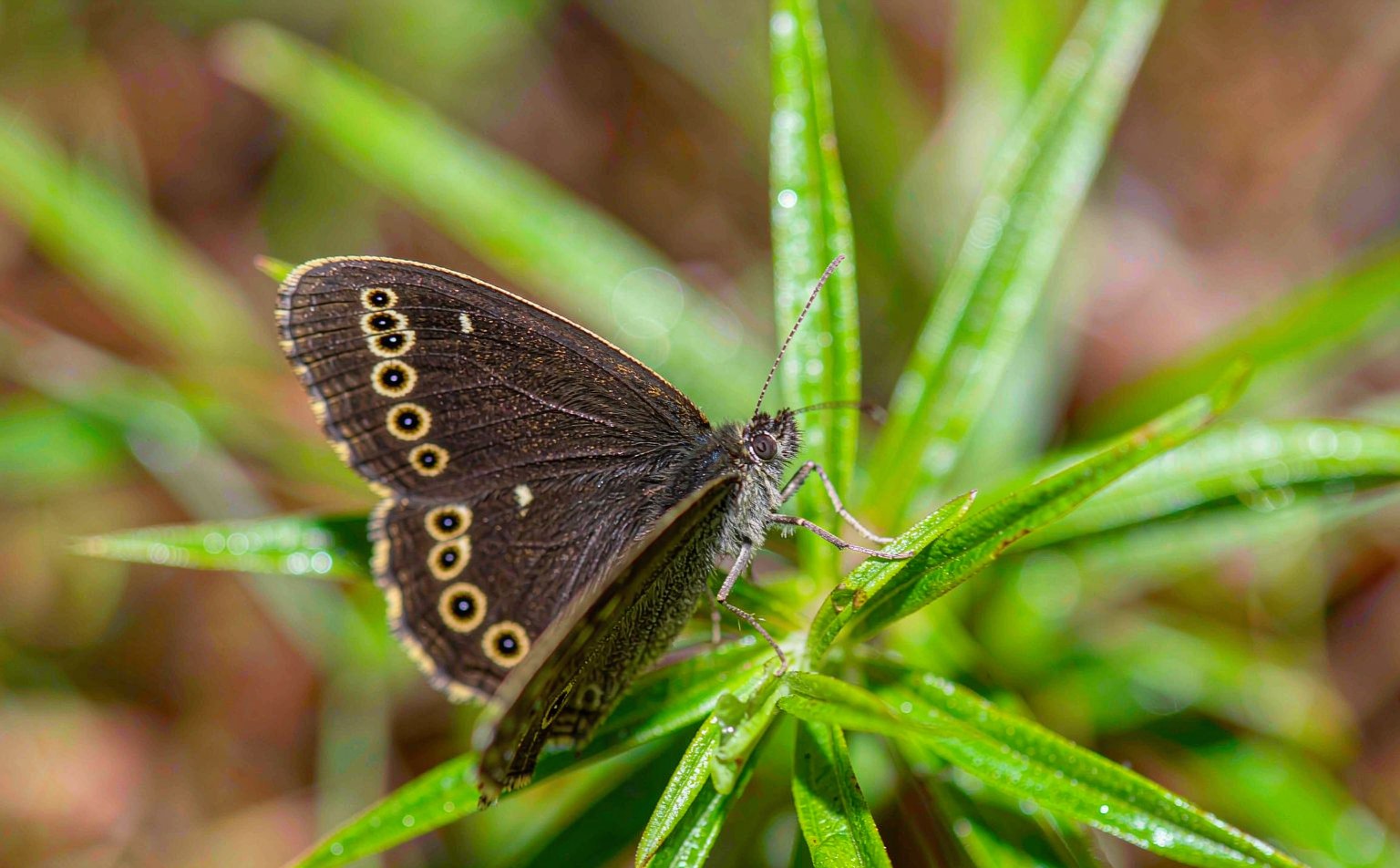
Aphantopus hyperantus | Ringlet
Introduction
The Ringlet (Aphantopus hyperantus) is a dark, velvety brown butterfly of summer meadows and woodland rides, named for the rings of eyespots that circle its wings. Shy of bright sun, it flies mainly on dull, cloudy days and at the edges of shade, where its dark colour absorbs what heat is available. It is a characteristic sight in July meadows, fluttering low among the grasses with a weak, wandering flight.
Taxonomy
The Ringlet is a member of the family Nymphalidae and the subfamily Satyrinae, the browns, related to the [Meadow Brown](https://www.gloencyc.com/peacock-butterfly-aglais-io/) and the [Small Heath](https://www.gloencyc.com/peacock-butterfly-aglais-io/). It is the sole species of the genus Aphantopus and is found across temperate Europe and into temperate Asia. Its dark coloration and cloud-loving habits distinguish it from brighter grassland browns.
Physical Characteristics
Adults have a wingspan of 42 to 52 millimetres. The upper side is a uniform dark brown, almost black in fresh males, with a ring of small black eyespots circled in yellow on both wings; females are slightly browner. The underside is a richer brown bearing a clear row of yellow-ringed eyespots, the “rings” that give the species its name, set against a soft brown ground.
The body is slim and dark-furred, the antennae slender with small clubs. The caterpillar is a green larva with a darker line and a forked tail, hidden among grass blades. The chrysalis is green at first, later brown, and rests in a loose silk shelter at the base of a grass tuft.
Habitat
The Ringlet favours damp, flower-rich grassland, woodland rides, hedgerows, meadows, riverbanks and tall roadside verges, especially where the sward is rank and shady. It tolerates cooler, cloudier conditions better than most butterflies and is often the last species flying on an overcast afternoon. It avoids dry, exposed turf and intensively grazed pasture.
Diet
Adults nectar from a variety of meadow flowers, including thistles, knapweeds, bramble, scabious, clover and hedge blooms, and they feed readily on over-ripe fruit when offered. The caterpillars eat grasses such as cock’s-foot, fescues, meadow grasses and false brome, feeding at night and resting low in the turf by day.
Reproduction
Females lay eggs loosely among grass, often simply dropping them in flight over suitable sward. The caterpillars hatch and feed slowly, then overwinter as small larvae and complete their growth the following year. There is a single generation annually, the adults flying from late June to August, with the chrysalis forming at the base of a grass tuft in early summer.
Conservation
The Ringlet is widespread and not threatened, though locally sensitive to the loss of damp, unimproved grassland and the over-management of woodland rides. It benefits from leaving tussocky, flowering sward and from shade-tolerant grassland that other butterflies avoid. As a species of longer, rougher grass, it is a good indicator of meadow quality where it occurs.
Fun Facts
- It flies on dull, cloudy days when many brighter butterflies have closed their wings.
- The ring of eyespots is thought to confuse predators into aiming at the wing edge.
- Fresh males are so dark they can look black against the grass.
- The caterpillar overwinters tiny and finishes growing the next spring, a slow two-season start.
- Despite its plain look, it is one of the commonest meadow butterflies in midsummer.